Follow us on Facebook for Training Tips
Physique Coaching Tips from Twitter
DeVine Physiques on Yelp!

Debunking: “Carbs are killing you.”

I usually tell people that “I’ve been there.”  My body type is “Endomorph,” which means losing fat is not easy and my body resists as much as possible.  I was once a total gym newbie.  I sought quick fixes to try and cut down and “tone.”  I still tell people that “I’ve been there.”  For some time I was eating no carb, tried nutrient timing diets, fasted cardio, and did all of these different things in an effort to lose fat as fast and efficiently as possible.  None of it really helped, and after plenty of reading and research, I found that I was getting in the way of my goals.  At this point, I eat a great deal of carbohydrates, and am still leaning out at the same rate (if not faster) than I was when I was eating paleo / no carb.

I have officially reduced every aspect of my nutrition and workout program to science–  No more pseudoscience involved!

I now feel as though I have had a huge breakthrough in my life, and I want to do everything I can to spread the word to as many people as possible!

. . .  Most won’t listen, though.  So instead, I usually leave a long winded comment in the hope that just one person will do a little research and realize that there is a better way to reach your goals.  I can definitely say that I wish someone had done that for me so I could have stopped wasting my time a long time ago.  Case in point, this pin on Pinterest.  This isn’t the first time I’ve debunked something from Pinterest, and it certainly won’t be the last.  Protip:  If you found the health / nutrition advice on Pinterest, there is a 95% chance it’s completely wrong or not helpful.

The best collection of fitness myths since 2010!

The best collection of fitness myths since 2010!

The whole infographic seems like an advertisement for paleo dieting / no carb dieting, as the main goal seems to be proving that eating a lot of dietary fat is okay.  For the record, eating a lot of dietary fat is not bad;  there are drawback to eating fatty foods, such as their high energy (calorie) content, but overall, you need to eat dietary fat.  I digress. . .  The author’s plan of attack is to demonize carbohydrates so that you’ll think, “The carbs are the reason I haven’t lost weight!”  This is absurd, and I can’t let this stand.  So, here we go; and I’m warning you. . .  This is a long one:

Debunking “Carbs are killing you!”

  1. Claim:  Insulin turns off fat burning.  Debunked:  It’s true that insulin turns off fat burning, but that’s perfectly okay.  Fat burning (or lipolysis), is the primary metabolic pathway for the body–  During periods of exertion, such as exercise, your body burns a combination of fats and carbohydrates for fuel.  The rest of the day, and while you’re sleeping, your body is oxidizing fat for fuel;  thus, the amount of time spent in a lipolytic state is far more than in a glycolytic (glucose burning) state.  Plus, shutting off lipolysis isn’t a bad thing–  When insulin levels are elevated, that means you’re fed.  Your body is now digesting the food it was given, and is determining where it all needs to go.  Insulin binds to different cells as a sort of valet, telling blood glucose to enter if needed.  This is important for muscle tissue repair (and growth), for glycogen storage, and for performance, if consuming carbs during a long workout.  If your body has any glucose left over, then it is stored as fat.
  2. Claim:  Thinking of eating carbs will stimulate insulin secretion.  Partially Debunked:  Thinking of any food can actually stimulate insulin secretion, whether there are carbs in the dream meal or not. . .  This was just another attempt to paint carbs in a bad light.
  3. Claim:  Insulin is bad because it promotes fat storage;  you will get leaner if you eat less carbs.  Debunked:  So the whole point of the pin is to show the cycle of how eating carbohydrates can make you “fatter.”  They don’t go into detail about all of the great things carbs do, though:
    • Glucose is the primary metabolic pathway for anaerobic activity–  If you’re lifting weight or sprinting, your body needs carbs, otherwise it may cleave skeletal muscle, which it can deaminate to create glucose;  thus, carbohydrates are incredible muscle sparing.  Wouldn’t you rather eat carbs than have your body eat your muscle mass?  Plus, skeletal muscle is what makes you appear lean, and if your body is consuming that for energy, you may lose weight, but not fat.
    • Insulin drives nutrients into cells–  This is why athletes consume carbs and protein after training.
    • Carbohydrates can easily be converted to Glycogen, which is then stored in the muscles for later use.  This makes energy readily available whether you’re fed or not, and whether the process is aerobic (primarily fat burning) or anaerobic (primarily glucose burning).
  4. Claim:  Carbohydrates are completely responsible for insulin secretion.  Debunked:  The article conveniently fails to mention that protein also stimulates insulin secretion;  if you’ve ever opted for a steak without the side of potatoes to avoid insulin secretion, you did not achieve your goal.
  5. Claim:  Fats don’t make you fat.  Carbs do!  Debunked:  Neither fats, nor carbs make you fat. . .  Calories do.  So many people get so caught up in their macronutrients, that they forget the most fundamental rule to fat loss:  If you consume less calories than you use, you will lose fat.  If you consume more calories than you use, you will not lose fat.  Just ask Professor Mark Haub, who did an experiment and lost 27 pounds by controlling his calories while only eating snack foods  (Doughnuts, twinkies, chips, etc.).  You can read more about it here.

This infographic is seriously flawed, and tries so hard to draw conclusions and correlations that are either fallacious, or wrong.  The most important takeaway is number 5 above:  You can’t blame any particular food for inhibiting fat loss. . .  It all comes down to calories in / calories out.
Sources and Links

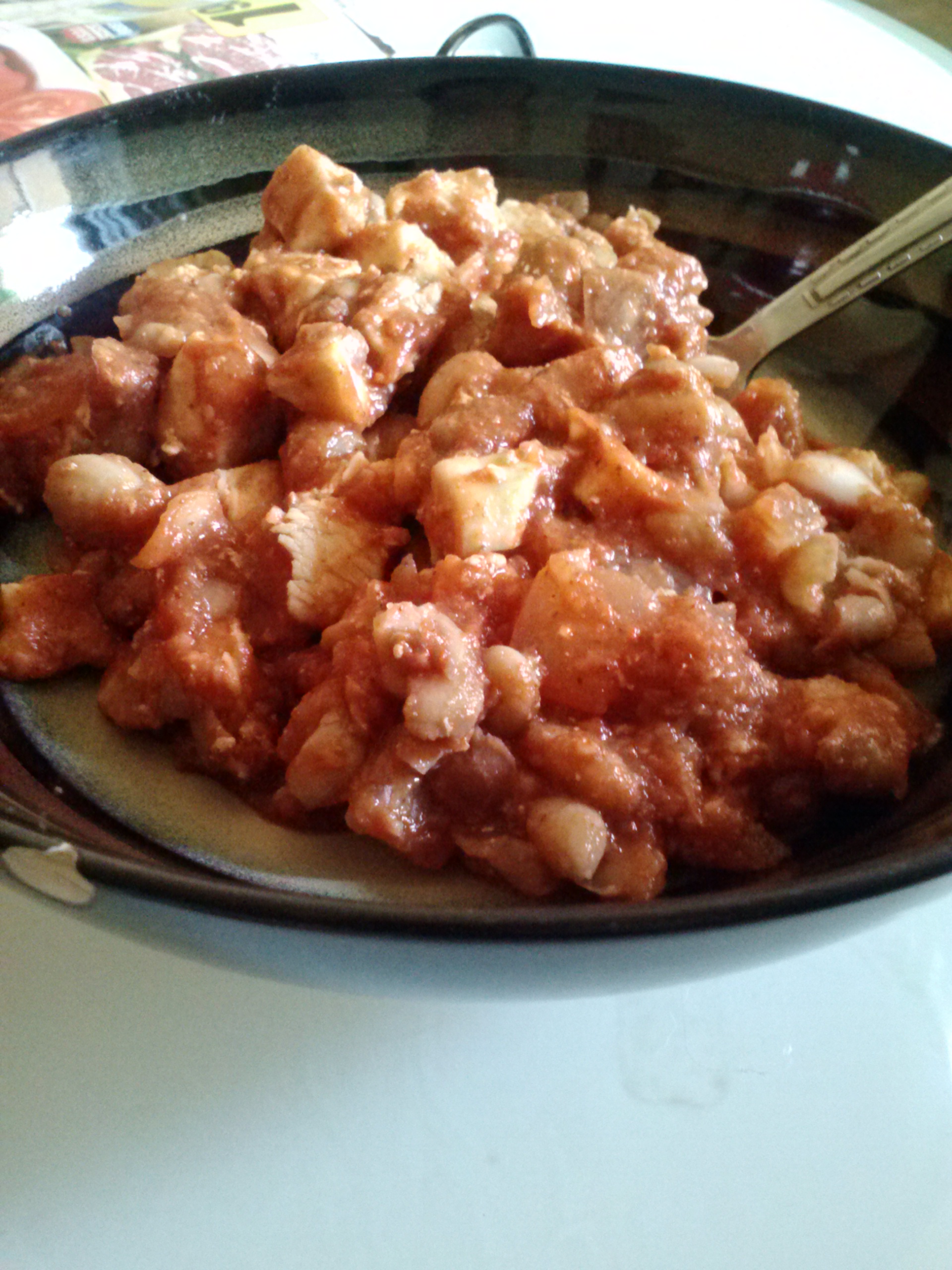
Clean Eating- Chili

This chili is soooooo tasty! It is gluten-free, egg free, nut free, and super clean!

1/4 cup raw pinto beans (yep, I soaked them and cooked them all by myself)!
1/2 cup organic tomato sauce
7 oz chicken
Chopped onion to taste
Giant dash of ground Onion
Giant dash of ground Garlic
Giant dash of cayenne

Calories: 393
Fat: 3g
Protein: 55g
Carbs: 38g

I soaked the beans for about 7 hours, then rinsed and let simmer for about another hour and 15 mins. I cooked the chicken, threw all of it into a pot, and mixed it up! Voila! Husband can be a bit picky with his beans, and he approved! (Only my second time making pinto beans from raw…first time…no success LOL).

Clean Chick

Clean Chicken Chili


The Great Fish Oil Scare of 2013

The vast majority of supplements out there don’t do anything for you, but for every 5 that do nothing, there’s 1 that is incredible!*  Today, we’ll be talking about one in particular that was part of a new “study,” a potentially harmful study that is being taken much more seriously than it should be.

Fish Oil.  Fish Oil supplementation is a cheap, easy way to supplement your diet with healthy Omega-3 Fatty Acids.  Taken in dosages between 1 and 4 gels a day, fish oil is an anti-inflammatory that has a wide range of potential benefits, including:

  • Potentially reducing blood pressure in those suffering from hypertension.
  • Potentially protecting against Parkinson’s Disease
  • Helps the prevent the brain from cognitive problems associated with Alzheimer’s.
  • It can slow the growth of tumors in cases of prostate cancer
  • May reduce depression
  • Can decrease severe symptoms of psoriasis
  • Can aid in weight loss
  • And much more!  (Seriously, this list could go on forever.)

As you can see, there’s a lot of benefits to supplementing with fish oil.  Now, recently, there was a study that allegedly linked fish oil supplement intake with the development of prostate tumors.  I’ve seen quite a few people in my news feed asking for the opinions of others, and whether or not they should stop taking the supplement.  For the first time in a while, I watched as a scientific study set off a sort of firestorm, but in reality, this is nothing to worry about, and when it comes down to it, the study seems seriously flawed.

There’s a fantastic article here that went through and thoroughly debunked the study, but here’s a short summary of why you should pay no attention to it:

  • Time is not a factor at all in this study, which is important because many prostate cancer patients may begin supplementing after an initial diagnosis because of the “Cancer Protecting” properties of fish oil.  Also, time is a major factor because of the method of determining circulating Omega-3s and Omega-6s.
  • They drew these conclusions from a pre-existing study known as the “SELECT Trials.”
  • Fish oil has been proven to decrease mortality in individuals with prostate cancer, a fact that is not referenced in the study.
  • Here’s a fantastic tidbit from another article about the study:  “Due to the nature of the study, it was not possible to tell for certain whether the elevated blood levels were due to men taking supplements or eating fish rich in omega-3s.”

As is the case with most things, and with most studies, more research is always welcome, but at this time, it’s a good idea to politely disregard this study.  Don’t stop with the fish oil!

*As far as statistics go, I made that up.  Sounds about right to me, though.

Sources and Links

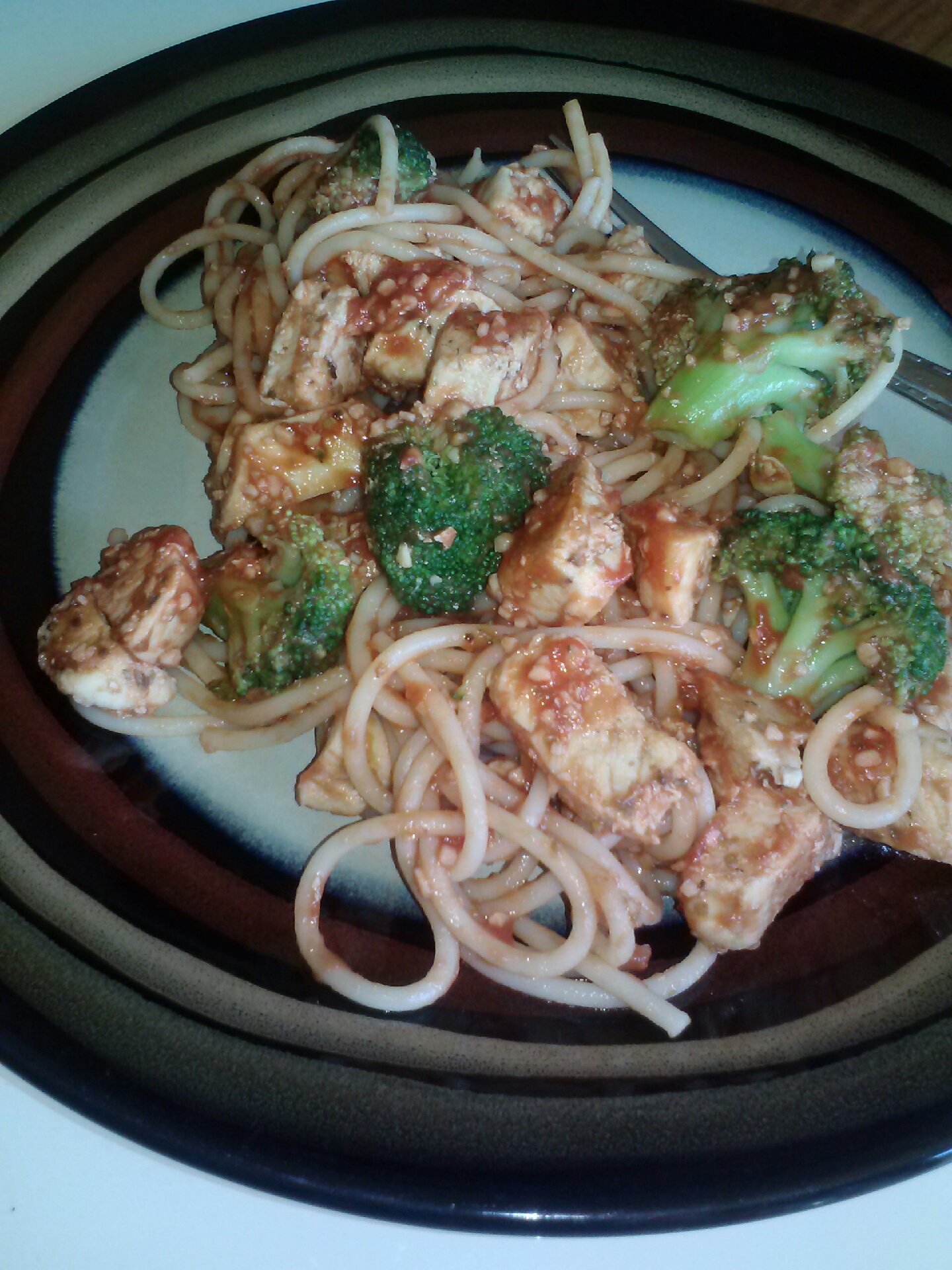
Garlic Chicken Spaghetti!

0625131710

2 oz Spaghetti
7 oz  Boneless Skinless Chicken Breast
1/2 cup Organic Tomato Sauce
1 tbsp Minced Garlic
1 cup Broccoli
Dash Oregano
Dash Onion Powder
Dash Garlic Salt (I love garlic, but could use regular salt here)

Calories: 467
Carbohydrates: 56g
Fat: 4g
Protein: 55g


Stretching – The Truth Revealed!

Stretching is fantastic for you, and you should do it often!

Well that was easy.

Wait. . .  Yeah, I guess that, just like everything else in the health and fitness world, it’s not that easy.

So let’s start with how stretching works.  We’re going to split this up–  For the science, read this paragraph;  If science isn’t your thing, skip this paragraph.  That being said:  Stretching can be easily defined as improving the extensibility of a muscle by moving it through it’s full range of motion.  There are different types of stretching, but for this, we’re going to mostly refer to static stretching, which is holding a stretch for 30 seconds or more.  There is a neuromuscular response in the body known as “Autogenic Inhibition” that is used to increase the extensibility of muscles.  Without getting too involved:  In your muscles, you have muscle spindles that sense the length and speed at which a muscle is lengthened;  In the tendons that attach muscles to bones, you have “Golgi Tendon Organs” (GTOs) that sense the tension and rate of tension.  Autogenic Inhibition is where the tension experienced by the GTO overrides the impulse causing the muscle to contract;  Thus, it forces the muscle spindle to relax, allowing you to increase the extensibility of the muscle.  In order for you to benefit from Autogenic Inhibition, the stretch must be held for 30 seconds;  That ensures your muscle spindles have relaxed.  There’s more to all of this, but this is a very brief overview of how stretching works.

So, to recap, to gain the benefits of static stretching, you should hold the stretch for at least 30 seconds for it to work–  Less time and you may feel better, but you’re not doing much to increase flexibility.  So what are the benefits to static stretching?  Stretching, and Flexibility Training can:

  • Increase joint range of motion.
  • Relieve joint stress.
  • Improve neuromuscular efficiency.
  • Improve the extensibility of muscles.
  • Decrease tension of muscles.
  • And more.

From my own experience, I only ever stretched in between sets, and would hold the stretches for about 10 seconds or less.  (I now know that this was actually getting in the way of my goals;  More on that later.)  I was not flexible at all–  Who am I kidding, I’m still not flexible, but ever since I’ve incorporated flexibility training into my exercises, I have experienced less soreness after exercise, increased flexibility, and increased range of motion.  Alissa has also benefited from the flexibility training and is now going ATG on squats.  So from experience, I can tell you that even 3 weeks of flexibility training can make a huge difference.

Now, there are many people that say that stretching before working out for you is bad.

. . .  And they’re mostly right.  Studies have found that static stretching before activity may decrease strength and power for up to 10 minutes after the stretching, but there is little evidence that it has any impact on overall general performance. So when should you stretch?

If you’re engaging in maximal effort exercises or activities (Powerlifting, Heavy Lifting, Sprinting, Competitive Sports, etc.), it’s recommended that you either don’t stretch, or you do active / dynamic stretching only as part of your preworkout warmup.  If you’re engaging in any other sort of activity, static stretching prior to workout is still recommended, especially if you have particular muscle imbalances.  (Of course, don’t stretch during your workout, as this will further reduce strength and power output.)  After your workout, at a minimum you should be stretching the muscles you stretched preworkout, and it’s also recommended that you stretch muscles that were worked during your workout.

Sources and Links

DOMS and The Lactic Acid Myth

Have you ever been really sore following an insane workout, and had someone tell you it was “Lactic Acid Build Up”?  Well, I’m sorry to tell you this, but Lactic Acid has nothing to do with you being sore, unless we’re talking about during the workout–  That could actually cause soreness fora minute or so.  If you’re sore after a workout, it’s something called “DOMS:”  “Delayed Onset Muscles Soreness.”

Not pictured: Lactic Acid Buildup.

Not pictured: Lactic Acid Buildup.

To start, what is Lactic Acid?  Without getting too far into it:  Lactic Acid is a by-product of Anaerobic Glycolysis.

The chemical breakdown of glucose for the production of “ATP” (Adenosine Triphosphate- Most easily described as a unit of energy for muscles) without oxygen (During weight lifting, sprinting, etc.) produces lactic acid;  When oxygen is present (Jogging, running, bicycling, etc.), the process is “Aerobic,” and instead of producing Lactic Acid, your body produces Pyruvic Acid, which can then be used to fuel other oxidative processes for energy metabolism.  There are two methods for removing Lactic Acid after production:  Oxidation into Pyruvic Acid to fuel the Krebs Cycle, or it can be converted into Glucose in the liver via Gluconeogenesis for energy.

Science aside, what does that mean?  Your body produces a chemical that can cause momentary “burn” in muscles because you’re exerting yourself, and then clears the pathways shortly thereafter.  Think of it like this–   Let’s say you have to climb 10 flights of stairs.  For the first flight or two, you will “feel the burn” in your legs, because your body hasn’t increased respiration to increase oxygen supply, so your body is producing energy through Anaerobic Glycolysis.  After the fourth flight of stairs, your body has increased respiration, and is now producing Pyruvic Acid instead of Lactic Acid, and you’ve begun an anaerobic workout–  At the same time, the increase in oxygen supply is allowing some of the Lactic Acid to go through oxidation, while the rest is being shuttled to the liver.

Here’s another example to demonstrate that it can’t “build up:”  You climb 2 flights of stairs–  The entire process was Anaerobic, so your body produced Lactic Acid;  You feel the burn in your legs as your arrive at your destination on the third floor.  After a very short while, your legs no longer burn.  Why?  You’re now in an aerobic method of energy metabolism–  You’re not taking in any more oxygen, but you’re also no longer exerting yourself;  The Lactic Acid was converted to Pyruvic Acid for energy metabolism.  (Anything left over was then sent to the liver.)

So, if someone says they’re suffering from Lactic Acid buildup from a few days ago. . .  They’re not.  What they’re experiencing is “DOMS.”  DOMS is soreness, inflammation, and pain associated with particularly tough workouts, workouts too intense for the trainee, or a workout that involves intense movements the trainee is unaccustomed to.  It’s often felt between 24 and 72 hours post workout, and is the result of microscopic tears in the muscle tissue that lead to inflammation and soreness.

DOMS is very unpleasant, but is not a sign that you did anything wrong, unless you’re just starting a workout plan–  In that case, DOMS means that you started off too intensely and should have ramped up.

K.I.S.S. – Keep it Simple, Stupid!

A lot of people have a tendency to get too crazy with not just their workout routines, but their nutrition plans and everything else in life–  I foresee it will only get worse as time goes on because of the overabundance of information out there, and the Internet makes everyone feel like what they’re saying is right, even if it’s just “BroScience.”

. . .  It’s a problem.  Don’t get me wrong–  I’m guilty of this too.  I will read about new nutritional news, workout plans, etc., and will immediately want to try it out.

There are a few things to keep in mind, though.  If your plan is working, you don’t need to change anything.  (Unless it’s something like cleaning up your diet.)  If you’re getting the results you want, there is no reason to move on to anything else unless you’re doing something considered unhealthy (or unsafe), and are moving to the better option.

More importantly, don’t complicate things–  Remember “K.I.S.S;”  “Keep it Simple, Stupid!”  This is what everyone should live by, as it’s the easiest way to lose track of the basics, and the basics are what are proven to work.

Want to try a weight training program split into 6 days where forearms and biceps have their own day, and you do 12 sets that day?  K.I.S.S.!  Full body workouts, or smaller splits are the most effective, and anything past that is insane.  Plus, if 6 time Mr. Olympia Dorian Yates says low volume training is effective, it’s worth listening.  (After a lot of research, we’ll be doing a post about low volume training soon.)

You spend how long in the gym on Biceps Curls?

“Hah! You spend how long in the gym on Biceps Curls?”

Want to try and incorporate a lot of different ideas from a lot of different fad diets to try and create your own “Super Diet”!?  K.I.S.S.!  Fad diets are set up to fail, and even if you’re going to try and follow a fad diet, only follow one.  Those things are hard enough to stick to without over complicating things.

"If I read every one of these, I will finally be able to lose weight, right?

“If I read every one of these, I will finally be able to lose weight, right?

Never been to the gym?  Is your goal to suddenly lose 100 lbs?  Do you plan on getting there with 7 days in the gym doing non stop cardio and starving yourself?  K.I.S.S.!  You’re setting yourself up to fail–  You can workout anywhere from 3 – 6 days a week and still reach any goal you have, and starving yourself is not necessary.  Keep it simple- –  A simple workout plan coupled with eating 500 calories below maintenance will make it happen at a great pace, safely.

I could keep going on with examples, but ultimately, the point I’m getting at is, don’t complicate things, and don’t forget the basics.  Too many people get caught up in all the fine details and all of the noise polluting the health & fitness industry, so much so that the basics are ignored, and everyone has a difficult time achieving their goals.  Stuck?  Confused?  Lost?  K.I.S.S.  Everyone’s goal can be met with calories in vs. calories out, simple workout routines, and simple cardio-respiratory exercise.

Play smart, and keep it simple.

(Side note:  You may have noticed the name of the blog changed–  There are big things coming up soon for us, and we’ll be starting a new health and fitness website called “DeVine Physiques.”  Stay tuned for details!)

Organic Food – The Myth About Pesticides

I’ve seen a lot of misconceptions around organic foods thrown around, and I figured it would be a great idea to clear up a few of these ideas.

First, let’s start by saying that I am all for organic food, and I’m all for “conventional food;”  Whatever fits into your lifestyle, your budget, your goals, and what you stand for is what works for you.  I choose to eat organic when possible, and there are some foods that I really don’t care whether or not I eat them organic–  It all comes down to choice, and that choice is yours to make.

That being said, on with some myth debunking!  (And it’s worth noting that this is strictly for an American audience–  I’m not familiar with Organic standards abroad.)

You probably have some misconceptions about this.

You probably have some misconceptions about this.

Let’s start by defining what “Organic Food” is.  It is food that is heavily regulated by the USDA under the guidelines of the National Organic Program (NOP) and Organic Food Production Act of 1990.  These guidelines define what must be followed in order to be certified organic, and they also define what sort of compounds may be used in the cultivation, production, and packing of organic foods.  Any business associated with the production of food can be certified as “Organic,” so long as they follow the strict guidelines.  Processed food that is marketed as “100% Organic” is made with 100% organic ingredients and may carry the “USDA Organic” seal;  Processed food that is “Organic” is made with 95% organic ingredients, and also carries the seal;  A food with 70% or more organic ingredients may be labeled, “Made with Organic Ingredients,” but may not carry the “USDA Organic” seal.

So, there is a very, very brief rundown on what defines organic food–   Now, to bust a myth.

Many people believe that organic food is free of pesticides and herbicides;  That is incorrect.  The difference between “Conventional” and “Organic” in terms of the use of pesticides comes down to what the Secretary of Agriculture defines as organic friendly or not.  What does that mean?  Pesticides used on organic foods must be derived from natural sources, whereas pesticides used for conventional foods may either be derived from natural sources, or synthetic.  The distinction has nothing to do with safety–  Simply the source of the pesticide.  Also keep in mind that the “natural source” of the organic pesticide has nothing to do with toxicity–  Organic pesticides can still be very toxic to humans and animals.  One common organic pesticide, “Rotenone,” is classified by the WHO (World Health Organization) as moderately hazardous;  It is toxic in humans and animals;  Deliberate ingestion can be fatal;  And in a 2011 study, Rotenone was linked to the development of Parkinson’s Disease in farm workers.

. . .  So whether you buy organic or not, be sure to wash your produce thoroughly.

And it’s also worth noting that there is no regulation on the use of the phrase “Pesticide Free” for marketing–  While an organic farmer has to be certified to market his products as organic, no one checks to see if his products are pesticide free if he markets them as such.

Bottom line, though:  Pesticides are everywhere–  “Organic” has nothing to do with that.  We’ll be tackling more misconceptions about organic food in the future, as well!

(A few fun facts on the subject:  The peel of fruits can hold onto trace amounts of pesticides, so if you are worried about synthetic pesticides and are on a budget, you can go conventional for any produce where you don’t eat the peel (Pineapple, Corn, etc.).  Meat can hold onto pesticides, but it all collects in the fat;  Trim the fat to avoid consuming any unwanted pesticides.)

Edit (6/19):  I’m adding links to various sources used while doing research for this article.  Sources may become a permanent fixture in our articles soon.  (You’ll have to forgive my sources not being annotated or properly formatted, as I’m adding these after the article was originally published.)

USDA National Organic Program, Subpart G
“Some Pesticides Permitted in Organic Gardening” from Colorado State University
Gillman J. (2008). The Truth About Organic Farming.
“Organic Agriculture”
Mechanism of toxicity in rotenone models of Parkinson’s disease
Rotenone model of Parkinson Disease

The DeVine Physiques Fad Diet

I have come up with a plan that will make me millions!  I’m going to write a book!  A fad diet book!  It’s going to be incredible, and is coming to a “Diet” section in a bookstore near you soon.  (Or maybe just in the “Diet” section of the Kindle store, or something.)

I have a lot of competition. . .

I have a lot of competition. . .

Would you like a preview of “The DeVine Physiques Fad Diet”?  I will introduce very revolutionary ideas in this book, including:

  • Eating more protein than carbs so that you will feel full longer, thus making it easier to maintain self control.
  • Eating fruits and vegetables for more nutrients and health benefits.
  • Supplementing with a multivitamin to make sure you get all of your micro-nutrients daily.
  • Encouraging simple and safe workout plans.
  • Promoting a healthy lifestyle.

And that’s not all!  I will even introduce my revolutionary point system to help you track your food and how much you should eat.  How does it work?  You find out your BMR based on your height, weight, and age–  We won’t call it your “BMR,” though, as that’s too scary. . .  How about, “Base Body Demand”?  Maybe my editor will have a better idea.  Anyway!  Here’s an website that will do that for you.  Then, you find out what is “500” below your “TDEE,” only we won’t call it that–  We’ll call it the “Adjusted Body Demand.”  I need to hire someone that can think of catchier wording.  You use the following formula to figure out your “Adjusted Body Demand,” where “X” is your “Base Body Demand,” and “M” is the “Activity Multiplier.”

[X(M) – 500].10

M = 1.2 if you’re sedentary;  M = 1.375 if working out 1 – 3 days a week;  M = 1.55 if working out 3 – 5 days a week;  M = 1.725 if working out 5 – 7;  M = 1.9 if you’re Michael Phelps.

Pictured:  One meal for Michael Phelps, or the average American.

Pictured: One meal for Michael Phelps, or the average American.

As an example, my “Adjusted Body Demand” is 257.  That’s a lot of “points” worth of food!  So, how do we figure out how many points are in something I want to eat?  Look at the nutrition label, and multiply the amount of calories by (.10).  Example:  A 100 calorie snack has a point value of 10.  Make sure you hit the amount of points you have as your “Adjusted Body Demand,” and you will lose weight!

Of course, in my book, I’ll have an easier way of explaining all of that, but there’s a preview of our fad diet book, due out in 2014!

. . .  I wonder if I should actually write that.

It’s Necessary: Counting Calories

“Hey, Gabriel. . .  Can you help me get in shape?  I want to tone up for summer; I don’t want to count calories though.”

I can’t tell you how many times I’ve heard that, or some variation of it.  Everyone wants to get the “beach body,” or “tighten up,” but no one wants to put in the proper work.  Here are a few things to keep in mind about getting in shape:  “You can’t out train a bad diet.”  And of course, “Abs are made in the kitchen, not in the gym.”  And let’s not forget the very true, “A good physique is 80% diet, and 20% training.

I have had countless people ask, “What’s a good workout to get abs,” but when I tell them they can get a six pack by going to the gym once a week and changing their lifestyle, suddenly they lose interest.  Why is that?  Convenience.  Nobody wants to count calories, but everyone should be counting–  And here’s the important thing to note:  Not only do you need to count calories if you want to lose fat. . .  You need to count calories if you want to gain muscle, and also if you want to just maintain.

What!?  Why is that!?  Counting calories is annoying!?  First, let’s look at it in terms of fat loss:  How do we lose weight?  We figure out our Total Daily Energy Expenditure (TDEE, or “Maintenance”) and eat less calories than we that.  If you’re not counting, how do you know how many calories below maintenance you’re eating?  Are you eating below maintenance at all?

Of course, then comes: “Can’t I just do more cardio!?”  No.  Look above:  “You can’t out train a bad diet.”  If your TDEE is 2000 calories, and you eat 3000 a day, that means that you would have to train long enough to burn 1000 calories.  The more you train, the more you consume, unless you have unbelievable self control, in which case, why aren’t you just counting calories?  Let’s take it a step further, though.  If you’re consistently eating far below your maintenance (Whether intentionally or otherwise), or if you do “Chronic Cardio,” you’re eventually going to run into metabolic problems.  First, your body is going to start feeding on your muscle mass because it takes more energy to maintain than body fat–  In times of “starvation” (Which your body thinks you’re in), this is an efficient way for your body to lower your energy requirements to help you “survive.”  You will slowly become skinny fat, losing strength and definition, and it won’t stop there.  Next, you will run into hypothyroidism and decreased leptin levels, which will stop fat loss from occurring, and will even inhibit weight loss all together.  So at this point, you hit a plateau, and conventional logic says to workout harder if you want to lose more weight.  But that just further damages the little muscle mass you have left, and further damages your metabolism.  It’s a vicious cycle.  In that case, the proper thing to do is eat at maintenance and do no activity to repair your metabolism;  Of course, you would never run into that if you count your calories and diet responsibly.

Side note:  Want to do something frightening and eye opening?  Estimate how many calories are in foods you know nothing about, and then look up the calorie count–  Everyone grossly underestimates energy content in food.  Worse than that, the amount of calories in alcoholic beverages, and caloric drinks in general is even crazier!  This is the chink in the armor of most people’s diets–  They rely on their own estimates for calories.  (Fun fact:  Popular drinks like Long Island Iced Teas, Margaritas and Pina Coladas typically have more than 700 calories per drink.  We won’t go into what happens when you consume alcohol–  We already wrote about that.)

Pictured:  Almost 900 calories.

Pictured: Almost 900 calories.

I digress. . .

So what about if you want to gain weight?  Well, if you’re not counting your calories, how do you know if you’re eating enough to gain weight?  You have to eat above your TDEE in order to gain weight;  In the same vein, though, what sort of weight do you want to gain?  When people refer to “weight gain,” they really mean “muscle gain.”  Well, to gain muscle mass, you need to eat between 10% above your TDEE, and 500 calories above your TDEE–  Anything more than that and the ratio of fat gain to muscle gain goes up.

Aw man!  So much work!  What if I just want to stay the same?  You still need to count calories.  Let’s say your TDEE is 2000 calories, but you’re only eating 1200 calories a day on average. . .  What will happen?  The same thing that will happen if you’re a chronic dieter and consistently eating a severely low amount of calories.  (See above.)

So, at the end of the day, unless you absolutely don’t care about muscle mass, aesthetics, strength, body composition, and / or a healthy metabolism, you need to count your calories.  Counting calories is not that difficult once you get the hang of it, and is absolutely imperative for your goals.

Recent Blog Posts