Follow us on Facebook for Training Tips
Physique Coaching Tips from Twitter
DeVine Physiques on Yelp!

Archive for the ‘Nutrition’ Category:

Carbs are Necessary

Disclaimer:  If you’re happy with your keto diet, I’m not here to convert you over to eating carbs–  Merely here to help inform.

I used to follow a ketogenic nutrition plan–  I did carb cycling as a way to try and burn fat faster.  I would eat “No Carb” on my non training days (Less than 30g net carbs), and then on training days, I would indulge in carbs only after my workout.

I then started learning about how that’s not very effective for my goals, so I tweaked my plan to where I eat a small amount of carbs pre workout, a lot post workout, and none otherwise.  I thought this would be great.

Luckily, I never stop researching exercise, nutrition, and physiology, and have since learned that none of that was necessary.  I then switched over to eating a lot of carbohydrates daily, and started measuring all of my food using metric measurements–  In the 1.5 months that I did that, I saw more progress in my quest to lean out than the previous 4 months combined.
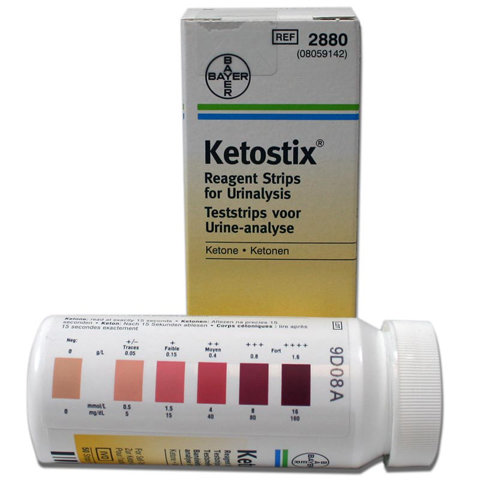
I'll pass.

I’ll pass.

How can this be!?

When it comes down to it, eating a ketogenic diet to lose fat is not necessary.  While it’s true that it may slightly accelerate the fat burning process, it can also lead to muscle wasting, which is far from our desired result.  Muscle creates muscle definition (“tone,” if you will), so it’s more important to keep that and lose fat slower than to potentially lose some hard earned muscle.

“That’s great, but the guy at the gym says–“

It would take about 1,500 words to properly explain why a ketogenic diet is not necessary, and carbs are more important.  Bear with me while I try and sum it up in this post:

Proponents of ketogenic diets claim that the diet will turn your body into a “fat burning machine.”  The problem with that?  Your body is already a fat burning machine.  Unless you’re engaged in an anaerobic activity (Sprinting, lifting weights, etc.), your body will utilize an oxidative (aerobic) process for energy metabolism, and the process that yields the most ATP (muscular energy) per gram of substrate is “beta-oxidation,” a lipolytic (fat burning) process.  Almost your entire day, unless you’re exerting yourself, or have elevated insulin levels from a meal digestion, is spent burning fat for fuel.  That sounds like all the fat burning I need!

“But Insulin is the ENEMY!”

While it’s true that lipolytic processes are halted (or slowed) when insulin is circulating, that doesn’t mean that you will get fat, and it doesn’t necessary say that you will automatically store more fat that day.  As I mentioned before, the amount of time you spend aerobically metabolizing energy will outweigh the amount of time your body can’t, or won’t burn your stores of body fat.  It’s also worth noting that, while digesting carbs may turn off lipolysis, it also turns on glycolysis, a glucose (carb) burning  metabolic pathway.  The result of which is less carbohydrates to be converted and stored as fat when your glycogen stores are full and your activity / digestion is through.

Also keep in mind that insulin is anabolic, meaning you need it to gain muscle mass.

The Bottom Line.

Remember that fat loss is a numbers game.  While nutrition and clean eating are high on my priority list (and I feel it should be high on your list too), if you consume less calories than you use, and have a healthy thyroid, you will lose fat.

“I’m sticking with Keto Dieting.”

That’s fine.  Here are some things to consider though:  Dietary Fat has the lowest “Thermic Effect;” that is, it is digested the easiest, with the fewest amount of calories burned from the digestive process.  For this reason, your RMR (Resting Metabolic Rate) will actually be lower than someone consuming carbohydrates, and you should take this into account when figuring out your caloric needs.  The Thermic Effect can account for up to 10% of your RMR.

Realize that carbohydrates are muscle sparing, and fat is not.  If your body needs more carbohydrates to perform a task, it will take from circulating blood glucose or stored glycogen.  If it can’t find any here, it will turn to protein stores (muscle)–  Amino Acids will be deaminated, and the left over carbon will be converted to glucose.  If you have no stored glycogen to begin with, and haven’t consumed carbs pre workout, then your body will likely turn to this process (Termed “Gluconeogenesis”) sooner.

Finally, when switching over to a ketogenic diet, you will likely notice a drastic decrease in weight, and possibly even a “leaning out” effect when you first start the diet.  This is side effect of the lack of carbohydrates that many people mistake for real progress.  What happens?  Your body can’t store nearly the amount of glycogen as it could before (as the carbs aren’t there), and glycogen tends to retain a lot of water.  Your body ends up having less immediate fuel on hand, and is not as hydrated as it normally is, leading to a reduction in weight.

Okay.  So how do you setup your macros?

Scientific research supports between 0.6g / lb. and 0.8g / lb. of body weight for protein, which is the most important macronutrient.  For myself, I actually go slightly above this (Between 0.8g / lb. and 1g / lb.), and follow something closer to the bodybuilder recommendation of 1g / lb. of body weight.  From there, I figure out what percentage of my macros protein makes up–  Currently, that would be 22% – 26%.  From there, I figure out how much fat I want to consume.

“How much fat should I consume?”

The accepted appropriate range is 20% – 35%;  20% – 25% is advised for athletes.  I follow 20 – 33% for myself, as I tend to eat a lot of eggs and nuts.  From there, I use the remaining percentages for carbs by adding my fat and protein ranges together.

What it looks like:

This week: 3020 calories target; 165g – 200g protein; 67g – 111g fat; 306g – 411g carbohydrates.

That was quick.

Thanks for sticking with me.  I tried to sum up an entire subject of bioenergetics in less than 1,000 words (For the record: 971), and while it may be a little lean, it seemed to work.  If you have any questions, feel free to comment or Email!  Next week, I’ll post a nutritional snapshot so you can see what a clean bulk, with plenty of carbs, looks like!
Sources, Links, and More Reading

Archive for the ‘Nutrition’ Category:

Carbs are Necessary

It’s fall, and that means that most people will be starting up their bulking cycles–  I know I will be soon.  Why fall, though, and why bulk at all?  Well, to start, physique competitions take place in the spring, summer, and early fall, so you use fall and winter to bulk, and spring to cut down.

Great, but why bulk?

Bulking is an opportunity to add muscle mass, which is what will provide your body with muscle tone when you lose body fat.  Also, you can bulk if you want to increase strength and body mass, which have many benefits, including increased metabolic rate, and increased performance.  It’s not just for men, either–  Both men and women can benefit from a bulking cycle, whether short or long.  It’s very easy to make mistakes while bulking, though, and here are some helpful tips to help keep you on track!

Tip #1:  Keep your calories in check.

It’s very easy to say, “I’m bulking” while you scarf down pizzas and milkshakes.  However, many organizations recommend an increase of just 200 to 300 calories above maintenance requirements per day to bulk.  Bodybuilding lore says 500 calories above maintenance so you gain a pound per week.  Either way, bulking is not an excuse to eat whatever you want–  It’s almost a guarantee that you will gain fat while bulking, but eating an excessive amount of calories will increase the amount of body fat you accumulate, which will make your cutting cycle more difficult.  Aim to eat between 200 and 500 calories above maintenance, and stick to it!  If one day you end up going crazy, that’s fine–  It’s just a day.  Try not to make a habit of it, though, or you may be angry about it down the road. . .

Tip #2:  Focus on compound movements.

Work efficiently in the gym.  The big compound movements are fantastic for mass building, and they’re also good at training multiple muscles at once–  Why do triceps press, pectoral flyes, and dumbbell front raise, when you can just do the bench press?  If you spend all of your time doing isolation work, you run the risk of your training sessions stretching out way too long, which could lead to muscle catabolism, which is the exact opposite of what you want during a bulking cycle.

Tip #3:  Adjust your calories as you go.

Remember that as you gain muscle, your caloric needs will increase.  Be sure to weigh yourself regularly, measure body fat regularly, and adjust your calorie and macro nutrients accordingly.  This is especially important if you only eat moderately above maintenance, instead of the 500 or more calories above.

Tip #4:  Keep a workout journal.

While increasing the resistance / load isn’t the only way to increase muscle mass, it is an important factor.  Keep a workout journal as you exercise so that you can track how many reps at what resistance you’re doing.  If you repped out last time you did Squats at 185 lbs., it’s time to add weight.  Without a workout journal, it’s very easy to not know how much weight you did last time.  You can also use this to keep track of how you felt during certain exercises, different settings you used on selectorized machines, and much more.  While we’re at it. . .

Tip #5:  Don’t go to the gym to “workout.”  Go to “train.”

What’s the difference between working out and training?  If you workout, you spend just as much time chatting as you do lifting.  If you workout, you saunter around doing whatever exercise you think feels like a good idea.  If you workout, you may or may not warmup.  If you workout, you do 3 sets of 10 on everything.

If you train, you’re going to go into the gym with a plan.  You will warm up, and will have clear goals.  You will monitor your rest periods, know what weight you should be lifting, and and will track your progress.  You will know how many sets you plan on doing, what rep scheme you should be doing, and will train to failure (or near to it) rather than reach an arbitrary number and call it a day.  You will remain focused.

Training is effective.  Working out is a chore.

Archive for the ‘Nutrition’ Category:

Carbs are Necessary

There’s often a lot of talk about my eating habits when we go out, because I’m cutting–  I’m eating at a deficit, and am being very careful so I can lose fat.  It’s not the easiest thing to do, especially while maintaining a social life, but it’s not impossible.  Often times, during these conversations, people bring up the person they know that is ripped but doesn’t have to worry about what they eat.

Body type and genetics aside, they’re already where they want to be.  Their caloric needs are at least 500 calories higher than mine, if not more.

How do you know their needs are higher?

If they’re not cutting, then they’re either eating to maintain where they are, or to gain weight, which by default, makes their calorie needs higher than me.  For example, my Total Daily Energy Expenditure (TDEE) is 2850 calories–  To maintain my weight, I would be consuming 2850 calories;  to bulk up, I would eat between 3150 and 3350 (or more);  to cut down, I currently eat 2350.

To some people, that may sound like a lot, and comparatively speaking, it is.  (For example, Alissa’s calorie goals to cut are around 1800)  A quick look at how many calories are in a typical restaurant meal can reveal just how little 2350 calories is.  If I know I’m going out to dinner, I usually have to allot myself 1000 calories for the meal, and I don’t even drink.

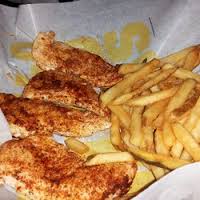
One of the lowest calorie options on the menu--  "Naked" Tenders and fries.  Over 700 calories.

One of the lowest calorie options on the menu– “Naked” Tenders and fries. Over 700 calories.

So just go crazy once in a while!

It’s not that easy.  While cheat meals are allowed, and necessary, you have to look at how consistent deviations can affect progress.  If you eat at maintenance, that means no fat was lost that day–  However, if you eat above maintenance, that means there’s potential for you to gain weight, thus setting you back on your path toward the goal.

Why do you bring this up?

Most people recommend bulking before cutting if you’re starting out.  I’m more inclined to recommend the opposite, which a minority of physique coaches and trainers recommend.  Cutting down isn’t easy, and the less time you have to spend doing so, the better.

Also, just keep that in mind if you’re out to dinner with someone who’s cutting.

Archive for the ‘Nutrition’ Category:

Carbs are Necessary

I’m a big proponent of measuring everything you eat–  A lot of people think it’s annoying, but once you get the hang of it, there’s not a whole lot to it.  What’s more, once you start to understand the amount of calories in food, you find it difficult to not measure food.  More importantly, though, unless you measure what you’re eating, you have no idea how many calories you’re consuming, which is the most important thing to track.

Well I Measure!

Here’s an important note, though. . .  How do you measure your food?  I live in the U.S., so naturally, I would use Imperial measurements like ounces, or just the recommended serving size.  Then, I looked at the back of a bag of clean tortilla chips, and noticed that the recommended serving size was “9 chips.”  What?  9 chips!?  What size of chips are we talking about here?

Then I looked at the serving size on a bottle of Wazy Maize (A carbohydrate supplement), and I got this:  “1 Heaping Scoop.”  My heaping scoop may be way different than everyone else’s heaping scoop, so what does that mean!?

Basically, if you go by most recommendations, you’ll be lost.  If you’re doing that much and are happy there, at least you’re counting!  For someone like me, though, I have this urge to know exactly how many calories I’m consuming.

How can I be more precise?

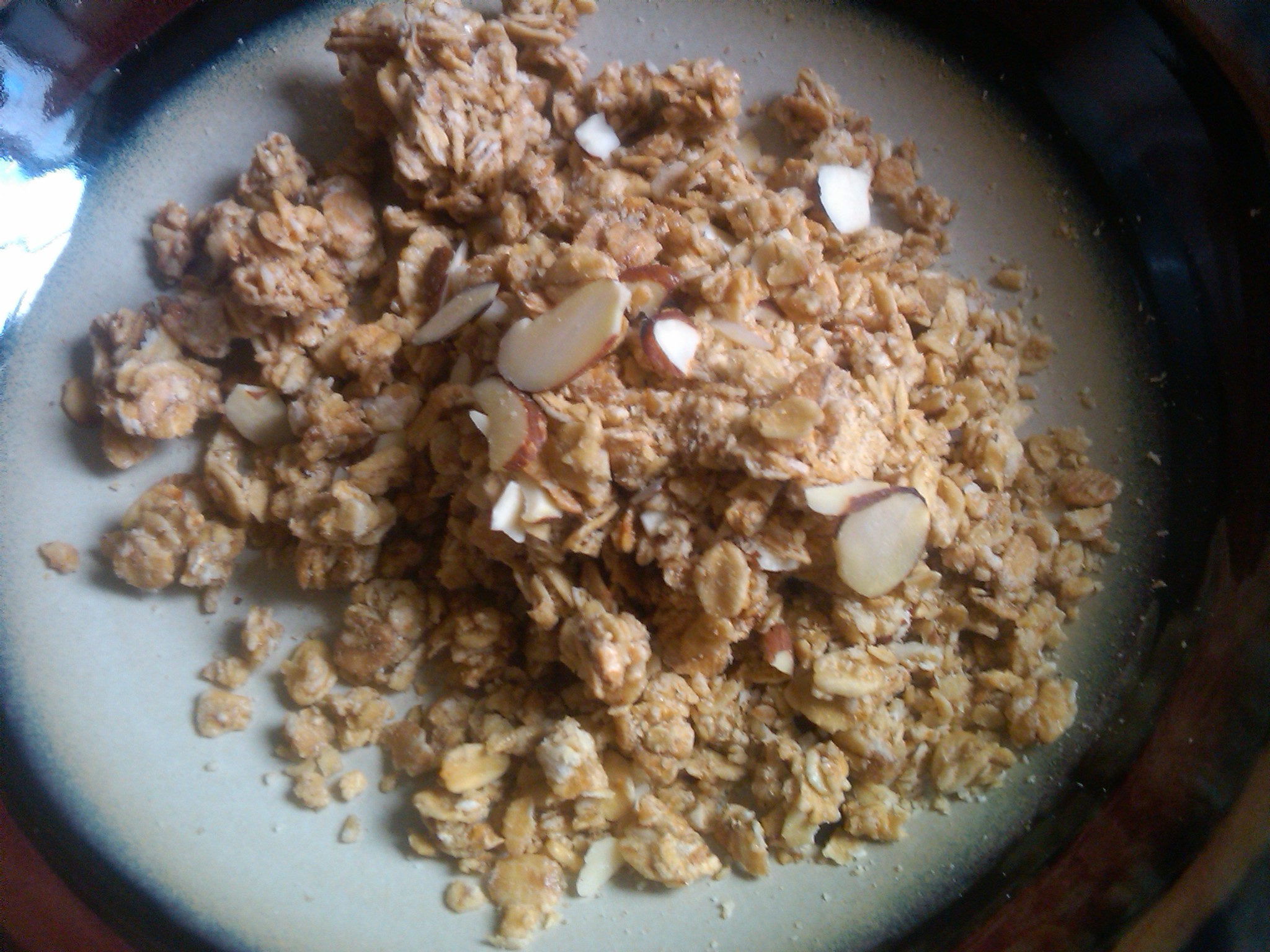
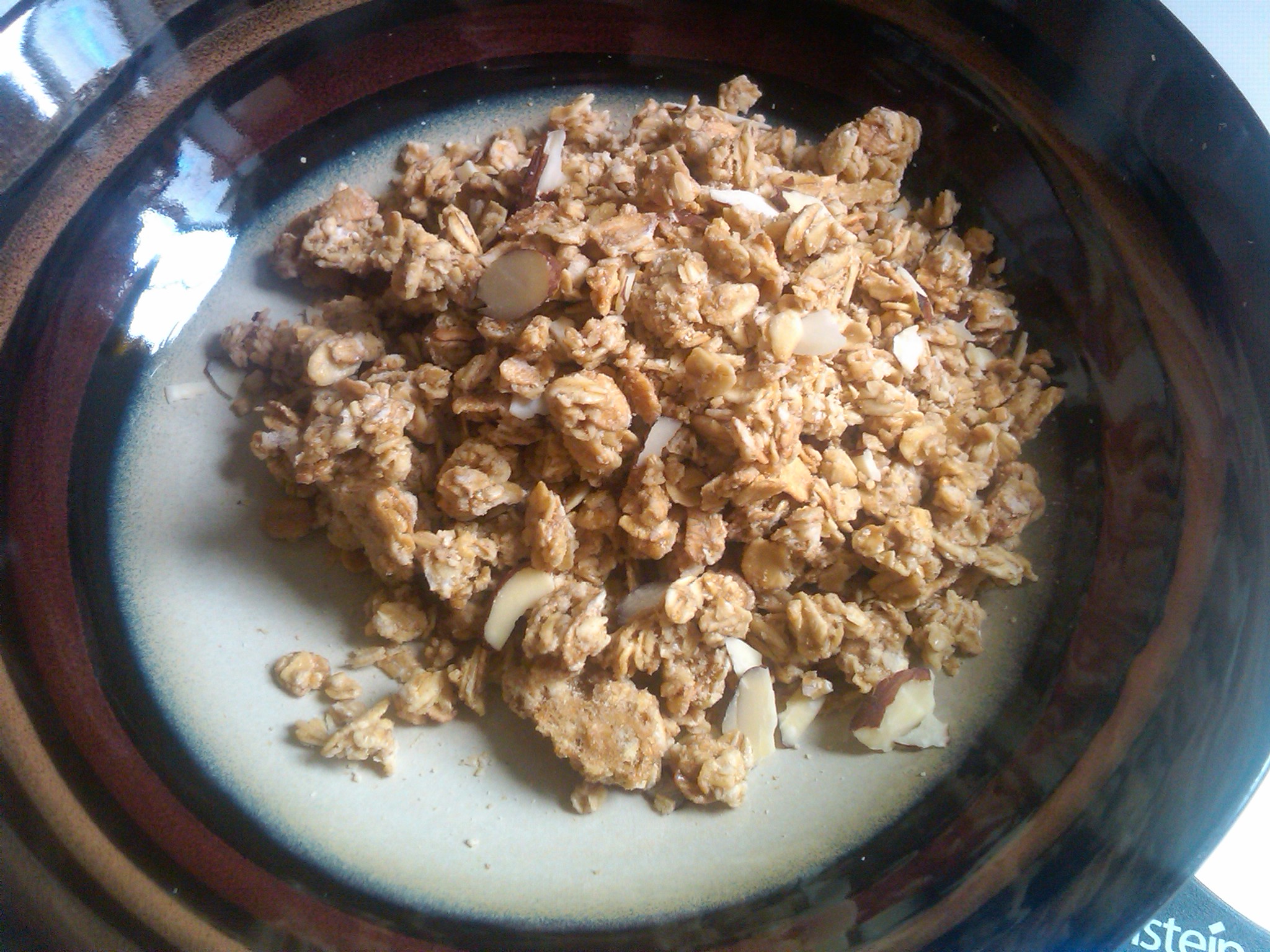
The recommended serving size can come in one of two ways:  An imperial measurement, or as an amount of product.  Beside their recommendation is the actual weight of the serving, displayed in the highly accurate metric measurement of grams.  For an example, we’re going to look at a box of organic granola.  The serving size is 3 / 4 C, or 55g;  each serving contains 250 calories.  That’s a lot of calories in a relatively small amount of food, which means big variances in measurements equate to big differences in calories.  So here’s what 3/4 C looks like:

Three Quarter Cups.

Three Quarter Cups.

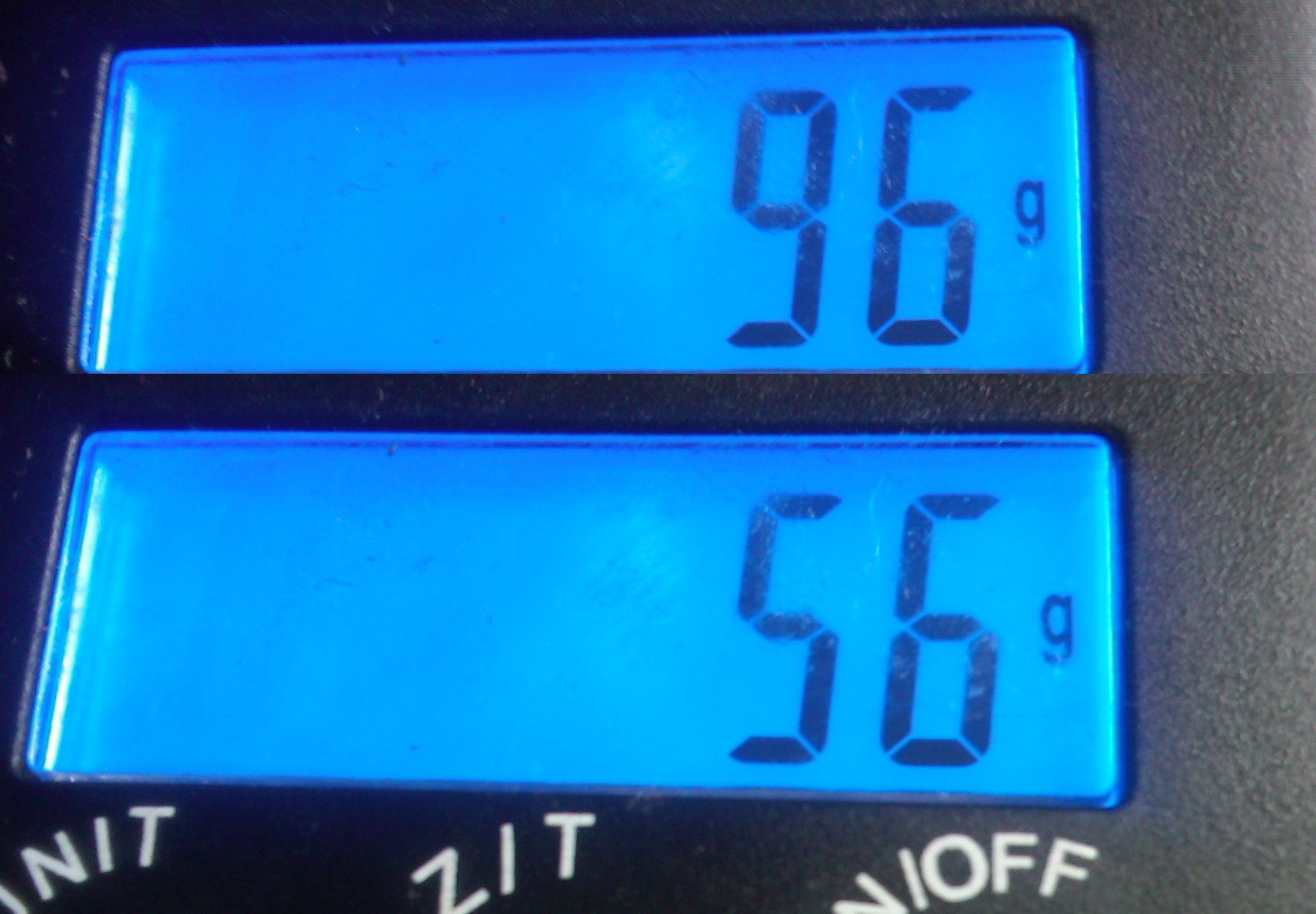
Here’s what 56g looks like (My scale doesn’t do odd numbers, so I have to add 1g to the serving size):

56 grams.

56 grams.

Maybe that’s not a good comparison–  They look nearly identical.  Let’s compare the measurement on the scale.  On the top we have our Imperial measurement (3 / 4 C), and on the bottom we have measured it out in grams:

Almost a serving difference.

Almost a serving difference.

It’s amazing the difference when you’re accurately measuring.  For the record, by using the imperial measurement and not the metric, I was consuming an additional 181 calories.  That means that I thought I was eating 500 calories below maintenance, but it was closer to only 300 below.

My Recommendation

I’ve started transitioning over to measuring everything in grams.  I’ve been on a cutting cycle for some time now, and have been wondering why I haven’t been losing fat at the rate I should be.  This is probably a large part of the reason, if not all of it–  I eat granola nearly every day, and maintain a 500 calorie deficit.  Without knowing it, I was really only eating 319 calories below maintenance–  And that’s only one food I’ve looked at.  Now it makes sense why I wasn’t losing a pound of fat a week.

If you want to be as precise as possible, use the metric system.

Archive for the ‘Nutrition’ Category:

Carbs are Necessary

I usually tell people that “I’ve been there.”  My body type is “Endomorph,” which means losing fat is not easy and my body resists as much as possible.  I was once a total gym newbie.  I sought quick fixes to try and cut down and “tone.”  I still tell people that “I’ve been there.”  For some time I was eating no carb, tried nutrient timing diets, fasted cardio, and did all of these different things in an effort to lose fat as fast and efficiently as possible.  None of it really helped, and after plenty of reading and research, I found that I was getting in the way of my goals.  At this point, I eat a great deal of carbohydrates, and am still leaning out at the same rate (if not faster) than I was when I was eating paleo / no carb.

I have officially reduced every aspect of my nutrition and workout program to science–  No more pseudoscience involved!

I now feel as though I have had a huge breakthrough in my life, and I want to do everything I can to spread the word to as many people as possible!

. . .  Most won’t listen, though.  So instead, I usually leave a long winded comment in the hope that just one person will do a little research and realize that there is a better way to reach your goals.  I can definitely say that I wish someone had done that for me so I could have stopped wasting my time a long time ago.  Case in point, this pin on Pinterest.  This isn’t the first time I’ve debunked something from Pinterest, and it certainly won’t be the last.  Protip:  If you found the health / nutrition advice on Pinterest, there is a 95% chance it’s completely wrong or not helpful.

The best collection of fitness myths since 2010!

The best collection of fitness myths since 2010!

The whole infographic seems like an advertisement for paleo dieting / no carb dieting, as the main goal seems to be proving that eating a lot of dietary fat is okay.  For the record, eating a lot of dietary fat is not bad;  there are drawback to eating fatty foods, such as their high energy (calorie) content, but overall, you need to eat dietary fat.  I digress. . .  The author’s plan of attack is to demonize carbohydrates so that you’ll think, “The carbs are the reason I haven’t lost weight!”  This is absurd, and I can’t let this stand.  So, here we go; and I’m warning you. . .  This is a long one:

Debunking “Carbs are killing you!”

  1. Claim:  Insulin turns off fat burning.  Debunked:  It’s true that insulin turns off fat burning, but that’s perfectly okay.  Fat burning (or lipolysis), is the primary metabolic pathway for the body–  During periods of exertion, such as exercise, your body burns a combination of fats and carbohydrates for fuel.  The rest of the day, and while you’re sleeping, your body is oxidizing fat for fuel;  thus, the amount of time spent in a lipolytic state is far more than in a glycolytic (glucose burning) state.  Plus, shutting off lipolysis isn’t a bad thing–  When insulin levels are elevated, that means you’re fed.  Your body is now digesting the food it was given, and is determining where it all needs to go.  Insulin binds to different cells as a sort of valet, telling blood glucose to enter if needed.  This is important for muscle tissue repair (and growth), for glycogen storage, and for performance, if consuming carbs during a long workout.  If your body has any glucose left over, then it is stored as fat.
  2. Claim:  Thinking of eating carbs will stimulate insulin secretion.  Partially Debunked:  Thinking of any food can actually stimulate insulin secretion, whether there are carbs in the dream meal or not. . .  This was just another attempt to paint carbs in a bad light.
  3. Claim:  Insulin is bad because it promotes fat storage;  you will get leaner if you eat less carbs.  Debunked:  So the whole point of the pin is to show the cycle of how eating carbohydrates can make you “fatter.”  They don’t go into detail about all of the great things carbs do, though:
    • Glucose is the primary metabolic pathway for anaerobic activity–  If you’re lifting weight or sprinting, your body needs carbs, otherwise it may cleave skeletal muscle, which it can deaminate to create glucose;  thus, carbohydrates are incredible muscle sparing.  Wouldn’t you rather eat carbs than have your body eat your muscle mass?  Plus, skeletal muscle is what makes you appear lean, and if your body is consuming that for energy, you may lose weight, but not fat.
    • Insulin drives nutrients into cells–  This is why athletes consume carbs and protein after training.
    • Carbohydrates can easily be converted to Glycogen, which is then stored in the muscles for later use.  This makes energy readily available whether you’re fed or not, and whether the process is aerobic (primarily fat burning) or anaerobic (primarily glucose burning).
  4. Claim:  Carbohydrates are completely responsible for insulin secretion.  Debunked:  The article conveniently fails to mention that protein also stimulates insulin secretion;  if you’ve ever opted for a steak without the side of potatoes to avoid insulin secretion, you did not achieve your goal.
  5. Claim:  Fats don’t make you fat.  Carbs do!  Debunked:  Neither fats, nor carbs make you fat. . .  Calories do.  So many people get so caught up in their macronutrients, that they forget the most fundamental rule to fat loss:  If you consume less calories than you use, you will lose fat.  If you consume more calories than you use, you will not lose fat.  Just ask Professor Mark Haub, who did an experiment and lost 27 pounds by controlling his calories while only eating snack foods  (Doughnuts, twinkies, chips, etc.).  You can read more about it here.

This infographic is seriously flawed, and tries so hard to draw conclusions and correlations that are either fallacious, or wrong.  The most important takeaway is number 5 above:  You can’t blame any particular food for inhibiting fat loss. . .  It all comes down to calories in / calories out.

Sources and Links

Archive for the ‘Nutrition’ Category:

Carbs are Necessary

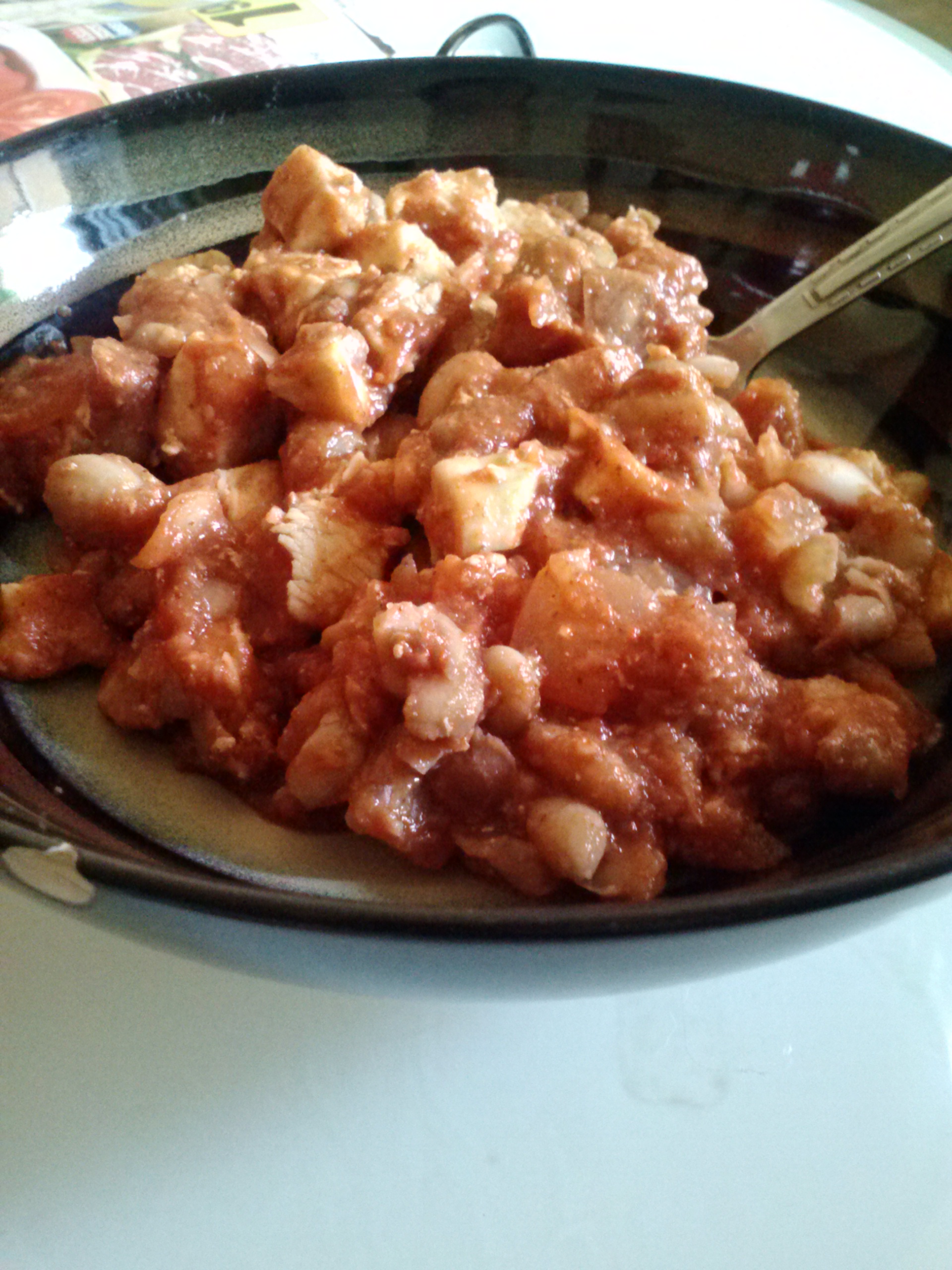
This chili is soooooo tasty! It is gluten-free, egg free, nut free, and super clean!

1/4 cup raw pinto beans (yep, I soaked them and cooked them all by myself)!
1/2 cup organic tomato sauce
7 oz chicken
Chopped onion to taste
Giant dash of ground Onion
Giant dash of ground Garlic
Giant dash of cayenne

Calories: 393
Fat: 3g
Protein: 55g
Carbs: 38g

I soaked the beans for about 7 hours, then rinsed and let simmer for about another hour and 15 mins. I cooked the chicken, threw all of it into a pot, and mixed it up! Voila! Husband can be a bit picky with his beans, and he approved! (Only my second time making pinto beans from raw…first time…no success LOL).

Clean Chick

Clean Chicken Chili


Archive for the ‘Nutrition’ Category:

Carbs are Necessary

The vast majority of supplements out there don’t do anything for you, but for every 5 that do nothing, there’s 1 that is incredible!*  Today, we’ll be talking about one in particular that was part of a new “study,” a potentially harmful study that is being taken much more seriously than it should be.

Fish Oil.  Fish Oil supplementation is a cheap, easy way to supplement your diet with healthy Omega-3 Fatty Acids.  Taken in dosages between 1 and 4 gels a day, fish oil is an anti-inflammatory that has a wide range of potential benefits, including:

  • Potentially reducing blood pressure in those suffering from hypertension.
  • Potentially protecting against Parkinson’s Disease
  • Helps the prevent the brain from cognitive problems associated with Alzheimer’s.
  • It can slow the growth of tumors in cases of prostate cancer
  • May reduce depression
  • Can decrease severe symptoms of psoriasis
  • Can aid in weight loss
  • And much more!  (Seriously, this list could go on forever.)

As you can see, there’s a lot of benefits to supplementing with fish oil.  Now, recently, there was a study that allegedly linked fish oil supplement intake with the development of prostate tumors.  I’ve seen quite a few people in my news feed asking for the opinions of others, and whether or not they should stop taking the supplement.  For the first time in a while, I watched as a scientific study set off a sort of firestorm, but in reality, this is nothing to worry about, and when it comes down to it, the study seems seriously flawed.

There’s a fantastic article here that went through and thoroughly debunked the study, but here’s a short summary of why you should pay no attention to it:

  • Time is not a factor at all in this study, which is important because many prostate cancer patients may begin supplementing after an initial diagnosis because of the “Cancer Protecting” properties of fish oil.  Also, time is a major factor because of the method of determining circulating Omega-3s and Omega-6s.
  • They drew these conclusions from a pre-existing study known as the “SELECT Trials.”
  • Fish oil has been proven to decrease mortality in individuals with prostate cancer, a fact that is not referenced in the study.
  • Here’s a fantastic tidbit from another article about the study:  “Due to the nature of the study, it was not possible to tell for certain whether the elevated blood levels were due to men taking supplements or eating fish rich in omega-3s.”

As is the case with most things, and with most studies, more research is always welcome, but at this time, it’s a good idea to politely disregard this study.  Don’t stop with the fish oil!

*As far as statistics go, I made that up.  Sounds about right to me, though.

Sources and Links

Archive for the ‘Nutrition’ Category:

Carbs are Necessary

A lot of people have a tendency to get too crazy with not just their workout routines, but their nutrition plans and everything else in life–  I foresee it will only get worse as time goes on because of the overabundance of information out there, and the Internet makes everyone feel like what they’re saying is right, even if it’s just “BroScience.”

. . .  It’s a problem.  Don’t get me wrong–  I’m guilty of this too.  I will read about new nutritional news, workout plans, etc., and will immediately want to try it out.

There are a few things to keep in mind, though.  If your plan is working, you don’t need to change anything.  (Unless it’s something like cleaning up your diet.)  If you’re getting the results you want, there is no reason to move on to anything else unless you’re doing something considered unhealthy (or unsafe), and are moving to the better option.

More importantly, don’t complicate things–  Remember “K.I.S.S;”  “Keep it Simple, Stupid!”  This is what everyone should live by, as it’s the easiest way to lose track of the basics, and the basics are what are proven to work.

Want to try a weight training program split into 6 days where forearms and biceps have their own day, and you do 12 sets that day?  K.I.S.S.!  Full body workouts, or smaller splits are the most effective, and anything past that is insane.  Plus, if 6 time Mr. Olympia Dorian Yates says low volume training is effective, it’s worth listening.  (After a lot of research, we’ll be doing a post about low volume training soon.)

You spend how long in the gym on Biceps Curls?

“Hah! You spend how long in the gym on Biceps Curls?”

Want to try and incorporate a lot of different ideas from a lot of different fad diets to try and create your own “Super Diet”!?  K.I.S.S.!  Fad diets are set up to fail, and even if you’re going to try and follow a fad diet, only follow one.  Those things are hard enough to stick to without over complicating things.

"If I read every one of these, I will finally be able to lose weight, right?

“If I read every one of these, I will finally be able to lose weight, right?

Never been to the gym?  Is your goal to suddenly lose 100 lbs?  Do you plan on getting there with 7 days in the gym doing non stop cardio and starving yourself?  K.I.S.S.!  You’re setting yourself up to fail–  You can workout anywhere from 3 – 6 days a week and still reach any goal you have, and starving yourself is not necessary.  Keep it simple- –  A simple workout plan coupled with eating 500 calories below maintenance will make it happen at a great pace, safely.

I could keep going on with examples, but ultimately, the point I’m getting at is, don’t complicate things, and don’t forget the basics.  Too many people get caught up in all the fine details and all of the noise polluting the health & fitness industry, so much so that the basics are ignored, and everyone has a difficult time achieving their goals.  Stuck?  Confused?  Lost?  K.I.S.S.  Everyone’s goal can be met with calories in vs. calories out, simple workout routines, and simple cardio-respiratory exercise.

Play smart, and keep it simple.

(Side note:  You may have noticed the name of the blog changed–  There are big things coming up soon for us, and we’ll be starting a new health and fitness website called “DeVine Physiques.”  Stay tuned for details!)

Archive for the ‘Nutrition’ Category:

Carbs are Necessary

I’ve seen a lot of misconceptions around organic foods thrown around, and I figured it would be a great idea to clear up a few of these ideas.

First, let’s start by saying that I am all for organic food, and I’m all for “conventional food;”  Whatever fits into your lifestyle, your budget, your goals, and what you stand for is what works for you.  I choose to eat organic when possible, and there are some foods that I really don’t care whether or not I eat them organic–  It all comes down to choice, and that choice is yours to make.

That being said, on with some myth debunking!  (And it’s worth noting that this is strictly for an American audience–  I’m not familiar with Organic standards abroad.)

You probably have some misconceptions about this.

You probably have some misconceptions about this.

Let’s start by defining what “Organic Food” is.  It is food that is heavily regulated by the USDA under the guidelines of the National Organic Program (NOP) and Organic Food Production Act of 1990.  These guidelines define what must be followed in order to be certified organic, and they also define what sort of compounds may be used in the cultivation, production, and packing of organic foods.  Any business associated with the production of food can be certified as “Organic,” so long as they follow the strict guidelines.  Processed food that is marketed as “100% Organic” is made with 100% organic ingredients and may carry the “USDA Organic” seal;  Processed food that is “Organic” is made with 95% organic ingredients, and also carries the seal;  A food with 70% or more organic ingredients may be labeled, “Made with Organic Ingredients,” but may not carry the “USDA Organic” seal.

So, there is a very, very brief rundown on what defines organic food–   Now, to bust a myth.

Many people believe that organic food is free of pesticides and herbicides;  That is incorrect.  The difference between “Conventional” and “Organic” in terms of the use of pesticides comes down to what the Secretary of Agriculture defines as organic friendly or not.  What does that mean?  Pesticides used on organic foods must be derived from natural sources, whereas pesticides used for conventional foods may either be derived from natural sources, or synthetic.  The distinction has nothing to do with safety–  Simply the source of the pesticide.  Also keep in mind that the “natural source” of the organic pesticide has nothing to do with toxicity–  Organic pesticides can still be very toxic to humans and animals.  One common organic pesticide, “Rotenone,” is classified by the WHO (World Health Organization) as moderately hazardous;  It is toxic in humans and animals;  Deliberate ingestion can be fatal;  And in a 2011 study, Rotenone was linked to the development of Parkinson’s Disease in farm workers.

. . .  So whether you buy organic or not, be sure to wash your produce thoroughly.

And it’s also worth noting that there is no regulation on the use of the phrase “Pesticide Free” for marketing–  While an organic farmer has to be certified to market his products as organic, no one checks to see if his products are pesticide free if he markets them as such.

Bottom line, though:  Pesticides are everywhere–  “Organic” has nothing to do with that.  We’ll be tackling more misconceptions about organic food in the future, as well!

(A few fun facts on the subject:  The peel of fruits can hold onto trace amounts of pesticides, so if you are worried about synthetic pesticides and are on a budget, you can go conventional for any produce where you don’t eat the peel (Pineapple, Corn, etc.).  Meat can hold onto pesticides, but it all collects in the fat;  Trim the fat to avoid consuming any unwanted pesticides.)

Edit (6/19):  I’m adding links to various sources used while doing research for this article.  Sources may become a permanent fixture in our articles soon.  (You’ll have to forgive my sources not being annotated or properly formatted, as I’m adding these after the article was originally published.)

USDA National Organic Program, Subpart G
“Some Pesticides Permitted in Organic Gardening” from Colorado State University
Gillman J. (2008). The Truth About Organic Farming.
“Organic Agriculture”
Mechanism of toxicity in rotenone models of Parkinson’s disease
Rotenone model of Parkinson Disease

Archive for the ‘Nutrition’ Category:

Carbs are Necessary

I have come up with a plan that will make me millions!  I’m going to write a book!  A fad diet book!  It’s going to be incredible, and is coming to a “Diet” section in a bookstore near you soon.  (Or maybe just in the “Diet” section of the Kindle store, or something.)

I have a lot of competition. . .

I have a lot of competition. . .

Would you like a preview of “The DeVine Physiques Fad Diet”?  I will introduce very revolutionary ideas in this book, including:

  • Eating more protein than carbs so that you will feel full longer, thus making it easier to maintain self control.
  • Eating fruits and vegetables for more nutrients and health benefits.
  • Supplementing with a multivitamin to make sure you get all of your micro-nutrients daily.
  • Encouraging simple and safe workout plans.
  • Promoting a healthy lifestyle.

And that’s not all!  I will even introduce my revolutionary point system to help you track your food and how much you should eat.  How does it work?  You find out your BMR based on your height, weight, and age–  We won’t call it your “BMR,” though, as that’s too scary. . .  How about, “Base Body Demand”?  Maybe my editor will have a better idea.  Anyway!  Here’s an website that will do that for you.  Then, you find out what is “500” below your “TDEE,” only we won’t call it that–  We’ll call it the “Adjusted Body Demand.”  I need to hire someone that can think of catchier wording.  You use the following formula to figure out your “Adjusted Body Demand,” where “X” is your “Base Body Demand,” and “M” is the “Activity Multiplier.”

[X(M) – 500].10

M = 1.2 if you’re sedentary;  M = 1.375 if working out 1 – 3 days a week;  M = 1.55 if working out 3 – 5 days a week;  M = 1.725 if working out 5 – 7;  M = 1.9 if you’re Michael Phelps.

Pictured:  One meal for Michael Phelps, or the average American.

Pictured: One meal for Michael Phelps, or the average American.

As an example, my “Adjusted Body Demand” is 257.  That’s a lot of “points” worth of food!  So, how do we figure out how many points are in something I want to eat?  Look at the nutrition label, and multiply the amount of calories by (.10).  Example:  A 100 calorie snack has a point value of 10.  Make sure you hit the amount of points you have as your “Adjusted Body Demand,” and you will lose weight!

Of course, in my book, I’ll have an easier way of explaining all of that, but there’s a preview of our fad diet book, due out in 2014!

. . .  I wonder if I should actually write that.

Recent Blog Posts