Follow us on Facebook for Training Tips
Physique Coaching Tips from Twitter
DeVine Physiques on Yelp!

Archive for the ‘Nutrition Myth’ Category:

What is a “Complex Carb”?

Do you know what a complex carbohydrate is?  I would argue that most people don’t, as there are a lot of misconceptions about what makes a complex carb.  The term is thrown around a lot, and is used to mean “slow digesting,” or in some really incorrect cases, “healthy.”  One of my favorites is when people recommend only eating complex carbohydrates like fruits and vegetables.

. . .  Really?  Fruits?  Fruits are mostly “simple carbs,” which many associate with being “bad” for you.

When it comes down to it, whether a carbohydrate is “simple” or “complex” really doesn’t matter.

What is a carbohydrate?

In simplest terms, carbohydrates are sugars.  All carbohydrates, when digested, will be broken down into one of 3 simple sugars, which are called “Monosaccharides;” you may recognize the names of them: Glucose, Fructose, and Galactose.  (This is why carbohydrate choice ultimately doesn’t matter, since all carbohydrates consumed will be broken down into one of these, a topic I’ve covered before.)  (Source)

How are carbohydrates classified?

In broadest terms, carbohydrates can be broken down into one of two camps:  Simple Carbs, and Complex Carbs.  The difference between these is a very easy to understand distinction:  If the carbohydrates are present as single (or double) sugars, it’s a simple carb; if the carbohydrates form longer chains (of more than 2 sugars), it’s a complex carb.  Another name for a complex carb is “starch,” which is defined as a long chain of sugar molecules.  (Source 1 | Source 2)  You’ll notice that “starch” is used to refer to potatoes, which are frequently called “simple carbs” and people are told to avoid them.  That’s not the case.

Pictured: Complex Carbs.

Pictured: Complex Carbs.

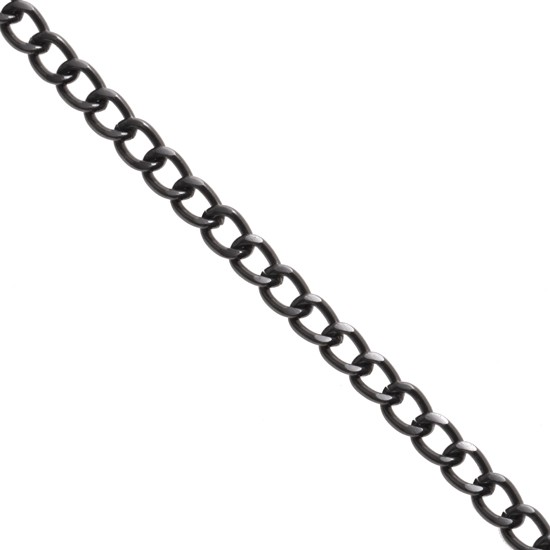
That’s all there is to it.  An easy way to think of carbs is like a chain–  Each link on the chain is a single sugar.  If you have 2 or less links, you don’t really have a chain, so instead, you have sugars:

8534439-abstract-3d-illustration-of-single-chain-link-with-golden-element

If you 3 or more links, that’s considered a chain, and that is a complex carbohydrate.  This includes a wide variety of foods, from potatoes to rice (both brown and white); from bananas to broccoli:

metal-chain-110225-gunmetal


So should I still pick brown rice over white if they’re both complex carbs?

If you’re going for the most healthful choice, going with the “brown” versions of foods is the better choice–  Brown Rice has more fiber, phytochemicals, and micronutrients than white; while both are tasty and fine to eat, if you want to make a choice that will offer more nutrition (and possibly keep you full longer), brown rice will be better.  Same with breads and other grains–  The whole grain option is a smarter choice, but that doesn’t mean that the alternative isn’t a complex carb.

Don’t get caught up on the nomenclature bandwagon–  Make smart choices that are right for you (which are hopefully the healthful choices), and you will be fine!

Archive for the ‘Nutrition Myth’ Category:

What is a “Complex Carb”?

Welcome to Part 2 of my series on the principles behind Flexible Dieting, also known as IIFYM, or “If it fits your Macros.”

What is a Calorie?

In the simplest terms possible, it’s a unit of energy that your body utilizes.  If you want a more technical response:

“The amount of heat required to raise the temperature of one kilogram of water one degree Celsius” or: “A unit equivalent to the large calorie expressing heat-producing or energy-producing value in food when oxidized in the body”  (Source; More Reading)

Apparently we've found the answer to energy independence.

Apparently we’ve found the answer to energy independence.

Okay, so a Calorie is a unit of energy.

If you think of your body like a car, Calories are like gasoline;  Calories are stored as energy in food, and here’s how much is stored in each macronutrient:  (Source)

  • 1 gram of Carbohydrate yields 4 Calories
  • 1 gram of Protein yields 4 Calories
  • 1 gram of Fat yields 9 Calories.

It’s worth noting that while Alcohol is not a macronutrient, it does yield energy–  1 gram of Alcohol yields 7 Calories.

So here’s how to think about it–  When your body digests and absorbs food, it frees up the energy stored in the food.  It either uses it for immediate energy, or stores it (as fat) for later use.

So in terms of energy, a Calorie is always a Calorie, since it is just a measure of the amount of energy in a food.  This is one of the fundamental principles behind flexible dieting–  Remember from last weeks post:  If you want to lose weight, you need to consume less energy than you burn.

Truth.

Truth.

Are there times when all Calories are not created equal?

The short answer:  Yes.

What is the long answer?

I have to reiterate that when you’re looking at energy balance, all Calories are equal.  We don’t want to look at food purely as energy, though–  There’s the entire “healthful diet” thing that everyone should consider.  When it comes down to what you eat, it should provide plenty of vitamins, minerals, phytochemicals, fiber, etc.  And this is where all Calories are not equal.

If we compare 100 Calories of banana vs. 100 Calories of soda, you’ll notice that they both have 100 Calories.  That’s obvious, right?  I mean, I said it’s 100 Calories of each.

Here’s where they differ, though; let’s look at what the Banana yields (Nutrition Data):

  • Energy derived from the macronutrients present–  Carbohydrates will be broken down into simple sugars (Monosaccharides) during digestion.
  • Fiber, which has many important healthful benefits from colon health to reducing cholesterol, among other things. (Source)
  • Micronutrients: These are Vitamins and Minerals, which your body requires to maintain physiological functions. (Source 1, Source 2)
  • Phytochemicals: These are chemical compounds that have been shown to offer great health benefits, but they are not required for survival, and more research needs to be (and is being) done on them. These are the chemicals people are referencing when they make the claim that “Red Wine is good for you;” they’re talking about “Resveratrol.” (Source 1, Source 2, Source 3)

Here’s a look at what the soda yields (Nutrition Data):

  • Energy derived from the macronutrients present–  Carbohydrates will be broken down into simple sugars (Monosaccharides) during digestion.

As you can see, there’s a great benefit to picking 100 Calories of banana over soda!  On top of that, sugary drinks take little time to digest, meaning they offer a lot of energy in a short time, and do nothing to satiate you.

While one could argue that this is an unfair comparison, it’s the sort of decisions people are faced with in every day life.  We could make the same comparison between a banana and a bag of chips, since both the chips and the soda are empty calories.

So what do you recommend?

Officially, as a nutritionist, I recommend you try and derive as much of your food from whole food sources as possible–  That means you can maximize satiety, micronutrient content, phytochemical content, and (usually) the amount of food you eat.  This is important to maximize the healthfulness of your diet.  Of course, that’s not an option for all of us, and we all enjoy foods that are processed (or just not whole foods). . .  That’s my “official” recommendation, though.

Here’s what I stick to on a daily basis for myself:  I try to get as much variety as possible in my diet when it comes to food choices, food groups, and even the colors of different foods (the color of fruits and veggies can clue you into the different phytochemicals present).  I also limit my consumption of non nutrient dense foods (So called “Free Foods”) to 1 – 2 food choices daily (Examples include cookies, pretzels, buttermilk pancakes, etc.) which usually comes out to between 150 and 200 Calories daily;  although, there are days where I don’t eat any free foods since I really enjoy everything I eat!

And that is the subject of next week’s post!  Most people think about a healthy lifestyle and think they can’t enjoy the food they eat.  Well, those people are not following sound advice.  Check back next week for Part 3 of this series where we talk about the importance of being “Non-restrictive” and flexible; hence, “Flexible Dieting.”

Any questions about this post?  Please ask!

Archive for the ‘Nutrition Myth’ Category:

What is a “Complex Carb”?

I’m going to write a series of posts talking about “Flexible Dieting;” a.k.a. “IIFYM.”  IIFYM stands for “If it fits your macros,” which is the idea that you can eat whatever you want to achieve changes in body composition, as long as it all fits into your Calorie and macronutrient ranges for the day.

I tend to veer away from using the term “IIFYM” in favor of “Flexible Dieting,” because there’s a sort of negative connotation with IIFYM; a lot of people think it means making terrible food choices for every meal.  While I’m sure there are those out there who do make poor food choices the majority of the time, there are also many out there who do it right.

What does that mean, “Do it right”?

This is what I’ll be examining over the next few posts.  In this first post, I will talk about why flexible dieting works, and how you’re able to eat everything from vegetables to ice cream, and still achieve whatever body composition goals you want.
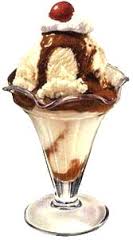
Think of this as energy and nothing more.

Think of this as energy and nothing more.

So why would someone want to do flexible dieting?

The biggest reason I advise flexible dieting is the flexibility it gives you–  You don’t have to restrict yourself from foods unnecessarily.  If you make room in your daily nutrition for something, you can have it!  An example I give my clients is how much I love chocolate:  I eat chocolate daily.  Pancakes are one of my all time favorite foods:  I eat them regularly.  I eat animal crackers, strawberry preserves, chicken nuggets, etc.  I don’t have to have a “cheat day,” because every day, I eat foods I enjoy based on whether they fit into my goals; not based on some arbitrary distinction between “good” and “bad.”

It’s also very easy to develop a binge eating disorder by unnecessarily restricting yourself–  By being flexible, however, you can avoid that (or work to fix it if you’re experiencing it) by promoting a healthy relationship with food, which is very important!  Now, you can have a serving of ice cream (that fits within your macros) rather than destroying a whole gallon of ice cream because you don’t know when you’ll allow yourself to eat it again.

You can’t be serious.  You can’t lose weight with ice cream!

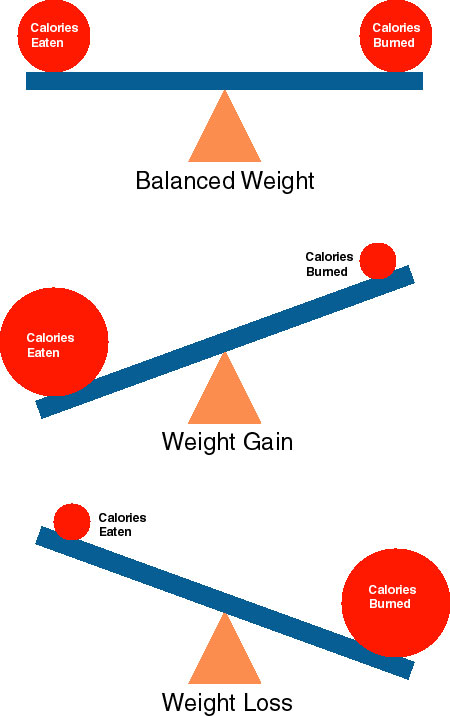
The basic principle behind weight loss, and weight gain, is “Energy Balance.”
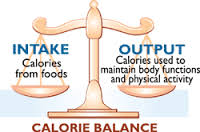
url

If you want to lose weight, eat less Calories than you burn; if you want to gain weight, eat more Calories than you burn.  It’s that simple. (Source | More reading about energy balance)  There are some that believe that they’re made differently; that they’re somehow special and live outside the laws of our universe.  If you think that about yourself, I’m sorry to break it to you, but you are not exempt from the First Law of Thermodynamics.  If you are, please submit your body to science, as you’re the first being that has managed such a feat.

But I’ve heard certain foods make you fat and others make you skinny!

If someone tells you that certain foods, by default, make you fat, they don’t know much about nutritional science.  Likewise, if they say a food will make you skinny, they’re terribly misinformed, and are likely trying to sell you an agenda.  To illustrate this point, let’s discuss the three main macronutrients (commonly referred to as “Macros”):  Fats, Carbohydrates, and Proteins.  As a blanket statement, we can say that all foods are comprised of a combination of these, as these are “energy yielding” nutrients–  That’s just a fancy way of saying they contain Calories.  In fact, a “Calorie” is really just a measure of how much energy is contained in the food from the combination of macros.  (Source)

A common misconception about macronutrients is that your body can differentiate where it came from–  People claim there is a magic sensor inside your body that tells your body if the sugar molecule you consumed came from ice cream vs. a banana, and it should treat it differently.

Your body can’t.

This is why flexible dieting works.  In the body, all macronutrients are broken down into “substrates;” Carbohydrates, no matter where they came from, get broken down into one of 3 “Monosaccharides;”  Proteins, no matter where they came from, get broken down into individual amino acids;  Fats, no matter where they came from, get broken down into (or remain as) triglycerides.  (More reading on Macronutrients)

Are you sure that’s right?

Yes.  To illustrate, though, let’s look at two different foods, and what will happen when eaten.  Let’s take a twinkie.

url

A twinkie has 4.5g of Fat, 27g Carbohydrates, and 1g Protein.  Let’s compare that to a 100g of avocado: 15g of Fat, 9g Carbohydrates, and 2g Protein.  In both cases, the Fats will be broken down into triglycerides; the Carbohydrates will all be broken down into one of three monosacharides (Glucose, Fructose, or Galactose); and the Proteins will all be broken down into individual amino acids.

I’m still not convinced.

Let’s take an even simpler example:  Let’s say you have a can of cola sweetened with high fructose corn syrup, a bottle of cola sweetened with sugar, and a banana–  3 examples that are all very high in carbs.  What will all of the carbs in these examples be broken down into?  1 of 3 monosaccharides:  Glucose, Fructose, or Galactose; and they’re all the exact same molecule.  (Source)

Truth.

Truth.

I’m still not sure I believe you.  How can you lose weight eating “bad foods”?

First off, I can’t think of anything that I’d call a “bad food.”  There are foods that aren’t very nutritious, but it’s still not a “bad food.”  Thinking of foods in terms of “good” and “bad” is a poor mentality to have.  Also, there’s a fantastic story about a nutrition scientist that wanted to demonstrate the principles of energy balance to his students by following a 10 week “convenience store diet,” and he ended up losing 27 pounds.  (Read about it here)

So I should go eat twinkies all day!?

Not exactly.  While it’s true that a “Calorie is a Calorie” in terms of body composition / energy balance, there is something else to consider.  In my next post, I’m going to talk about nutrient density and variety, which addresses this.  Many people will make the claim that not all Calories are created equal;  from a healthful diet standpoint, they do have a point; in terms of fat loss, though, they’re way off!

Archive for the ‘Nutrition Myth’ Category:

What is a “Complex Carb”?

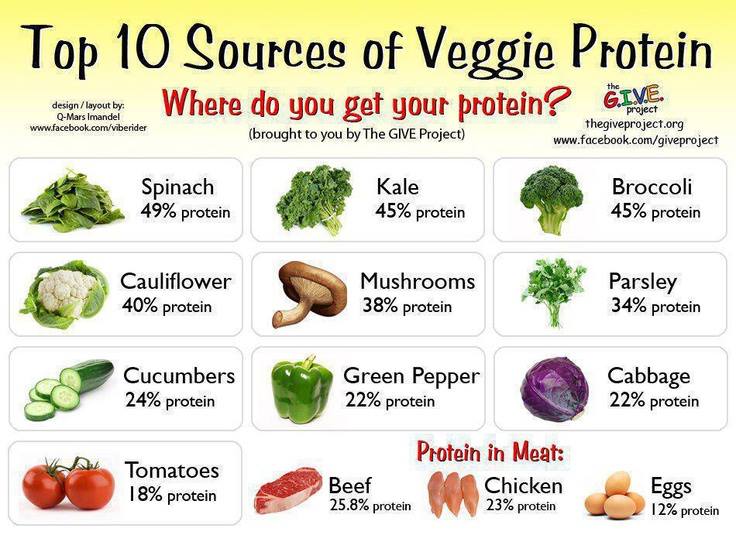
There is so much misinformation on the Internet, and it is truly the reason why everyone over complicates everything related to health, nutrition, and exercise.  It’s not isolated to just that, though.  I would venture to say that 80% of the info-graphics on varying topics don’t cite sources, and are usually wildly inaccurate.  I digress. . .

Case in point, this little gem I found recently.  Now, I don’t want to make any implications about where this may have come from, or who may have made it, but first, let’s look at some of the information they claim:

Sources of Protein

This is so incorrect.

So, obviously, they have an agenda. They’re trying to make the case that you could derive more protein from plant based sources than animal based sources.  While I agree that there are plenty of fantastic plant based sources for protein, they don’t compare to animal based sources as a percent of calories–  Furthermore, the information presented here is completely false, and you can easily look up the information yourself.

There are databases where you can look up the complete breakdown of virtually all foods–  These break downs include macronutrients, micronutrients, amino acid profiles, energy content, calorie percentages, and even more than all of that.  The one I use is Nutrition Data.

Now, let’s make some comparisons based on this false chart:

I could go on more, but I think you can see where this is headed.  Most people would (hopefully) look at their claims about chicken and eggs and see right through the nonsense, but there are plenty of people out there who won’t make that connection, and could be listening to a shoddy info-graphic for information.

. . .  And really, if you have to spread misinformation to advance your agenda, I’m going to go out on a limb and say you’re doing it wrong.  The truth is much more powerful than lies–  It may not be as sexy, and it may take more time to get people to listen to you, but in the end, it’s better than creating a castle built upon a foundation of lies.  I believe that, at least.

It’s so easy to share a photo without thinking about the content, but before you blindly share a photo, maybe look for a reliable source, or do some research on it first!  Remember:  You can’t trust everything you read on the Internet. . .

It has to be true!

It has to be true!


Archive for the ‘Nutrition Myth’ Category:

What is a “Complex Carb”?

I was recently reading the comment section of an article, when I came across a particular gem that just. . .  It actually gave me a headache.  I won’t attribute this to the author, nor will I link the article, but I wanted to take a moment to dissect this comment  (The rant about the government was deleted because it’s not necessary):

“Your understanding is flawed. Obese Americans are not obese due to their caloric intake, it is the vast amounts of processed carbs and simple sugars. They spike our blood sugar and cause our natural metabolic mechanisms to adjust and begin storing the sugars as fat. You could eat the exact same “amount” (calories) of low carb diet and be much healthier.

[…]

Well, if you really want the people to have freedom of choice, you need to be honest about the choices available. You can not support one above all others; ignoring science and logic; and force feed those ideals to children at a young age through the public school system.”

Oy.

Oy.

“Your understanding is flawed. Obese Americans are not obese due to their caloric intake, it is the vast amounts of processed carbs and simple sugars.”

So, to start, the author states that the person they’re responding to doesn’t understand metabolism.  By the end of this, you’ll understand why the author should have started their comment with: “My understanding is flawed!”

Simply put, Americans that are obese to the degree it shows are, in fact, obese because of excess calories.  In apparently healthy individuals, you have to eat an excess of calories to gain weight.  (There is an exception for metabolic depression and hypothyroidism, which aren’t the epidemic most people make them out to be; especially since metabolic depression mostly affects physique competitors.)

Here is an exception:  Obese Americans that don’t show it (Excessively “skinny-fat” individuals that, based on their body fat percentage, can be classified as obese) could become obese because of excessive carbohydrate intake while eating less than their TEE (Total Energy Expenditure), and not eating enough protein to maintain nitrogen balance.

However, I’m willing to bet that these aren’t the people that the author was referring to.

“They spike our blood sugar and cause our natural metabolic mechanisms to adjust and begin storing the sugars as fat. You could eat the exact same “amount” (calories) of low carb diet and be much healthier.”

This is true that carbohydrates can spike your blood sugar–  This is a natural response to the carbs being broken down into glucose which then enters our bloodstream.  That rise in blood glucose releases insulin which attaches to cells and opens up the door for nutrients to be shuttled in.  Insulin binds to muscle cells so that circulating glucose will get stored in the muscle as glycogen;  insulin also binds to fat cells so that circulating fat (broken down into triglycerides from dietary fat that was consumed with the meal) is stored in fat cells.  Any glucose left over is then converted into fat, which may be stored in fat cells.  (Important note:  Glucose can NOT be stored in a fat cell. It must be converted to fat first.)

Something a lot of people love to point out about insulin is that it shuts off lipolysis (“Fat Burning”) and turns on lipogenesis (“Fat Storage”).  Well, they’re partially right–  In this state, your body no longer has to burn fat for energy, because it has the most efficient energy source circulating already: Glucose.  And they’re partially right that insulin starts lipogenesis, but they fail to point out that the glucose has to be converted to fat before it can be stored as fat–  Until that happens, it’s used for glycogen repletion in the muscles, and as an energy source.

I would also like to take a moment to point out that basically all metabolic systems are running at all times–  Our metabolism is viewed as a light switch, when really it should be viewed as a series of faucets that are always flowing, some more than others.

And one last thing:  A lot of people say, “Insulin is the enemy, so if we don’t eat carbs, we don’t have to deal with the fat storage that goes along with insulin!”  Well, are you also not eating protein, because protein causes an insulin response as well.

To his final point about being healthier by switching the type of calories, I may be inclined to agree–  If you’re eating whole foods instead of processed sugars, then yes, you may be “healthier.”  At the same time, someone switching to low carb with the same amount of calories could also make themselves less healthy by making poor food choices, thus becoming deficient in certain micronutrients.

Note that the author doesn’t state that someone would lose weight by switching the types of calories, just that they would be “healthier.”

“Well, if you really want the people to have freedom of choice, you need to be honest about the choices available. You can not support one above all others; ignoring science and logic; and force feed those ideals to children at a young age through the public school system.”

I appreciate this statement, but in all of their comments on the article, they were proselytizing the paleo diet above all else.  I don’t mean to take a jab at their character, but it’s worth noting.  I digress.

Here, I just want to point out that his assumptions about metabolism are all based on flawed science, and in most cases, “broscience.”  Trying to say that we should not ignore “science and logic” while simultaneously ignoring science and logic is kind of absurd.

Real science can tell you what am optimal diet is;  I can assure you there is no book to sell it, and it will likely never be marketed properly.

It’s worth noting that I don’t advocate eating unhealthy, nor do I advocate eating severely low carbohydrate, nor do I advocate eating too many processed sugars–  I advocate, and follow, a nonrestrictive, science based nutrition approach that is based on an individual and their goals.  For me, that means I derive 25 – 30% of my calories from protein, 20 – 25% of my calories from fat, and 40 – 55% of my calories from carbohydrates.

Sources and More Reading

Archive for the ‘Nutrition Myth’ Category:

What is a “Complex Carb”?

I usually tell people that “I’ve been there.”  My body type is “Endomorph,” which means losing fat is not easy and my body resists as much as possible.  I was once a total gym newbie.  I sought quick fixes to try and cut down and “tone.”  I still tell people that “I’ve been there.”  For some time I was eating no carb, tried nutrient timing diets, fasted cardio, and did all of these different things in an effort to lose fat as fast and efficiently as possible.  None of it really helped, and after plenty of reading and research, I found that I was getting in the way of my goals.  At this point, I eat a great deal of carbohydrates, and am still leaning out at the same rate (if not faster) than I was when I was eating paleo / no carb.

I have officially reduced every aspect of my nutrition and workout program to science–  No more pseudoscience involved!

I now feel as though I have had a huge breakthrough in my life, and I want to do everything I can to spread the word to as many people as possible!

. . .  Most won’t listen, though.  So instead, I usually leave a long winded comment in the hope that just one person will do a little research and realize that there is a better way to reach your goals.  I can definitely say that I wish someone had done that for me so I could have stopped wasting my time a long time ago.  Case in point, this pin on Pinterest.  This isn’t the first time I’ve debunked something from Pinterest, and it certainly won’t be the last.  Protip:  If you found the health / nutrition advice on Pinterest, there is a 95% chance it’s completely wrong or not helpful.

The best collection of fitness myths since 2010!

The best collection of fitness myths since 2010!

The whole infographic seems like an advertisement for paleo dieting / no carb dieting, as the main goal seems to be proving that eating a lot of dietary fat is okay.  For the record, eating a lot of dietary fat is not bad;  there are drawback to eating fatty foods, such as their high energy (calorie) content, but overall, you need to eat dietary fat.  I digress. . .  The author’s plan of attack is to demonize carbohydrates so that you’ll think, “The carbs are the reason I haven’t lost weight!”  This is absurd, and I can’t let this stand.  So, here we go; and I’m warning you. . .  This is a long one:

Debunking “Carbs are killing you!”

  1. Claim:  Insulin turns off fat burning.  Debunked:  It’s true that insulin turns off fat burning, but that’s perfectly okay.  Fat burning (or lipolysis), is the primary metabolic pathway for the body–  During periods of exertion, such as exercise, your body burns a combination of fats and carbohydrates for fuel.  The rest of the day, and while you’re sleeping, your body is oxidizing fat for fuel;  thus, the amount of time spent in a lipolytic state is far more than in a glycolytic (glucose burning) state.  Plus, shutting off lipolysis isn’t a bad thing–  When insulin levels are elevated, that means you’re fed.  Your body is now digesting the food it was given, and is determining where it all needs to go.  Insulin binds to different cells as a sort of valet, telling blood glucose to enter if needed.  This is important for muscle tissue repair (and growth), for glycogen storage, and for performance, if consuming carbs during a long workout.  If your body has any glucose left over, then it is stored as fat.
  2. Claim:  Thinking of eating carbs will stimulate insulin secretion.  Partially Debunked:  Thinking of any food can actually stimulate insulin secretion, whether there are carbs in the dream meal or not. . .  This was just another attempt to paint carbs in a bad light.
  3. Claim:  Insulin is bad because it promotes fat storage;  you will get leaner if you eat less carbs.  Debunked:  So the whole point of the pin is to show the cycle of how eating carbohydrates can make you “fatter.”  They don’t go into detail about all of the great things carbs do, though:
    • Glucose is the primary metabolic pathway for anaerobic activity–  If you’re lifting weight or sprinting, your body needs carbs, otherwise it may cleave skeletal muscle, which it can deaminate to create glucose;  thus, carbohydrates are incredible muscle sparing.  Wouldn’t you rather eat carbs than have your body eat your muscle mass?  Plus, skeletal muscle is what makes you appear lean, and if your body is consuming that for energy, you may lose weight, but not fat.
    • Insulin drives nutrients into cells–  This is why athletes consume carbs and protein after training.
    • Carbohydrates can easily be converted to Glycogen, which is then stored in the muscles for later use.  This makes energy readily available whether you’re fed or not, and whether the process is aerobic (primarily fat burning) or anaerobic (primarily glucose burning).
  4. Claim:  Carbohydrates are completely responsible for insulin secretion.  Debunked:  The article conveniently fails to mention that protein also stimulates insulin secretion;  if you’ve ever opted for a steak without the side of potatoes to avoid insulin secretion, you did not achieve your goal.
  5. Claim:  Fats don’t make you fat.  Carbs do!  Debunked:  Neither fats, nor carbs make you fat. . .  Calories do.  So many people get so caught up in their macronutrients, that they forget the most fundamental rule to fat loss:  If you consume less calories than you use, you will lose fat.  If you consume more calories than you use, you will not lose fat.  Just ask Professor Mark Haub, who did an experiment and lost 27 pounds by controlling his calories while only eating snack foods  (Doughnuts, twinkies, chips, etc.).  You can read more about it here.

This infographic is seriously flawed, and tries so hard to draw conclusions and correlations that are either fallacious, or wrong.  The most important takeaway is number 5 above:  You can’t blame any particular food for inhibiting fat loss. . .  It all comes down to calories in / calories out.

Sources and Links

Archive for the ‘Nutrition Myth’ Category:

What is a “Complex Carb”?

I’ve seen a lot of misconceptions around organic foods thrown around, and I figured it would be a great idea to clear up a few of these ideas.

First, let’s start by saying that I am all for organic food, and I’m all for “conventional food;”  Whatever fits into your lifestyle, your budget, your goals, and what you stand for is what works for you.  I choose to eat organic when possible, and there are some foods that I really don’t care whether or not I eat them organic–  It all comes down to choice, and that choice is yours to make.

That being said, on with some myth debunking!  (And it’s worth noting that this is strictly for an American audience–  I’m not familiar with Organic standards abroad.)

You probably have some misconceptions about this.

You probably have some misconceptions about this.

Let’s start by defining what “Organic Food” is.  It is food that is heavily regulated by the USDA under the guidelines of the National Organic Program (NOP) and Organic Food Production Act of 1990.  These guidelines define what must be followed in order to be certified organic, and they also define what sort of compounds may be used in the cultivation, production, and packing of organic foods.  Any business associated with the production of food can be certified as “Organic,” so long as they follow the strict guidelines.  Processed food that is marketed as “100% Organic” is made with 100% organic ingredients and may carry the “USDA Organic” seal;  Processed food that is “Organic” is made with 95% organic ingredients, and also carries the seal;  A food with 70% or more organic ingredients may be labeled, “Made with Organic Ingredients,” but may not carry the “USDA Organic” seal.

So, there is a very, very brief rundown on what defines organic food–   Now, to bust a myth.

Many people believe that organic food is free of pesticides and herbicides;  That is incorrect.  The difference between “Conventional” and “Organic” in terms of the use of pesticides comes down to what the Secretary of Agriculture defines as organic friendly or not.  What does that mean?  Pesticides used on organic foods must be derived from natural sources, whereas pesticides used for conventional foods may either be derived from natural sources, or synthetic.  The distinction has nothing to do with safety–  Simply the source of the pesticide.  Also keep in mind that the “natural source” of the organic pesticide has nothing to do with toxicity–  Organic pesticides can still be very toxic to humans and animals.  One common organic pesticide, “Rotenone,” is classified by the WHO (World Health Organization) as moderately hazardous;  It is toxic in humans and animals;  Deliberate ingestion can be fatal;  And in a 2011 study, Rotenone was linked to the development of Parkinson’s Disease in farm workers.

. . .  So whether you buy organic or not, be sure to wash your produce thoroughly.

And it’s also worth noting that there is no regulation on the use of the phrase “Pesticide Free” for marketing–  While an organic farmer has to be certified to market his products as organic, no one checks to see if his products are pesticide free if he markets them as such.

Bottom line, though:  Pesticides are everywhere–  “Organic” has nothing to do with that.  We’ll be tackling more misconceptions about organic food in the future, as well!

(A few fun facts on the subject:  The peel of fruits can hold onto trace amounts of pesticides, so if you are worried about synthetic pesticides and are on a budget, you can go conventional for any produce where you don’t eat the peel (Pineapple, Corn, etc.).  Meat can hold onto pesticides, but it all collects in the fat;  Trim the fat to avoid consuming any unwanted pesticides.)

Edit (6/19):  I’m adding links to various sources used while doing research for this article.  Sources may become a permanent fixture in our articles soon.  (You’ll have to forgive my sources not being annotated or properly formatted, as I’m adding these after the article was originally published.)

USDA National Organic Program, Subpart G
“Some Pesticides Permitted in Organic Gardening” from Colorado State University
Gillman J. (2008). The Truth About Organic Farming.
“Organic Agriculture”
Mechanism of toxicity in rotenone models of Parkinson’s disease
Rotenone model of Parkinson Disease

Archive for the ‘Nutrition Myth’ Category:

What is a “Complex Carb”?

“Hey, Gabriel. . .  Can you help me get in shape?  I want to tone up for summer; I don’t want to count calories though.”

I can’t tell you how many times I’ve heard that, or some variation of it.  Everyone wants to get the “beach body,” or “tighten up,” but no one wants to put in the proper work.  Here are a few things to keep in mind about getting in shape:  “You can’t out train a bad diet.”  And of course, “Abs are made in the kitchen, not in the gym.”  And let’s not forget the very true, “A good physique is 80% diet, and 20% training.

I have had countless people ask, “What’s a good workout to get abs,” but when I tell them they can get a six pack by going to the gym once a week and changing their lifestyle, suddenly they lose interest.  Why is that?  Convenience.  Nobody wants to count calories, but everyone should be counting–  And here’s the important thing to note:  Not only do you need to count calories if you want to lose fat. . .  You need to count calories if you want to gain muscle, and also if you want to just maintain.

What!?  Why is that!?  Counting calories is annoying!?  First, let’s look at it in terms of fat loss:  How do we lose weight?  We figure out our Total Daily Energy Expenditure (TDEE, or “Maintenance”) and eat less calories than we that.  If you’re not counting, how do you know how many calories below maintenance you’re eating?  Are you eating below maintenance at all?

Of course, then comes: “Can’t I just do more cardio!?”  No.  Look above:  “You can’t out train a bad diet.”  If your TDEE is 2000 calories, and you eat 3000 a day, that means that you would have to train long enough to burn 1000 calories.  The more you train, the more you consume, unless you have unbelievable self control, in which case, why aren’t you just counting calories?  Let’s take it a step further, though.  If you’re consistently eating far below your maintenance (Whether intentionally or otherwise), or if you do “Chronic Cardio,” you’re eventually going to run into metabolic problems.  First, your body is going to start feeding on your muscle mass because it takes more energy to maintain than body fat–  In times of “starvation” (Which your body thinks you’re in), this is an efficient way for your body to lower your energy requirements to help you “survive.”  You will slowly become skinny fat, losing strength and definition, and it won’t stop there.  Next, you will run into hypothyroidism and decreased leptin levels, which will stop fat loss from occurring, and will even inhibit weight loss all together.  So at this point, you hit a plateau, and conventional logic says to workout harder if you want to lose more weight.  But that just further damages the little muscle mass you have left, and further damages your metabolism.  It’s a vicious cycle.  In that case, the proper thing to do is eat at maintenance and do no activity to repair your metabolism;  Of course, you would never run into that if you count your calories and diet responsibly.

Side note:  Want to do something frightening and eye opening?  Estimate how many calories are in foods you know nothing about, and then look up the calorie count–  Everyone grossly underestimates energy content in food.  Worse than that, the amount of calories in alcoholic beverages, and caloric drinks in general is even crazier!  This is the chink in the armor of most people’s diets–  They rely on their own estimates for calories.  (Fun fact:  Popular drinks like Long Island Iced Teas, Margaritas and Pina Coladas typically have more than 700 calories per drink.  We won’t go into what happens when you consume alcohol–  We already wrote about that.)

Pictured:  Almost 900 calories.

Pictured: Almost 900 calories.

I digress. . .

So what about if you want to gain weight?  Well, if you’re not counting your calories, how do you know if you’re eating enough to gain weight?  You have to eat above your TDEE in order to gain weight;  In the same vein, though, what sort of weight do you want to gain?  When people refer to “weight gain,” they really mean “muscle gain.”  Well, to gain muscle mass, you need to eat between 10% above your TDEE, and 500 calories above your TDEE–  Anything more than that and the ratio of fat gain to muscle gain goes up.

Aw man!  So much work!  What if I just want to stay the same?  You still need to count calories.  Let’s say your TDEE is 2000 calories, but you’re only eating 1200 calories a day on average. . .  What will happen?  The same thing that will happen if you’re a chronic dieter and consistently eating a severely low amount of calories.  (See above.)

So, at the end of the day, unless you absolutely don’t care about muscle mass, aesthetics, strength, body composition, and / or a healthy metabolism, you need to count your calories.  Counting calories is not that difficult once you get the hang of it, and is absolutely imperative for your goals.

Archive for the ‘Nutrition Myth’ Category:

What is a “Complex Carb”?

I don’t spend a lot of time on Pinterest, but I know Alissa does, and we often have a big laugh when she’s on the health and / or fitness boards.  The amount of misinformation that gets disseminated there is astounding.  It would take me a few years to refute all of the incorrect “pins,” and that’s time I just don’t have.

I do have time to take care of one right now, though. . .  This is one of the most ridiculous pins I’ve heard, and one of the most absurd claims I’ve ever heard.  I wanted to go over this one in particular because it completely disregards science, and tries to give the middle finger to how our bodies work.

Have you heard the one about how taking Honey and Cinnamon together will make you lose weight?  Here’s the claim:

Daily in the morning one half hour before breakfast and on an empty stomach, and at night before sleeping, drink honey and cinnamon powder boiled in one cup of water. When taken regularly, it reduces the weight of even the most obese person. Also, drinking this mixture regularly does not allow the fat to accumulate in the body even though the person may eat a high calorie diet.

Pictured:  The alleged solution for the obesity epidemic.

Pictured: The alleged solution for the obesity epidemic.

This is ridiculous.  First off, there is no food that will “not allow the fat to accumulate” on the body.  Fat doesn’t accumulate–  Fat is stored.  You have an amount of fat cells in your body, and if you gain weight / fat, those fat cells fill with oil.  If you lose weight, those fat cells don’t go away. . .  They simply release and oxidize that oil.  The person that came up with this outrageous claim probably believes that eating fatty foods will lead to fat gain because fat will “accumulate” in your body, but that is a myth as well.

Weight gain and weight loss in normal, healthy individuals is a simple numbers game.  Your body expends a certain amount of energy throughout the day–  If you eat more energy (Fun fact: A calorie is a unit of energy) than you expend, you will gain weight;  If you eat less energy than you expend, you will lose weight.  If we don’t account for body types and depressed metabolisms (from Chronic Dieting), it is that simple.  So the claim that it will reduce weight even when eating a high calorie diet?  Wrong.

Also, “it reduces the weight of even the most obese person.”  What!?  So they’re claiming that this is a thermogenic (fat burning) food?  What’s interesting is that honey is comprised of 100% carbs;  Carbs are the least thermogenic of the macro nutrients.  Ridiculous.  For the record, protein is generally accepted as the most thermogenic food (Though some studies claim fat is); The one consistency to all of these studies is that carbs come in last.

So what will happen if you eat that concoction twice a day?  Nothing.  You will eat honey and cinnamon, which is more calories than you (probably) would have eaten otherwise.  If anything, if you don’t put a lot of cinnamon in this (as cinnamon can help control blood sugar), you will make your body fattier as you may be spiking your blood sugar and forcing an insulin response multiple times per day.  (Honey has a very high glycemic load;  I eat honey only when I want to spike my blood sugar.)

“But Gabriel, how do you explain my mailman’s dog’s best friend who lost weight with this LOL?”  Easy.  They made a lifestyle adjustment separate from the honey cinnamon that helped them to lose weight.  (I crafted that hypothetical rebuttal myself–  I haven’t heard of anyone even doing this.)

If anything claims you will lose weight with no effort, it lies;  If anything claims that it will drastically cut the time it takes to achieve your goals, it’s probably not going to.  If you chase after fad diets and crazy concoctions, the amount of time you spend on all of that could have been used simply changing your lifestyle, and then you would see real results.

It’s worth noting that there are many other (claimed) benefits of a Cinnamon Honey concoction–  I’m not addressing a single one of those. . .  Just the incorrect claim that it can help you lose weight.

Recent Blog Posts