Follow us on Facebook for Training Tips
Physique Coaching Tips from Twitter
DeVine Physiques on Yelp!

Archive for the ‘Health’ Category:

Do you want the real answer or the “sexy” answer?

Having a noggin full of knowledge has it’s pluses and minuses–  On one hand, I have a wealth of knowledge that I can use to help others achieve their goals;  it also helps that this knowledge helps me reach my goals.

On the other hand, though, I have to deal with a lot of strange questions, and people that don’t actually want to hear the answer.

The Basics

When it comes down to it, you can think of everything relating to health, fitness, and nutrition in terms of Occam’s Razor:  The simplest explanation is often the correct explanation.

How does that apply?

Here’s the topic I field the most questions about: weight loss.  Everyone wants to complicate the matter into what foods to eat, when to eat, how to eat, why to eat, where to eat, and so on–  There are countless diet books, detox diets, and other strange things that serve as methods to glean money from your pockets and give you false hope.

I can’t tell you how many people ask me for advice on fat loss;  if a particular supplement “works;”  if a certain diet “works;” and so on and so forth.  Here’s one of my favorites:  Someone asked me what the best workout for a “six pack” is–  My response:  To reveal your abdominal muscles, you must reduce your body fat through proper nutrition.

They never talked to me on the subject again.

So what’s your point?

Before asking someone for help, ask yourself a question:  Are you ready to hear the correct answer, or are you looking for someone to give you a “sexy” answer?  If you want a sexy answer, you’re really not ready to ask the question. . .

Archive for the ‘Health’ Category:

Do you want the real answer or the “sexy” answer?

There’s a style of dieting that has gotten a mild amount of press, and I have heard of many people attempting it–

In this article, they often refer to it as the “two day diet,” and in it’s strictest sense, the dieter is to eat very low calorie (and low carb) for two days, and then stick to a moderate Mediterranean diet for the other five days of the week.  The rationale behind it?  It’s easier to diet for two days a week than it is to diet for seven.  I would agree with that statement when we’re discussing people starting to change their lifestyle; however, I still maintain it comes down to changing your whole lifestyle.

This diet is also based on the principles of Intermittent Fasting, which can lead to a more favorable body composition.  A study in rats even proved this, however, rats don’t tend to complain about being hungry and raid cupboards, so it’s important to keep that in mind.  I digress.

Does this diet work?

This diet can work, as evidenced by a study out England examining the results of 100 participants.

Does this diet really work?

Again, if you’re totally compliant and aware of what you’re eating, of course this diet can work.  The problem?  Most people don’t actually stick to this diet at all.  The idea behind it is to eat moderately and sensibly for five days while being very strict with yourself for two.  This creates a deficit in calories, which is required for weight loss.  I want to show you how easy it could be for this diet to become derailed on a weekly basis; it’s worth noting that this example applies to basically any diet, as these are the sorts of problems most people encounter.

To better illustrate this, let’s talk about a hypothetical person represented by this stock photo:

iStock_woman

Meet Jane.  She’s 30 years young, 5’10”, 170 lbs., and she enjoys going out to eat with her boyfriend.  She works a desk job, but manages to get in two hour long runs a week in an effort to try and lose weight–  Her goal is to lose 25 lbs.  Her resting metabolic rate (RMR) is 1573 calories, and her total energy expenditure (TEE) is 2163.  In order to lose weight, she has to eat less than 2163 calories per day.  For our example, let’s look at it as a week:  In order to lose weight, she has to eat less than 15141 calories a week.  Easy enough, right?

Jane does this 2 day fast and 5 days moderate diet, and here’s how she goes about it:

For the 2 day fasts, she sticks to the diet by the book.  She eats low carb, and maintains at around 1000 calories both days.  Well done Jane!  By Wednesday morning, she has created a deficit of 2326 calories; roughly two thirds of a pound.

On Wednesday, she goes back to eating normally.  She does her best to eat moderately, and let’s just say she’s done a great job and is going into dinner at only 1,500 calories.  She also decides she needs to reward herself for her good work by going out to dinner with her boyfriend.  They choose The Cheesecake Factory.  She tries to eat sensibly (since seafood can often be lower calorie), and orders the Jamaican Black Pepper Shrimp with a glass of wine.  In the dinner and wine, there are 1260 calories, not counting any appetizers or bites of anything else.  Jane decides against dessert since the wine was her little extra.  Where does she end today at?  2760 calories, which means her deficit is down to 1729.  Not too bad– She’s still on track to lose half a pound at the end of the week.

She does great on Thursday, and would have eaten at maintenance (2163 calories), if it weren’t for meeting a friend at Starbucks.  She’s not a big coffee drinker, but loves a Grande Mocha.  Today, she went over her calories by 260 (She opted for 2% milk).  Her deficit for the week is now at 1469–  She can lose almost half of a pound this week if she doesn’t go over on the weekend.

Friday.  She eats well throughout the day, and is going out for a night of bar hopping / clubbing with her friends!  She feels she’s doing well on her diet, but will try and keep things under control since drinks have calories; of course, she wants to “live a little!”  Throughout the night, she orders two 10 fl. oz. Long Island Iced Teas.  This equates to 552 calories, which brings her deficit down to 1117 calories–  She can lose almost one third of a pound at the end of the week.

On Saturday she does great most of the day, and then goes out to dinner with her boyfriend.  They enjoy watching hockey, so they go to a Buffalo Wild Wings for the Sharks game.  At this point in the day, she has consumed 1900 calories, and opts for a healthier food option: Naked Tenders and Fries, since it’s on the healthy menu (Still 700 calories).  Now she’s at 2600 calories for the day (luckily, she opted just for water), which brings her deficit down to 437 for the week–  She can lost almost one fifth of a pound at the end of the week.

On Sunday she eats reasonably well, until the evening.  She realizes that her fast begins again tomorrow, and with that comes the restriction of carbohydrates.  She feels like she ate moderately enough to allow herself some frozen yogurt at night.  Little does she know that she’s already eaten 2000 calories today.  She goes to Yogurtland and gets a fair amount of yogurt, but no toppings.  Smart move.  However, her trip also added 400 calories to her day since this is her “last hurrah for the week,” as she says  (A psychological byproduct of restricting foods).  Now she’s at 2400 calories for the day, which brings her deficit down to 200 calories for the week.

In this hypothetical week, Jane could have lost .66 lbs.  Instead, she ended up only losing .06 lbs.–  Barely more than 1/20th of a pound.  Over the course of a year, that equates to only 3 lbs. lost if she never binges.  (For comparison, if she stayed on track, she could have lost 34.5 lbs.)  Most dieters fall out of compliance because they don’t see results fast enough–  Jane would likely fall into this group.

Of course, this is all hypothetical, but I wanted to demonstrate how easy it could be to derail a diet, and how it happens.  The key to weight loss is calories in, vs. calories out.  If you opt to not pay attention to your calories at all, you could end up like Jane.

(On the flip side, you could count your calories every day like Jane’s friend Janet; maintain a small deficit, not starve yourself, have a completely unrestricted diet, and get the results you want.  Janet will also have an easier time transitioning to a healthy lifestyle post “diet.”  Remember: whatever you do, it all comes down to calories.)

Archive for the ‘Health’ Category:

Do you want the real answer or the “sexy” answer?

Last month, a study was reported in the Annals of Internal Medicine that reported on the efficacy of multivitamins, and it proved to be quite controversial.  To quote the physicians: “The message is simple: Most supplements do not prevent chronic disease or death, their use is not justified and they should be avoided.

Multivitamins don’t save me from death!?  Why do I take them?

Here’s an interesting tidbit that I think most people are aware of:  All of our “stories” end the same way.  A multivitamin is not the key to immortality.

That’s great, but they’re saying it doesn’t prevent chronic disease.

Jokes aside, I have an issue with the study, and I know there are many people who agree with my argument (since they’ve brought it up themselves):  A multivitamin is a type of dietary supplement.  A dietary supplement is meant to supplement a healthy diet with nutrients or compounds that are either deficient in the diet, or the dietary supplement is meant to bring about a specific result.  Before we get too far in my editorial, let’s look at some parts of the study:

. . . the researchers examined whether high doses of multivitamins and minerals could prevent heart attacks, strokes and death in 1,700 people who have already had a heart attack. After an average follow-up of five years, the results didn’t show a difference between participants who took dietary supplements and those who didn’t.

I can’t argue with the data, but in the same vein, I never knew that multivitamins were supposed to have any effect on mortality rates–  I thought it was supposed to add nutrients to my diet that I may be missing.

The new review study looked at clinical trials that included a total of 450,000 older adults. All together, the researchers didn’t find clear evidence of a beneficial effect of supplements on cancer and heart diseases.

Interesting.  So taking a multivitamin did not help treat cancer or heart disease.  How can people be so misinformed!?  Better yet–  Why are we allowing the vitamin companies to make these outrageous claims that their product will help fight cancer!?

Let’s look at a multivitamin label:

Where are the claims about fighting cancer?

Where are the claims about fighting cancer?

“Kirkland Signature Daily Multivitamin helps maintain and support:”

  • Bones & Teeth* – Makes sense since there is a small amount of calcium; and if you’re not getting 100% of your RDI (Recommended Daily Intake), this extra 20% could help you get an adequate amount.  (Not to mention other minerals that help.)
  • Eye Health* – Makes sense since there is Vitamin A, which is important for eye health and development according to the American Journal of Clinical Nutrition.
  • Heart Health* – Makes sense since there are B Vitamins in the product; B Vitamin deficiencies can lead to irregular heartbeat, heart failure, high blood pressure, and more.
  • [There are a few more, but you get the picture.]

“* These statements have not been evaluated by the Food and Drug Administration.  This product is not intended to diagnose, treat, cure or prevent any disease.”

Wait a second.  So they say it could support eye health, heart health, and other aspects of your life by preventing nutrient deficiencies, but at the same time has a mandatory label informing it can’t treat or prevent a disease.

What were these physicians thinking about!?

It’s a [Big Pharma / Illuminati / Political / Alien] Conspiracy!

It all makes sense!

It all makes sense!

While I find the “Big Pharma” conspiracy theories entertaining, this is obviously a form of reactionary extremism.

There are those out there that eat absolute garbage and claim they’ll be okay by taking a multivitamin–  In the case of those people, this new study is absolutely correct, and this news should be a sort of wake up call for anyone who lives their life with that sort of mindset.

However, I would argue that the physicians that took part in the study failed to acknowledge that the majority of multivitamin users do so as a way to make sure their bodies aren’t deficient–  Not to make up for a garbage diet.  To altogether claim that multivitamins are useless and / or “harmful” and not acknowledge that they could prevent nutrient deficiencies is absurd.

It’s also worth noting that there are studies that have shown positive effects from multivitamin supplementation in certain subgroups; for example:

  • The Vitamin D and Calcium can help prevent fractures in older users.
  • Zinc and Antioxidants helped with age related macular degeneration.

To close this out, here’s why I still take a multivitamin:  Look at your body like a car.  A car needs many different fluids, lubricants, and fuel to work properly.  If you drain the coolant from your radiator, your car may run for a few minutes, but you it will overheat, and you will likely run into a catastrophic problem.  If you don’t give your body all of the micro-nutrients (vitamins and minerals) it needs, how can you expect it to work properly?  I strive to eat healthy, but rather than track my micro-nutrients (on top of my macros and calories), I prefer taking a multivitamin.

(Full disclosure:  If you suffer from any chronic diseases, or you’re pregnant, you should consult your physician about vitamin choices as these states of being can be harmed by supplementation.  It’s also worth noting that there is an upper limit of intake for most micro-nutrients that can lead to toxicity, but this hasn’t been observed in multivitamin supplementation in apparently healthy adults.)

Sources and More Reading

Archive for the ‘Health’ Category:

Do you want the real answer or the “sexy” answer?

I was recently reading the comment section of an article, when I came across a particular gem that just. . .  It actually gave me a headache.  I won’t attribute this to the author, nor will I link the article, but I wanted to take a moment to dissect this comment  (The rant about the government was deleted because it’s not necessary):

“Your understanding is flawed. Obese Americans are not obese due to their caloric intake, it is the vast amounts of processed carbs and simple sugars. They spike our blood sugar and cause our natural metabolic mechanisms to adjust and begin storing the sugars as fat. You could eat the exact same “amount” (calories) of low carb diet and be much healthier.

[…]

Well, if you really want the people to have freedom of choice, you need to be honest about the choices available. You can not support one above all others; ignoring science and logic; and force feed those ideals to children at a young age through the public school system.”

Oy.

Oy.

“Your understanding is flawed. Obese Americans are not obese due to their caloric intake, it is the vast amounts of processed carbs and simple sugars.”

So, to start, the author states that the person they’re responding to doesn’t understand metabolism.  By the end of this, you’ll understand why the author should have started their comment with: “My understanding is flawed!”

Simply put, Americans that are obese to the degree it shows are, in fact, obese because of excess calories.  In apparently healthy individuals, you have to eat an excess of calories to gain weight.  (There is an exception for metabolic depression and hypothyroidism, which aren’t the epidemic most people make them out to be; especially since metabolic depression mostly affects physique competitors.)

Here is an exception:  Obese Americans that don’t show it (Excessively “skinny-fat” individuals that, based on their body fat percentage, can be classified as obese) could become obese because of excessive carbohydrate intake while eating less than their TEE (Total Energy Expenditure), and not eating enough protein to maintain nitrogen balance.

However, I’m willing to bet that these aren’t the people that the author was referring to.

“They spike our blood sugar and cause our natural metabolic mechanisms to adjust and begin storing the sugars as fat. You could eat the exact same “amount” (calories) of low carb diet and be much healthier.”

This is true that carbohydrates can spike your blood sugar–  This is a natural response to the carbs being broken down into glucose which then enters our bloodstream.  That rise in blood glucose releases insulin which attaches to cells and opens up the door for nutrients to be shuttled in.  Insulin binds to muscle cells so that circulating glucose will get stored in the muscle as glycogen;  insulin also binds to fat cells so that circulating fat (broken down into triglycerides from dietary fat that was consumed with the meal) is stored in fat cells.  Any glucose left over is then converted into fat, which may be stored in fat cells.  (Important note:  Glucose can NOT be stored in a fat cell. It must be converted to fat first.)

Something a lot of people love to point out about insulin is that it shuts off lipolysis (“Fat Burning”) and turns on lipogenesis (“Fat Storage”).  Well, they’re partially right–  In this state, your body no longer has to burn fat for energy, because it has the most efficient energy source circulating already: Glucose.  And they’re partially right that insulin starts lipogenesis, but they fail to point out that the glucose has to be converted to fat before it can be stored as fat–  Until that happens, it’s used for glycogen repletion in the muscles, and as an energy source.

I would also like to take a moment to point out that basically all metabolic systems are running at all times–  Our metabolism is viewed as a light switch, when really it should be viewed as a series of faucets that are always flowing, some more than others.

And one last thing:  A lot of people say, “Insulin is the enemy, so if we don’t eat carbs, we don’t have to deal with the fat storage that goes along with insulin!”  Well, are you also not eating protein, because protein causes an insulin response as well.

To his final point about being healthier by switching the type of calories, I may be inclined to agree–  If you’re eating whole foods instead of processed sugars, then yes, you may be “healthier.”  At the same time, someone switching to low carb with the same amount of calories could also make themselves less healthy by making poor food choices, thus becoming deficient in certain micronutrients.

Note that the author doesn’t state that someone would lose weight by switching the types of calories, just that they would be “healthier.”

“Well, if you really want the people to have freedom of choice, you need to be honest about the choices available. You can not support one above all others; ignoring science and logic; and force feed those ideals to children at a young age through the public school system.”

I appreciate this statement, but in all of their comments on the article, they were proselytizing the paleo diet above all else.  I don’t mean to take a jab at their character, but it’s worth noting.  I digress.

Here, I just want to point out that his assumptions about metabolism are all based on flawed science, and in most cases, “broscience.”  Trying to say that we should not ignore “science and logic” while simultaneously ignoring science and logic is kind of absurd.

Real science can tell you what am optimal diet is;  I can assure you there is no book to sell it, and it will likely never be marketed properly.

It’s worth noting that I don’t advocate eating unhealthy, nor do I advocate eating severely low carbohydrate, nor do I advocate eating too many processed sugars–  I advocate, and follow, a nonrestrictive, science based nutrition approach that is based on an individual and their goals.  For me, that means I derive 25 – 30% of my calories from protein, 20 – 25% of my calories from fat, and 40 – 55% of my calories from carbohydrates.

Sources and More Reading

Archive for the ‘Health’ Category:

Do you want the real answer or the “sexy” answer?

One of the most difficult things associated with achieving your goals, is how to properly measure them.

We have scales. . .

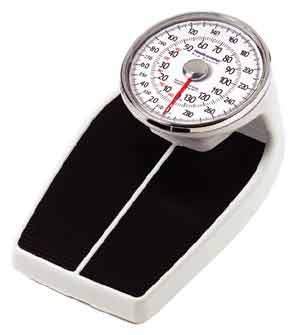
It’s not difficult in the way that you may be thinking.  Let’s take the scale for example.  The scale tells you your weight, and nothing more.  It doesn’t distinguish between fat or muscle, and certainly can’t tell you if you’ve lose some fat while gaining an amount of muscle–  It just tells you a number that too many people put too much stock in.

Pictured: 'The Enemy,' to most people.

Pictured: ‘The Enemy,’ to most people.

What about circumference measurements?

A tape measure can work well as well, but just like the scale, may not always be telling the truth (read: Not always your friend).  The problem with relying purely on these measurements is that the tape measure doesn’t know if you’re bloated.  Likewise, the tape measure is just as dumb as the scale in that it can’t tell the difference between different types of body mass.

What about X?

Unless you pay for really expensive testing, there will probably be an issue with the method of testing you bring up, and paying for really expensive tests every week or two is not practical.

So what do I do then?

Many trainers opt for the “Mirror Test,” and I’m definitely an advocate of this, as well!  Here’s how simple it is:

  1. Stand in the mirror.
  2. Observe.
  3. Ask yourself, “How do I look in the mirror?”
  4. Do you like the changes you’re seeing?  Assess.

Most people can’t really notice these changes since they see their bodies every day, and in that case, you can do the “Modified Mirror Test:”  Take some pictures regularly, and compare these.  What has the result been?  Sure, you can use the scale to get a very general idea of where you’re headed, but you must put very little stock in that number.  If you’re looking better, but weighing more, this is just as good as looking better but weighing less;  both are positive benefits, and you should not let that number on the scale hurt you!  It’s only a number!

Except this three.  It really is a monster.

Except three. It really is a monster.

The Mirror Test may not be scientific, but the end result of most plans should be achieving a sort of aesthetic, whether it’s an extreme case like bodybuilding, to someone overweight who wants to be healthier, or someone who simply wants to “tone up;” the mirror test will tell you all that you need to know, and is fantastic for your sanity!

Archive for the ‘Health’ Category:

Do you want the real answer or the “sexy” answer?

Must be.

Must be.

We’ve been working very hard on finishing up the website, and eventually I had to write some content that dealt with the results that can be achieved through personal training, or being prescribed a workout plan / nutrition plan.  When it comes down to it, I had to admit that I can’t guarantee anyone results.

The truth is, any trainer that “guarantees” success is doing something wrong.

How can you say that!?

Here’s what I ended up writing, and it is definitely true:  “Understand that results are not guaranteed–  All goals achieved are the product of four things: A solid plan, a committed trainee, dedication, and self control.  I am only providing you with the first item–  You have to bring the rest.”

You must have a solid plan in place based around tried and true principles, which is what I’m here for.  On top of that, you have to be committed to your goals–  Make S.M.A.R.T. goals (Specific, measurable, attainable, realistic, timely) and commit to them.  You must be dedicated to your success.  More than anything, though, you must have self control.

Can you say I’m wrong?  As a trainer, I’m not the one cooking your meals.  As a trainer, I’m not the one whose goals are on the line.  As a trainer, I’m not there to remind you about your calories and macros.  As a trainer, I can’t guarantee you’ll do everything I recommend.

Can you be my “Personal Nanny”?

When it comes down to it, I’m your personal trainer.  I’m in charge of creating a solid plan, and taking all of the guess work out of your training and nutrition.  If you come to the table committed, dedicated, and willing to exert self control, we can achieve anything together.

Archive for the ‘Health’ Category:

Do you want the real answer or the “sexy” answer?

I follow a dessert brand on facebook, and they posted a motivational picture yesterday that drew a lot of criticism:

1382933_10151986062377847_669123424_n


The criticism?

  • Looking like the woman in this pic is likely just as unrealistic as looking like a swimsuit model, so in that sense it can be damaging
  • Those women have trained for YEARS for hours at a time not having to worry about jobs and work because modeling IS their career. They generally don’t have children so most likely can do cardio when it’s required and don’t have little ones sucking the energy out of them and in addition the majority NEVER use the supplements they represent. They use clenbuterol, dnp and other injectable “supplements”

(I was originally going to paraphrase the comments, but since I’m not mentioning names, nor which page these appeared on, I posted them verbatim.)

That’s true, right?  That’s unrealistic!

There’s a movement on Tumblr, and Pinterest called “Thinspiration.”  This is the idea that you should do unhealthy things to look unhealthily thin.  While I wouldn’t call the movement “unrealistic” as there are real, living people doing those terrible things. . .  I would call it damaging, unhealthy, and dangerous.

The thing is, the picture above is not a “Thinspiration” picture.  “Thinspiration” tells you to not workout because your legs will become muscular and you may lose out on a “thigh gap.”  “Thinspiration” tells you to follow unsound, and unhealthy nutritional advice to lose weight.

That picture is still an unrealistic body type!

No.  We’re not discussing a plastic doll, or an overly photo-shopped billboard.  We’re discussing a fitness model that has achieved those results.  It’s not unrealistic because someone, in reality, has gotten there.  She has a fit body from her training.

This is all a part of a much larger problem known as “fit shaming.”  It’s unacceptable to comment on an overweight person’s health or weight, but it’s okay to tear someone down for being in shape.  It’s a horrible double standard, and it’s harmful to many people on many levels.  (That is the subject of a much longer post one day.)

But it’s unrealistic for me!

Things are only “unrealistic” when you don’t work toward them.  While there are some people that are genetically gifted, that doesn’t mean they don’t have to work for they want;  In a similar fashion, just because you weren’t blessed with genetics doesn’t mean you can’t achieve what you want.  Genetics tells us only two things:  What you can’t do, and how difficult your journey will be.  What can’t you change?  Bone structure.  If you have a wide pelvic girdle that leads to “wide set hips,” you can’t change that.  What else can’t you change?  Muscle bellies.  “Full muscle bellies” are much sought after in competitive bodybuilding and are totally dictated by genetics; unless you’re planning to compete, this means nothing to you.

You said “How difficult your journey will be”?

We’ve discussed “Somatypes” before, and while they’re a controversial topic, there’s plenty of evidence to suggest they’re very real.  There are people who are naturally small;  people that are naturally more fit;  and of course, there are people that are naturally larger / fatter.  No matter what somatype you are, you can achieve your goals if you follow a proper nutrition and training program–  While you may be genetically predisposed to be fatter (like I am), that doesn’t mean you can’t have a shredded physique one day.

She’s still using “Injectable ‘supplements'”

That’s a cop out.  You don’t know that, and it’s rude to assume that someone who has a nice physique is using PEDs (Performance Enhancing Drugs) to get there.  You’re looking at someone you know nothing about, and are effectively calling them a liar, unethical, and in some circles, a cheater.  Sure, many use PEDs, but just as many don’t.  Just because someone how what you want doesn’t mean you should tear them down.

That’s great and all, but I’m too busy.

I always find this argument interesting, because for a long time, I was working between 50 – 60 hours a week at normal jobs, while also working toward my career in the entertainment industry, and trying to maintain a little bit of a life outside of work.  I still made time to prepare all of my food, eat clean, and train 5 times a week.  Why?  Because it’s important to me, and I will achieve my goals.  If you want it badly enough, you will make the time to do so.  I’ve heard of a lot of people discuss how they have no time to get in shape, yet they have plenty of time for partying, blazing through seasons of TV shows, and much more.  If you want it badly enough, you will decide to change your lifestyle.

As far as the argument that this is their job (on the subject of fitness models), you’re right.  It is, now.  It wasn’t, though, when they had to work their hardest to get in shape.  Maintaining a body type is a lot easier than achieving one, but no modeling agency wants a fitness model that is still bulking, or still cutting–  They want one that will sell.  So that model, the one whose work you’re devaluing, had to juggle a job to pay the bills, while preparing food, while training 5 days a week to get to the point where she could make this her job.

It all boils down to motivation.  How badly do you want it?

Archive for the ‘Health’ Category:

Do you want the real answer or the “sexy” answer?

There’s often a lot of talk about my eating habits when we go out, because I’m cutting–  I’m eating at a deficit, and am being very careful so I can lose fat.  It’s not the easiest thing to do, especially while maintaining a social life, but it’s not impossible.  Often times, during these conversations, people bring up the person they know that is ripped but doesn’t have to worry about what they eat.

Body type and genetics aside, they’re already where they want to be.  Their caloric needs are at least 500 calories higher than mine, if not more.

How do you know their needs are higher?

If they’re not cutting, then they’re either eating to maintain where they are, or to gain weight, which by default, makes their calorie needs higher than me.  For example, my Total Daily Energy Expenditure (TDEE) is 2850 calories–  To maintain my weight, I would be consuming 2850 calories;  to bulk up, I would eat between 3150 and 3350 (or more);  to cut down, I currently eat 2350.

To some people, that may sound like a lot, and comparatively speaking, it is.  (For example, Alissa’s calorie goals to cut are around 1800)  A quick look at how many calories are in a typical restaurant meal can reveal just how little 2350 calories is.  If I know I’m going out to dinner, I usually have to allot myself 1000 calories for the meal, and I don’t even drink.

One of the lowest calorie options on the menu--  "Naked" Tenders and fries.  Over 700 calories.

One of the lowest calorie options on the menu– “Naked” Tenders and fries. Over 700 calories.

So just go crazy once in a while!

It’s not that easy.  While cheat meals are allowed, and necessary, you have to look at how consistent deviations can affect progress.  If you eat at maintenance, that means no fat was lost that day–  However, if you eat above maintenance, that means there’s potential for you to gain weight, thus setting you back on your path toward the goal.

Why do you bring this up?

Most people recommend bulking before cutting if you’re starting out.  I’m more inclined to recommend the opposite, which a minority of physique coaches and trainers recommend.  Cutting down isn’t easy, and the less time you have to spend doing so, the better.

Also, just keep that in mind if you’re out to dinner with someone who’s cutting.

Archive for the ‘Health’ Category:

Do you want the real answer or the “sexy” answer?

I’m a big proponent of measuring everything you eat–  A lot of people think it’s annoying, but once you get the hang of it, there’s not a whole lot to it.  What’s more, once you start to understand the amount of calories in food, you find it difficult to not measure food.  More importantly, though, unless you measure what you’re eating, you have no idea how many calories you’re consuming, which is the most important thing to track.

Well I Measure!

Here’s an important note, though. . .  How do you measure your food?  I live in the U.S., so naturally, I would use Imperial measurements like ounces, or just the recommended serving size.  Then, I looked at the back of a bag of clean tortilla chips, and noticed that the recommended serving size was “9 chips.”  What?  9 chips!?  What size of chips are we talking about here?

Then I looked at the serving size on a bottle of Wazy Maize (A carbohydrate supplement), and I got this:  “1 Heaping Scoop.”  My heaping scoop may be way different than everyone else’s heaping scoop, so what does that mean!?

Basically, if you go by most recommendations, you’ll be lost.  If you’re doing that much and are happy there, at least you’re counting!  For someone like me, though, I have this urge to know exactly how many calories I’m consuming.

How can I be more precise?

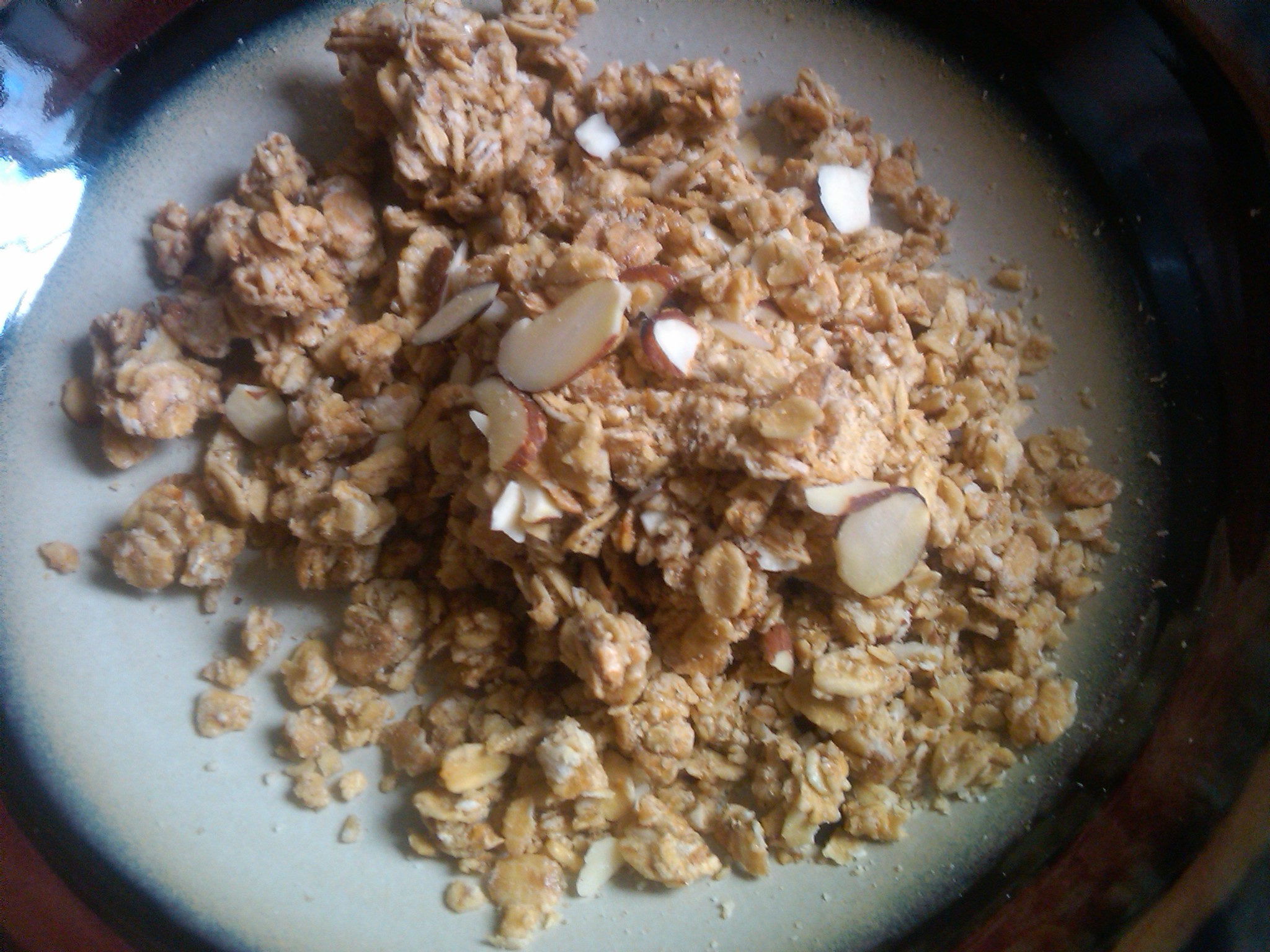
The recommended serving size can come in one of two ways:  An imperial measurement, or as an amount of product.  Beside their recommendation is the actual weight of the serving, displayed in the highly accurate metric measurement of grams.  For an example, we’re going to look at a box of organic granola.  The serving size is 3 / 4 C, or 55g;  each serving contains 250 calories.  That’s a lot of calories in a relatively small amount of food, which means big variances in measurements equate to big differences in calories.  So here’s what 3/4 C looks like:

Three Quarter Cups.

Three Quarter Cups.

Here’s what 56g looks like (My scale doesn’t do odd numbers, so I have to add 1g to the serving size):

56 grams.

56 grams.

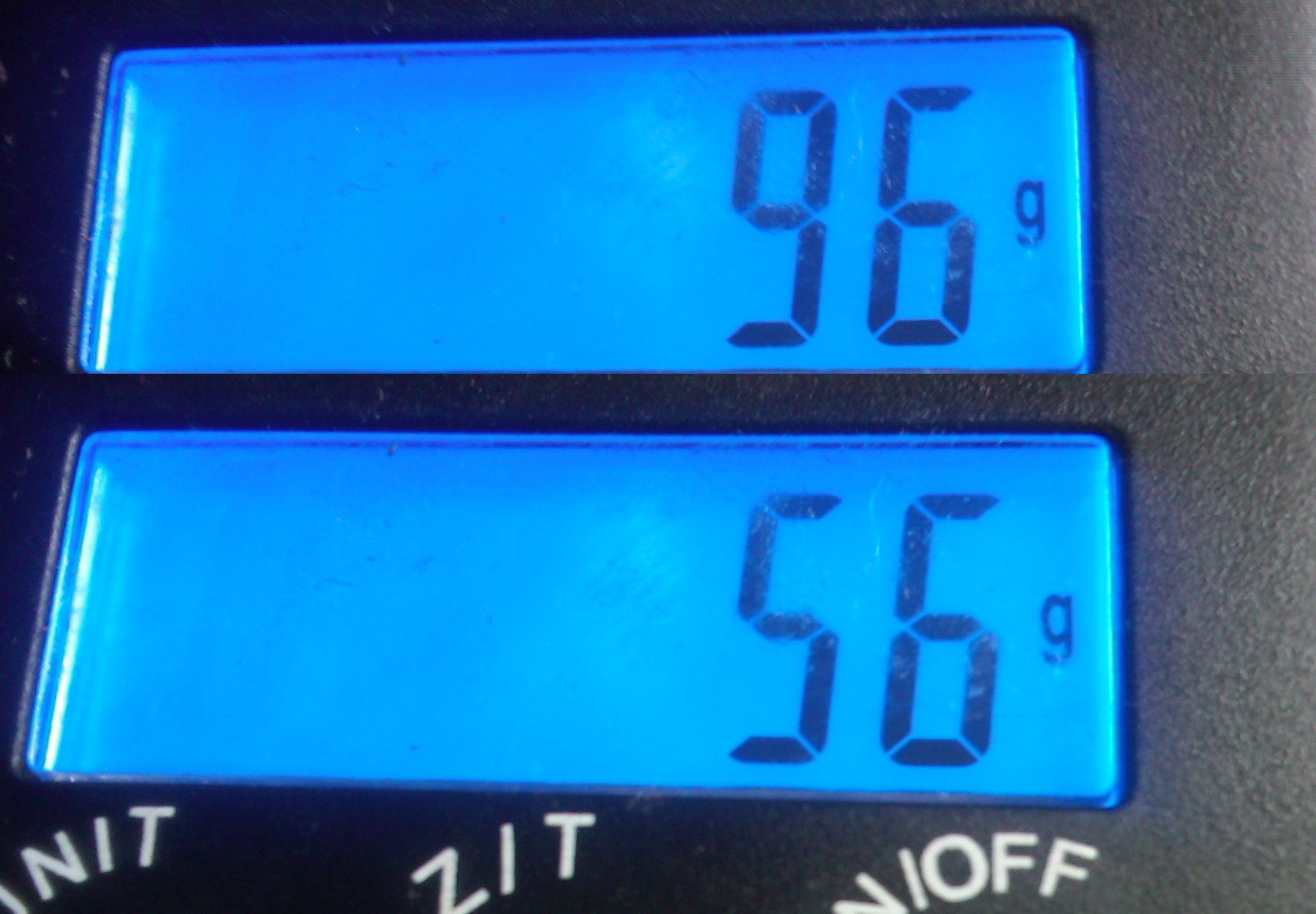
Maybe that’s not a good comparison–  They look nearly identical.  Let’s compare the measurement on the scale.  On the top we have our Imperial measurement (3 / 4 C), and on the bottom we have measured it out in grams:

Almost a serving difference.

Almost a serving difference.

It’s amazing the difference when you’re accurately measuring.  For the record, by using the imperial measurement and not the metric, I was consuming an additional 181 calories.  That means that I thought I was eating 500 calories below maintenance, but it was closer to only 300 below.

My Recommendation

I’ve started transitioning over to measuring everything in grams.  I’ve been on a cutting cycle for some time now, and have been wondering why I haven’t been losing fat at the rate I should be.  This is probably a large part of the reason, if not all of it–  I eat granola nearly every day, and maintain a 500 calorie deficit.  Without knowing it, I was really only eating 319 calories below maintenance–  And that’s only one food I’ve looked at.  Now it makes sense why I wasn’t losing a pound of fat a week.

If you want to be as precise as possible, use the metric system.

Archive for the ‘Health’ Category:

Do you want the real answer or the “sexy” answer?

If you came here looking for a quick fix, or for a way to “cheat” the system and lose weight fast. . . You have come to the wrong place. If, however, you are looking for the way to lose fat the healthy way and keep it off, read on!

I promised the 2 Secrets to a Flat Stomach and here they are:

1. A consistent healthy diet.
2. An effective workout plan consisting of cardio and weight training.

A Consistent Healthy Diet:

Over the years I have struggled with fat loss. I have tried almost every diet out there to no success. Or I had some success with a few, but it was short lived and the fat and weight came back. It wasn’t until recently (when my husband became a certified personal trainer) that we learned the proper way to eat for a healthy attractive body. Your diet should consist of protein, fat, and yes, even carbs! In fact, this picture was taken after I had already had about 150g of carbs that day…no bloating! If you are looking for a great meal plan let us know! We are now offering meal plans that will keep you healthy and get you the physique you are looking for.

An Effective Workout Plan Consisting of Cardio and Weight Training:

Here is the deal, society has put the fear into women’s hearts that if they do weight training they will turn into the Hulk. This is simply not true. The body must have an excess of calories every day to put on mass. Also, women don’t produce nearly the amount of testosterone that men do, making it much harder for us to put muscle on. In my opinion, weight training can be more effective at getting results for your physique than cardio. The more muscle you have the more calories you burn! If you are looking for an effective workout plan tailored to your needs. . . We can help you there too!

This article may upset some women looking for a trick to get a flat stomach, but if you are looking to not only get results but be able to maintain them these 2 “secrets” are the only way to go.

Recent Blog Posts