Follow us on Facebook for Training Tips
Physique Coaching Tips from Twitter
DeVine Physiques on Yelp!

Flexible Dieting / IIFYM (Part 2) – “What is a Calorie?”

Welcome to Part 2 of my series on the principles behind Flexible Dieting, also known as IIFYM, or “If it fits your Macros.”

What is a Calorie?

In the simplest terms possible, it’s a unit of energy that your body utilizes.  If you want a more technical response:

“The amount of heat required to raise the temperature of one kilogram of water one degree Celsius” or: “A unit equivalent to the large calorie expressing heat-producing or energy-producing value in food when oxidized in the body”  (Source; More Reading)

Apparently we've found the answer to energy independence.

Apparently we’ve found the answer to energy independence.

Okay, so a Calorie is a unit of energy.

If you think of your body like a car, Calories are like gasoline;  Calories are stored as energy in food, and here’s how much is stored in each macronutrient:  (Source)

  • 1 gram of Carbohydrate yields 4 Calories
  • 1 gram of Protein yields 4 Calories
  • 1 gram of Fat yields 9 Calories.

It’s worth noting that while Alcohol is not a macronutrient, it does yield energy–  1 gram of Alcohol yields 7 Calories.

So here’s how to think about it–  When your body digests and absorbs food, it frees up the energy stored in the food.  It either uses it for immediate energy, or stores it (as fat) for later use.

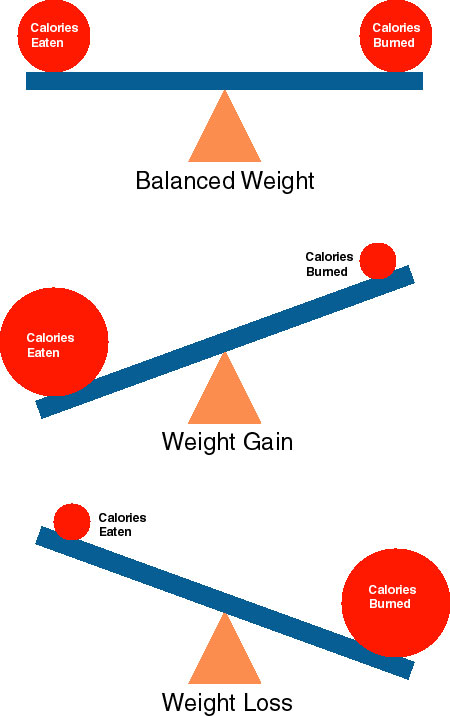
So in terms of energy, a Calorie is always a Calorie, since it is just a measure of the amount of energy in a food.  This is one of the fundamental principles behind flexible dieting–  Remember from last weeks post:  If you want to lose weight, you need to consume less energy than you burn.
Truth.

Truth.

Are there times when all Calories are not created equal?

The short answer:  Yes.

What is the long answer?

I have to reiterate that when you’re looking at energy balance, all Calories are equal.  We don’t want to look at food purely as energy, though–  There’s the entire “healthful diet” thing that everyone should consider.  When it comes down to what you eat, it should provide plenty of vitamins, minerals, phytochemicals, fiber, etc.  And this is where all Calories are not equal.

If we compare 100 Calories of banana vs. 100 Calories of soda, you’ll notice that they both have 100 Calories.  That’s obvious, right?  I mean, I said it’s 100 Calories of each.

Here’s where they differ, though; let’s look at what the Banana yields (Nutrition Data):

  • Energy derived from the macronutrients present–  Carbohydrates will be broken down into simple sugars (Monosaccharides) during digestion.
  • Fiber, which has many important healthful benefits from colon health to reducing cholesterol, among other things. (Source)
  • Micronutrients: These are Vitamins and Minerals, which your body requires to maintain physiological functions. (Source 1, Source 2)
  • Phytochemicals: These are chemical compounds that have been shown to offer great health benefits, but they are not required for survival, and more research needs to be (and is being) done on them. These are the chemicals people are referencing when they make the claim that “Red Wine is good for you;” they’re talking about “Resveratrol.” (Source 1, Source 2, Source 3)

Here’s a look at what the soda yields (Nutrition Data):

  • Energy derived from the macronutrients present–  Carbohydrates will be broken down into simple sugars (Monosaccharides) during digestion.

As you can see, there’s a great benefit to picking 100 Calories of banana over soda!  On top of that, sugary drinks take little time to digest, meaning they offer a lot of energy in a short time, and do nothing to satiate you.

While one could argue that this is an unfair comparison, it’s the sort of decisions people are faced with in every day life.  We could make the same comparison between a banana and a bag of chips, since both the chips and the soda are empty calories.

So what do you recommend?

Officially, as a nutritionist, I recommend you try and derive as much of your food from whole food sources as possible–  That means you can maximize satiety, micronutrient content, phytochemical content, and (usually) the amount of food you eat.  This is important to maximize the healthfulness of your diet.  Of course, that’s not an option for all of us, and we all enjoy foods that are processed (or just not whole foods). . .  That’s my “official” recommendation, though.

Here’s what I stick to on a daily basis for myself:  I try to get as much variety as possible in my diet when it comes to food choices, food groups, and even the colors of different foods (the color of fruits and veggies can clue you into the different phytochemicals present).  I also limit my consumption of non nutrient dense foods (So called “Free Foods”) to 1 – 2 food choices daily (Examples include cookies, pretzels, buttermilk pancakes, etc.) which usually comes out to between 150 and 200 Calories daily;  although, there are days where I don’t eat any free foods since I really enjoy everything I eat!

And that is the subject of next week’s post!  Most people think about a healthy lifestyle and think they can’t enjoy the food they eat.  Well, those people are not following sound advice.  Check back next week for Part 3 of this series where we talk about the importance of being “Non-restrictive” and flexible; hence, “Flexible Dieting.”

Any questions about this post?  Please ask!
Flexible Dieting / IIFYM (Part 1) – “Substrates”

I’m going to write a series of posts talking about “Flexible Dieting;” a.k.a. “IIFYM.”  IIFYM stands for “If it fits your macros,” which is the idea that you can eat whatever you want to achieve changes in body composition, as long as it all fits into your Calorie and macronutrient ranges for the day.

I tend to veer away from using the term “IIFYM” in favor of “Flexible Dieting,” because there’s a sort of negative connotation with IIFYM; a lot of people think it means making terrible food choices for every meal.  While I’m sure there are those out there who do make poor food choices the majority of the time, there are also many out there who do it right.

What does that mean, “Do it right”?

This is what I’ll be examining over the next few posts.  In this first post, I will talk about why flexible dieting works, and how you’re able to eat everything from vegetables to ice cream, and still achieve whatever body composition goals you want.

Think of this as energy and nothing more.

Think of this as energy and nothing more.

So why would someone want to do flexible dieting?

The biggest reason I advise flexible dieting is the flexibility it gives you–  You don’t have to restrict yourself from foods unnecessarily.  If you make room in your daily nutrition for something, you can have it!  An example I give my clients is how much I love chocolate:  I eat chocolate daily.  Pancakes are one of my all time favorite foods:  I eat them regularly.  I eat animal crackers, strawberry preserves, chicken nuggets, etc.  I don’t have to have a “cheat day,” because every day, I eat foods I enjoy based on whether they fit into my goals; not based on some arbitrary distinction between “good” and “bad.”

It’s also very easy to develop a binge eating disorder by unnecessarily restricting yourself–  By being flexible, however, you can avoid that (or work to fix it if you’re experiencing it) by promoting a healthy relationship with food, which is very important!  Now, you can have a serving of ice cream (that fits within your macros) rather than destroying a whole gallon of ice cream because you don’t know when you’ll allow yourself to eat it again.

You can’t be serious.  You can’t lose weight with ice cream!

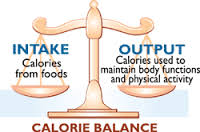
The basic principle behind weight loss, and weight gain, is “Energy Balance.”

url

If you want to lose weight, eat less Calories than you burn; if you want to gain weight, eat more Calories than you burn.  It’s that simple. (Source | More reading about energy balance)  There are some that believe that they’re made differently; that they’re somehow special and live outside the laws of our universe.  If you think that about yourself, I’m sorry to break it to you, but you are not exempt from the First Law of Thermodynamics.  If you are, please submit your body to science, as you’re the first being that has managed such a feat.

But I’ve heard certain foods make you fat and others make you skinny!

If someone tells you that certain foods, by default, make you fat, they don’t know much about nutritional science.  Likewise, if they say a food will make you skinny, they’re terribly misinformed, and are likely trying to sell you an agenda.  To illustrate this point, let’s discuss the three main macronutrients (commonly referred to as “Macros”):  Fats, Carbohydrates, and Proteins.  As a blanket statement, we can say that all foods are comprised of a combination of these, as these are “energy yielding” nutrients–  That’s just a fancy way of saying they contain Calories.  In fact, a “Calorie” is really just a measure of how much energy is contained in the food from the combination of macros.  (Source)

A common misconception about macronutrients is that your body can differentiate where it came from–  People claim there is a magic sensor inside your body that tells your body if the sugar molecule you consumed came from ice cream vs. a banana, and it should treat it differently.

Your body can’t.

This is why flexible dieting works.  In the body, all macronutrients are broken down into “substrates;” Carbohydrates, no matter where they came from, get broken down into one of 3 “Monosaccharides;”  Proteins, no matter where they came from, get broken down into individual amino acids;  Fats, no matter where they came from, get broken down into (or remain as) triglycerides.  (More reading on Macronutrients)

Are you sure that’s right?

Yes.  To illustrate, though, let’s look at two different foods, and what will happen when eaten.  Let’s take a twinkie.

url

A twinkie has 4.5g of Fat, 27g Carbohydrates, and 1g Protein.  Let’s compare that to a 100g of avocado: 15g of Fat, 9g Carbohydrates, and 2g Protein.  In both cases, the Fats will be broken down into triglycerides; the Carbohydrates will all be broken down into one of three monosacharides (Glucose, Fructose, or Galactose); and the Proteins will all be broken down into individual amino acids.

I’m still not convinced.

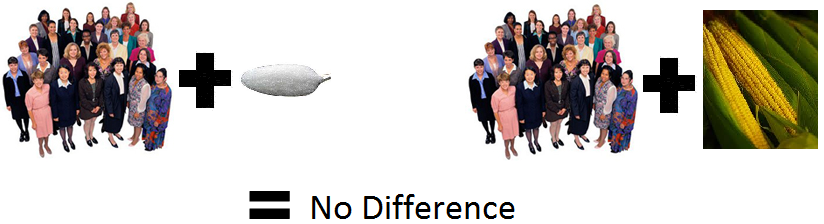
Let’s take an even simpler example:  Let’s say you have a can of cola sweetened with high fructose corn syrup, a bottle of cola sweetened with sugar, and a banana–  3 examples that are all very high in carbs.  What will all of the carbs in these examples be broken down into?  1 of 3 monosaccharides:  Glucose, Fructose, or Galactose; and they’re all the exact same molecule.  (Source)

Truth.

Truth.

I’m still not sure I believe you.  How can you lose weight eating “bad foods”?

First off, I can’t think of anything that I’d call a “bad food.”  There are foods that aren’t very nutritious, but it’s still not a “bad food.”  Thinking of foods in terms of “good” and “bad” is a poor mentality to have.  Also, there’s a fantastic story about a nutrition scientist that wanted to demonstrate the principles of energy balance to his students by following a 10 week “convenience store diet,” and he ended up losing 27 pounds.  (Read about it here)

So I should go eat twinkies all day!?

Not exactly.  While it’s true that a “Calorie is a Calorie” in terms of body composition / energy balance, there is something else to consider.  In my next post, I’m going to talk about nutrient density and variety, which addresses this.  Many people will make the claim that not all Calories are created equal;  from a healthful diet standpoint, they do have a point; in terms of fat loss, though, they’re way off!

It can be difficult for me too!

Last week, I was checking in with an online training client with some of my usual queries: How is your nutrition, training, etc.?  At the end of their response, they asked me how my training was going.

I appreciated the thought, but more than anything, I was happy to be ale to share something with them–  I’ve had clients, family, and friends comment on my dedication to working out as if I never have issues with motivation.  I’ve also been told that I don’t understand motivation issues.

But, I do; and lately, I know them very well.

For the last few weeks, I have had some serious motivation issues with my training.  I find myself toying with the idea of skipping workouts; I’ve found myself putting off my workouts; I’ve considered scaling back the intensity; During a few workouts I’ve cut out a set; In one particular case, I had to basically force myself to start my warm up and train.

Life is stressful–  Between work, school, studying for a nutrition certification, contest prep for my show, acting in a web series, and everything else I have going on, it has definitely worn me down.  Somehow, though, I manage to keep myself in the gym and compliant on my nutrition.

The point of this post?

I’m writing this to tell you that motivation issues are normal, and that I know exactly how difficult this journey can be.  I’m right there alongside everyone else in struggling to maintain a healthy lifestyle.  It’s not limited to me either–  You’ll find that even professional athletes, professional physique competitors, amateur physique competitors, etc. have regular struggles with staying on their nutrition, or staying motivated in the gym.

Staying as consistent as possible, and trying to find motivation every day can be difficult, but they’re necessary; and hopefully, you have someone in your life that can help you maintain that!

What can you do about motivation issues?

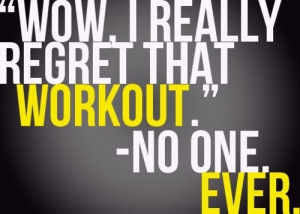
There’s no real solution for motivation issues.  Usually I try and tell people to find the root of the issue–  Often it can be something like sitting down after a long day when you should have gone directly the gym.  Other times it’s a sort of response that occurs after deviating from your nutrition plan.  Getting the root of the problem can often do the trick.  For me, personally, I just remind myself of how I’ll feel if I don’t train vs. if I do. If I skip a workout, I’ll feel bad about it, and I’ll feel like I wasn’t working toward my goal. . .  But I know that, if I can get started, I will feel better once I’m training, and I’ll feel great when I’m finished!

never-regret-workout

How I became a pro science “Zealot”

When I was young, I wanted to be a scientist–  There was a wide variety of fields I considered, such as paleontology, astronomy, geology, astrophysics, engineering, and others.  At some point along the way, I deviated from my passion for science, and instead pursued the arts.

. . .  Oddly enough, the arts brought me back to my passion for science.  I’m now in school with the eventual goal of a M.S. in Nutritional Science (Possibly a PhD), and I now research all subjects thoroughly so that I have scientific evidence to back up my claims and recommendations.  (You’ll also notice that my blogs started containing sources.)

It’s easy to get sucked into the sort of anti science mindset that is stereo-typically associated with artistic types.  For a while, I was anti GMO, believed in faulty nutritional science, and wrote a lot about pseudo-scientific topics on this blog.  I’ve actually gone back and destroyed that evidence–  I don’t want to contribute misinformation to the Internet.

1921871_808153689213070_315568724_n

While quite a bit went into my rediscovery of my passion for science, there are 5 different moments in particular that had a pretty profound effect on me, and they all happened within a relatively short time period; and that is something I would like to share with you.

“Why are GMOs bad?”

I was against GMOs–  They seemed horrifying!  You see all of these memes shared on Facebook that talk about the different health risks of these “Frankenfoods,” and indeed, if you lack the any knowledge in Biology (or disregard it), GMOs must be stopped.  One day, someone asked me, “Why are GMOs bad?”  I couldn’t think of a reason off the top of my head, and went to Google it.  The strangest thing happened–  I couldn’t find a single credible resource claiming any drawbacks whatsoever (health or otherwise), but found plenty of credible, scientifically based resources proving their safety and efficacy.  I’m not afraid to admit when I’m wrong, and this was a time when I most certainly was.  My position has changed, and I have evidence to back me up.  (Source)

“You know protein causes a spike in insulin, right?”

I spent a lot of time spinning my wheels–  Years, in fact.  I wasn’t able to lose weight no matter what I would do.  For a while, I thought following an extremely low carb diet would work for me, and indeed, I saw an initial result (as everyone does), but that was it.  From reading a myriad of incorrect articles, I thought that restricting carb intake would suppress insulin release, thus turning off my body’s ability to store fat.  This would eventually, hypothetically, lead to ketosis, where my body would “burn fat” for fuel.  All of this was wrong (which I’ll address later), but I had no idea.  I explained this logic to someone on a forum, and someone else asked, “You know that protein causes a spike in insulin, right?”

I immediately started researching, and eventually found a plethora of scientifically based articles proving that person’s point.  (Source 1 & Source 2)

This is very similar to the next–

There are several main reasons that I recommend retaining carbohydrates.”

Dr. Layne Norton (PhD Nutritional Science) is a. . .  I don’t want to say a hero of mine, but I definitely respect him and look up to him.  I trust the information he puts out not only because of his education and experience, but because research backs his advice and recommendations.

That said, he has a fantastic article (more like novella) about preparing for a bodybuilding show, and right off the bat, he talks about the importance of consuming carbohydrates.  At this point in my life, I thought that bodybuilders ate no carbs to prep for a competition, and indeed, I came across this article just around the time I had become enlightened to protein’s effect on insulin.  This completely shook up my world–  For the better!  After reading the article twice through, I started reintroducing carbohydrates into my nutrition plan.  (Source)

Citation Needed

I had started putting a lot more energy into my research; I was also very strict, limiting myself to only reputable resources with adequate research backing it up. . .  I was also adding these resources to the end of my blog posts–  I had begun looking for sources in everything I read, so I wanted to provide those to my readers.  There’s a phenomenon that I used to believe in that basically said if you diet a while, and then have a massive cheat day, your body won’t absorb those Calories because, and I quote, “your body doesn’t know what to do with all that food.”  Someone recommended I write a blog post on that subject, and when doing research, I couldn’t find any evidence to support this claim, but mountains of evidence to the contrary.  In fact, as I’ve learned in my textbook “Nutrition (5th Edition),” the human body can absorb at least kilograms of Carbohydrates, 500g of Fat, and 500g – 700g of Protein.  For a little perspective, that means, at an absolute minimum, your body can absorb at least 10500 Calories a day (but really, is capable of significantly more).  (Source)

It’s worth noting that my notoriously insane, regularly scheduled cheat meals also helped me not lose weight.

Beta – Oxidation

The final event–  my complete turn to the right side of The Force, came when I was studying the textbook for my NASM certification.  The book is very science heavy (as it should be), delving into physiological topics such as biomechanics, bioenergetics, anatomy, metabolism, and much more.  The book details beta-oxidation, a dominant metabolic pathway, and one that is lipolytic (fat burning).  All that work to convert my body to “burn fat for fuel” by not eating carbs, and my body already did it daily.  (Source 1 & Source 2)

“Zealot”

What was even more amusing is that, in addition to these instances, my first science class after returning to school managed to break down all of the remaining pseudo-scientific myths that I hadn’t yet let go of.

I am now so pro science that I would almost classify myself as a zealot; but I mean that in the best possible way.  If you don’t trust in science, what can you trust?  What can you believe?  If you reject science, do you think the Earth is flat?  Do you believe in the geocentric model of the Universe?  I know that’s a bit of a “Slippery Slope Fallacy,” but I maintain that it’s a fair argument–  How do you choose what science to reject and what to “believe”?  Science has done so much for humanity, continues to do so, and I want to contribute to that; I want to help spread the word, and help people achieve their goals!  Remember:

Preach it!

Preach it!

Recent Blog Posts