Follow us on Facebook for Training Tips
Physique Coaching Tips from Twitter
DeVine Physiques on Yelp!

Get a Perky Bum!!

10446481_589979481104_3508060242920945575_n bikni2back

The best way to get a nice perky bum is to build muscle in that area of your body and to lean out. How do you build muscle there? You lift heavy weights! I used to suffer badly from “flat bum syndrome,” so I can tell you that the best way of fixing that is lifting!

Our society has trained us to think that, as women, if we lift heavy weights we will get “big and bulky.” This is just not true, unless you are on steroids. Heavy weight lifting will increase muscle mass so that when you lose fat you will look nice and lean and “toned.” If you have no muscle under your fat you will just look very skinny when you get thinner.

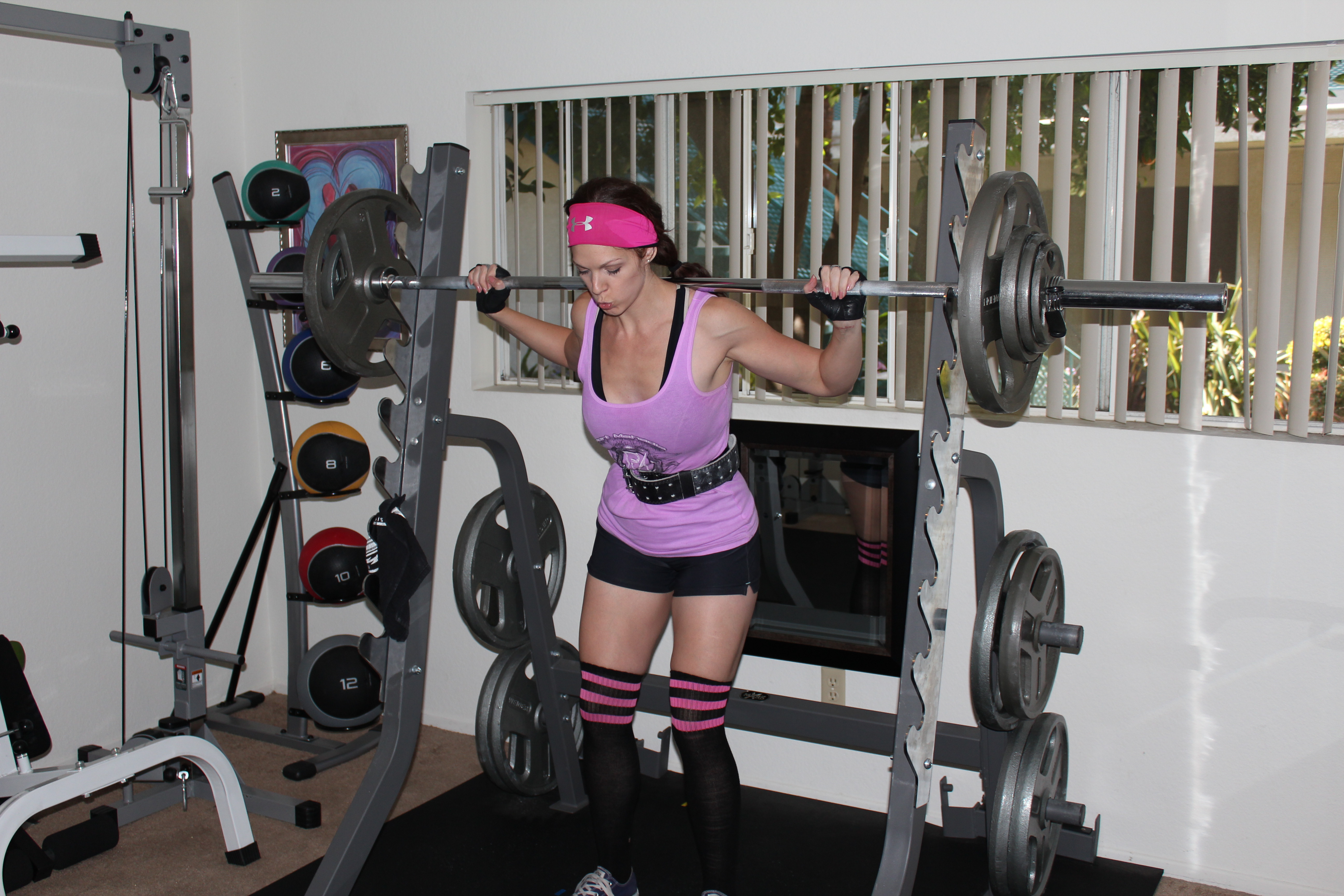
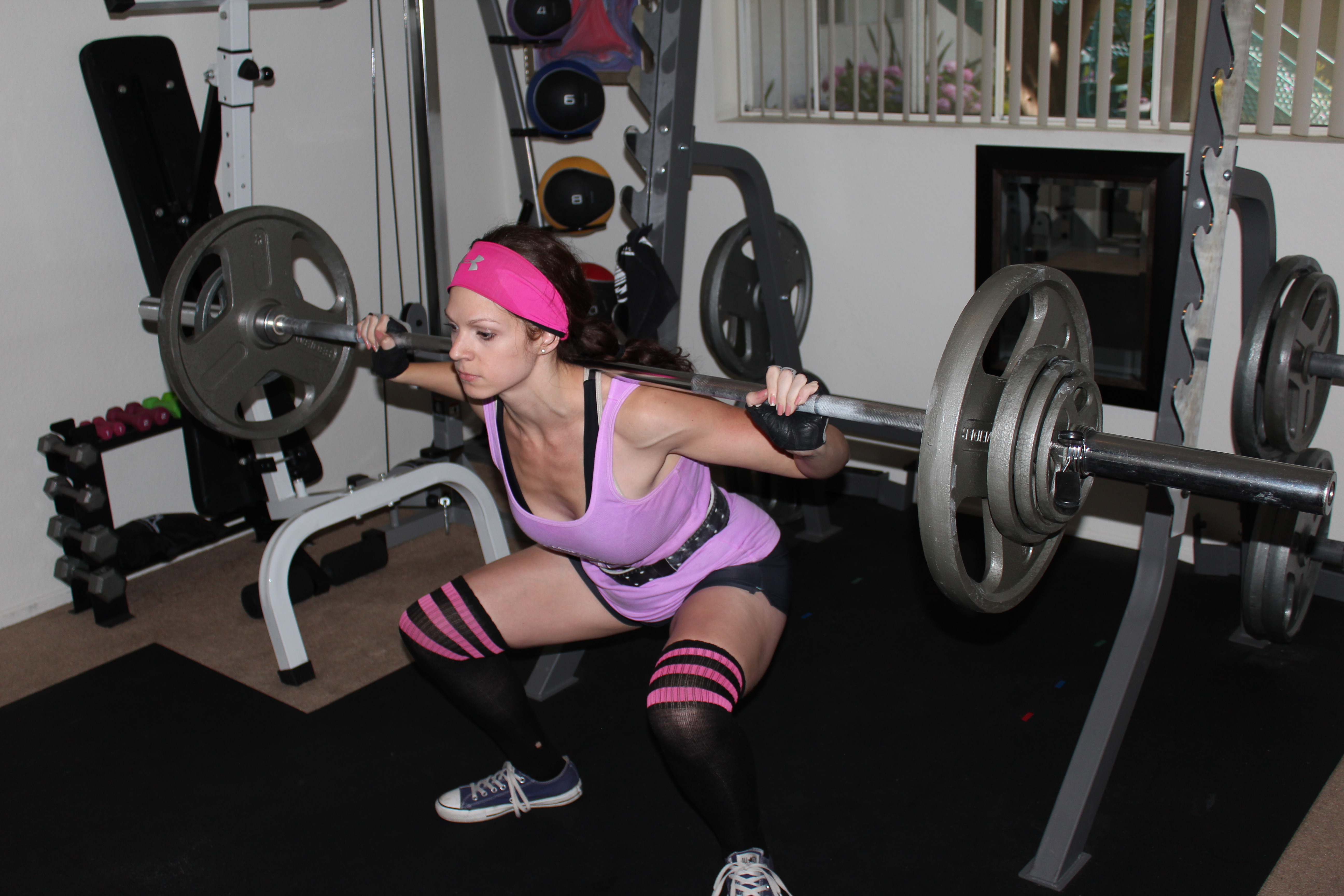
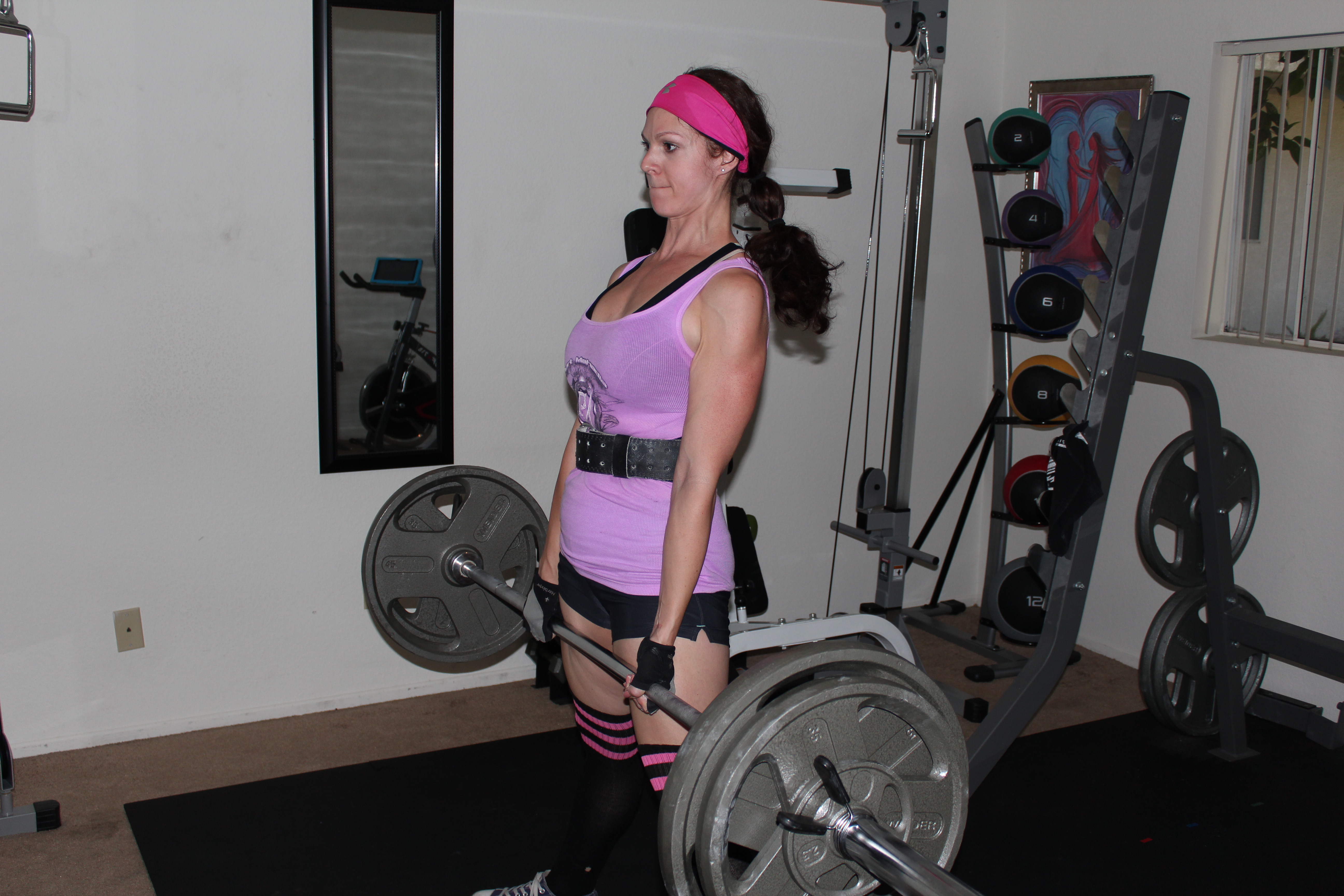
My two favorite exercises to not only feel strong but get those glutes activated for a nice bum are squats and deadlifts. Both of these compound movements use a vast majority of the muscles in your body and specifically the gluteus maximus (aka your booty!).

I am including my prep pictures for both exercises as well to emphasize how important it is to really focus and visualize what you are about to do. For me, this was on a max strength training day so I was telling myself  “you can lift this weight, you only have to lift it once, it is easy.”

IMG_7455 IMG_7457 IMG_7463IMG_7464


Important Tips for Meal Planning & Tracking

Meal Planning & Tracking is the most important aspect of achieving your goals, and it takes some time to not only get in the rythym of it, but to also know how to do it effectively.  Here are a few tips:

Tip #1 – Make sure all of your foods are an option in your tracker!

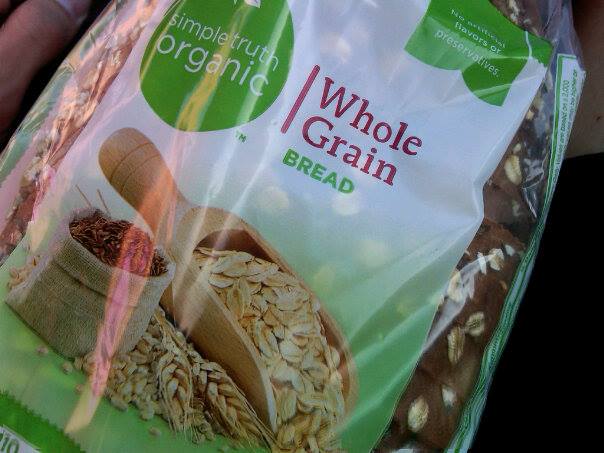
I consume a lot of the same foods on a weekly basis, but I am always looking for ways to enhance variety, and work in specific cravings.  For example, I was recently overwhelmed with a craving for whole grain bread, so I went to the store and got a loaf.

I can't explain it.

I can’t explain it.

The first thing I did when I got home:  Entered in the completed nutrient breakdown into my SparkPeople.com account.

This is a sort of ritual for me after every shopping trip where I add something new to my nutrition plan–  The very first thing I do is put it into my tracker.  I often opt to create my own entry rather than rely on the ones already entered because those already entered usually:

  • Aren’t entered using the metric system.
  • Aren’t always complete.

Tip #2 – Measure individual foods in meals as you go along!

When preparing a meal, it is absolutely imperative that you measure and update each ingredient as you go, otherwise, you will have no way of knowing how much of which ingredients are present in your meal.  So how do you do that?  Simple.  Weigh it all as you go!  If you’re making spaghetti and chicken:

  • Weigh the chicken before you prepare it and enter it into your tracker.  (If it’s frozen chicken, weigh it frozen, if it’s already cooked, weigh it directly out of the bag.)
  • Weigh the pasta dry before cooking.
  • Put the cooked pasta and chicken on a plate on your food scale.  Turn on the scale, and weigh out the amount of tomato sauce you used.

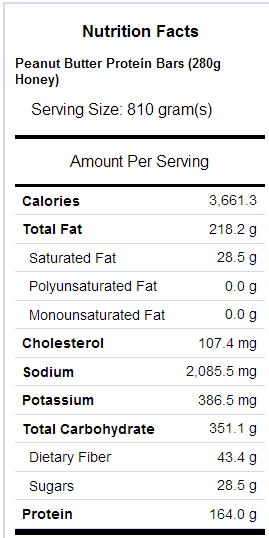
Now for more involved recipes, the principle is the same.  Take for example the No Bake Peanut Butter Protein Bars:

  • Weigh each individual ingredient as you go, and calculate the nutrient totals for each ingredient.
  • Combine the weight of each ingredient (since they’re all dry) to figure out the total “yield;” combine the nutrient totals for each ingredients to find out the complete nutrition facts for the yield.
  • Enter those nutrition facts into your tracker using your total yield as the serving size.
  • When you want to eat some of the food, weigh out each piece, and input that as the updated serving size.
What that recipe looks like in my SparkPeople.

What that recipe looks like in my SparkPeople.

It sounds a little complicated, but after you do it yourself once you will understand, and then it will be easy!

Tip #3 – Use a “Mole Fraction” to measure bulk prepared foods!

My kitchen is my lab!

My kitchen is my lab!

If you don’t remember the “Mole Fraction” from chemistry, don’t worry, I’m not even going to bother explaining it here.  The principles we’re going to use is the exact same, though.  We’ll continue with pasta as an example.  Let’s say you’re cooking a big pot of pasta, but don’t want to prepare separate pots of it for your serving vs. everyone else’s pasta.  Follow these steps:

  • Weigh out the pasta first, and try and stick with servings (Though, it’s not necessary). To make this easy, let’s say there are 5 people eating; let’s get 5 servings.  The pasta I eat is 56g per serving, so we would weigh out 280g of pasta (56g * 5).
  • Cook the pasta.
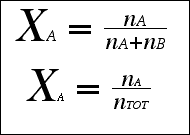
  • Obviously we can’t weigh the pasta afterward the same as before because the absorption of water will change the weight.  We can, however, use a sort of “Mole Fraction:”
    • Weigh the total amount of pasta cooked after draining it.  Let’s say it weighs 600g total.
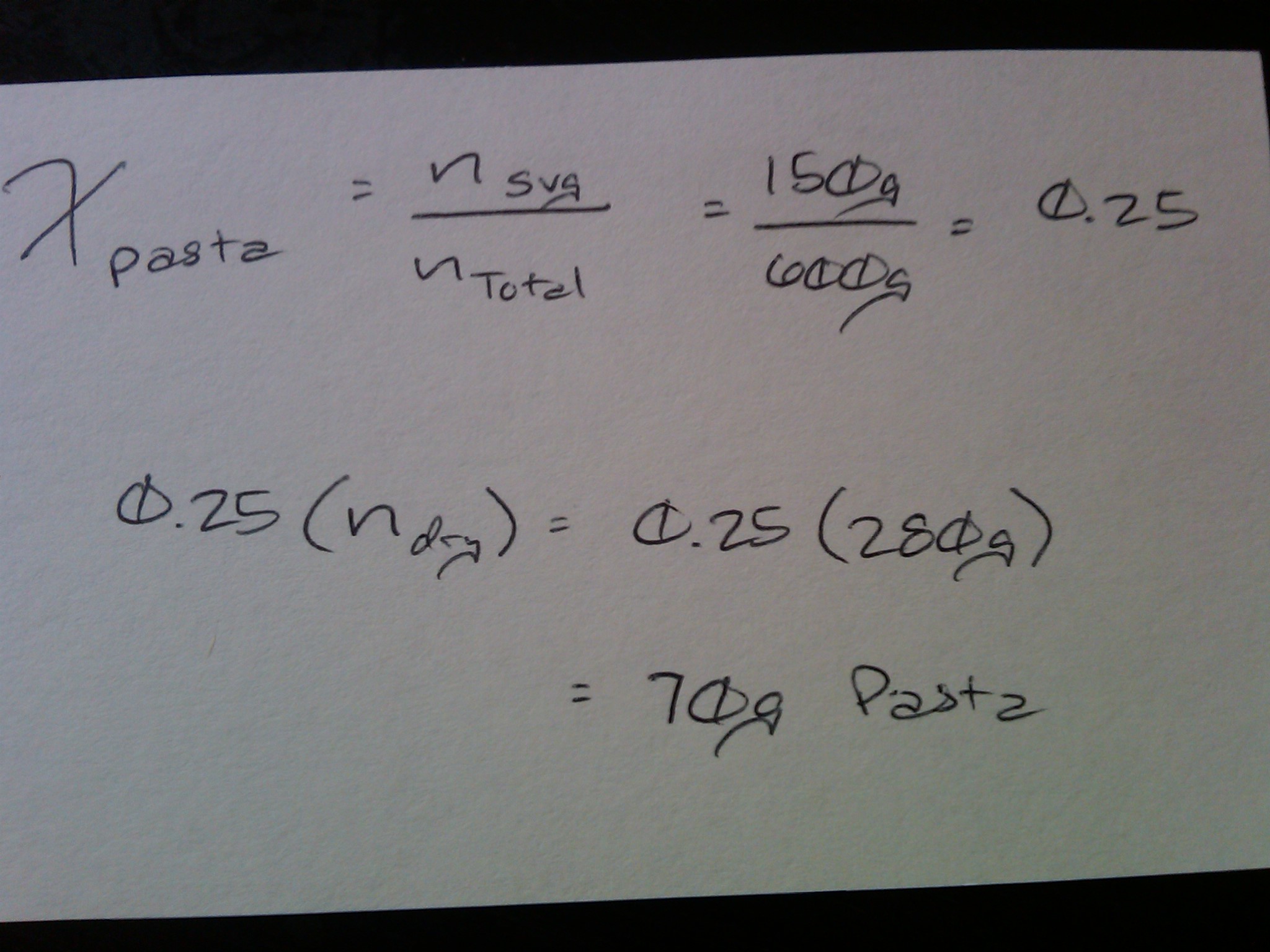
    • Serve yourself and weight it–  Let’s say you scooped out 150g worth of pasta.  Now, we’ll set up our “Nutrition Fraction;” divide the amount you served by the total cooked amount.  This will give us the percentage of the food you served.  (In the case of our example, 0.25, or 25%.)
    • Next, multiply that by the dry measurement–  That’s how much pasta you were served and how much you should put in your tracker (70g, a bit more than a serving).  Here’s how to set it up on paper:
"X" represents the ratio of pasta served, and "n" represents the various measurements of pasta.

“X” represents the ratio of pasta served, and “n” represents the various measurements of pasta.

  • Let’s say we need to be more precise and need to figure out how much to serve rather than calculate how much was served:
    • In the case of our pasta example, let’s say you want just 1 serving of the 5 we cooked; and cooked, it came out to 600g.  Find out what 1/5th of 600g is:  [(1/5)*600] = 120g.  Now you know that you need to serve yourself 120g of cooked pasta to get the equivalent of 56g of dry pasta.

Tip #4: Measure and track everything as accurately and precisely as possible.

This post wouldn’t be complete without reminding you of that!

How much time do you spend each day measuring food?

I measure everything I eat–  Unless it’s something packaged, processed, and sold by weight where I know how much each individual item is, it gets weighed on my food scale.  Actually, even some of those items get weighed.

I had a client ask my how much of my day is spent weighing my food, so I set out on an experiment–  I also made a video about it:

To answer the question: 10.5 minutes total.  Such a small part of my day is devoted to measuring, and that 10.5 minutes isn’t even all at once–  That’s spread out throughout the day.  It works out to 0.73% of your day.  If you think of your day like a dollar bill, that means that less than a penny is “spent” on measuring my food for my goals.

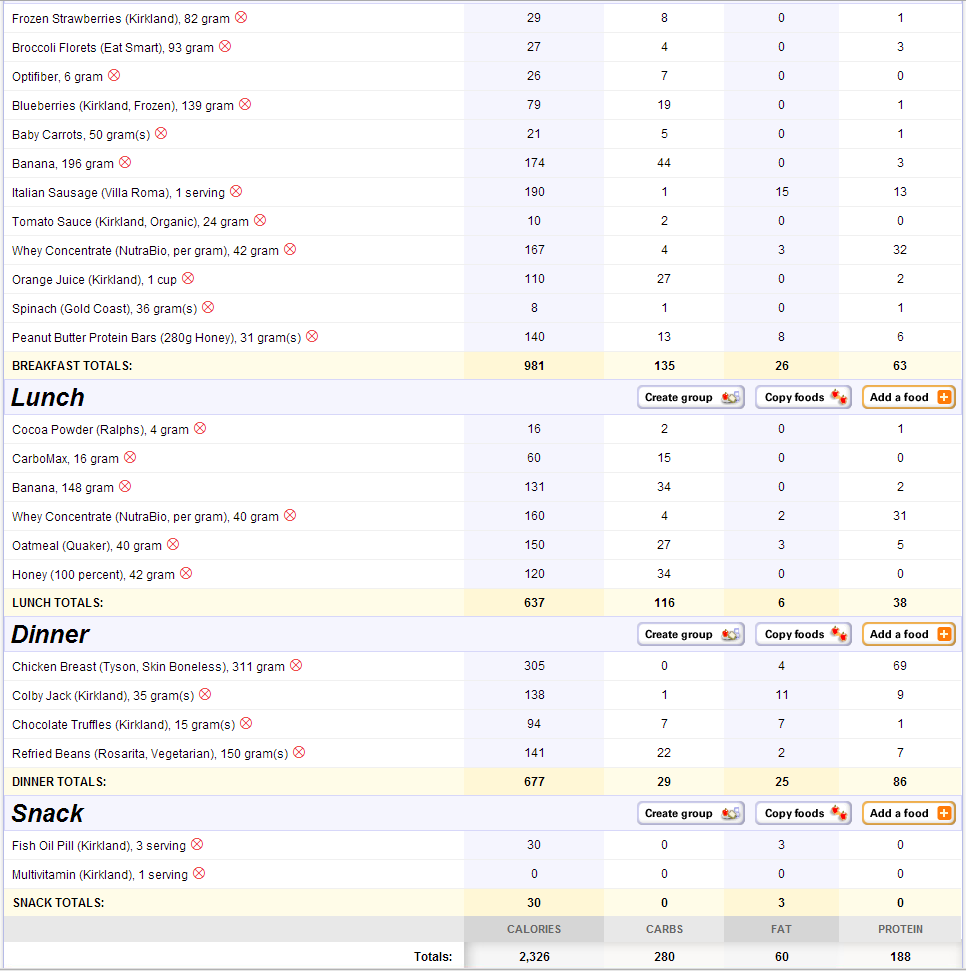
Something else I would like to discuss (that isn’t in the video) is what my day looks like when it’s planned vs. how it ends up–  It evolves quite a bit as I update everything as it’s measured.  Here’s my tracker at the start of the day:

VlogStart1

There’s a lot of food there, so my final stats got cut off, but it ended up at 2,261 Calories; 273g Carbs; 54g Fat; 192g Protein.  Here’s how my tracker looked at the end of the day:

VlogFinish

I finished my day at these totals: 2,326 Calories; 280g Carbs; 60g Fat; and 188g Protein.  I was within my macro ranges, and came in just below my Calorie needs.

Should I buy a fat burner?

I was sent an Email this morning about a miracle weight loss supplement featured on Dr. Oz.  First, let me say I later found out the Email was sent from an Email that was hacked.  Second:

Dr. Oz is entertainment.  He’s a surgeon, not a scientist; but more than that, he’s an entertainer whose goal is to increase viewership and ratings so that the network may sell advertising space at a premium.  He’s been called out by Popular Science, and other organizations for giving non scientific advice.  His show is chock full of pseudoscience, and he was even given an award to recognize his “extraordinary contributions to America’s scientific illiteracy and pervasive fear mongering.”
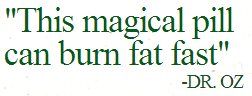
Dr. Oz Quackery

You’re a “doctor” yet you believe in magic?

Anytime someone says they saw something on Dr. Oz, I am immediately skeptical.

This post isn’t about Dr. Oz, though. . .  It’s about fat burners and what you should consider before buying.

Let’s start with the claims of the supplement–  It will “melt fat away.”

Well I want my fat to melt away!

Here’s the thing about any weight loss supplement–  It’s meant to supplement an effective weight loss plan.  If you eat whatever you want and your Calories are way above maintenance, no legal (or safe) supplement can burn off the amount of Calories necessary for you to burn fat.

But there’s a study about it!

Hah!  “Study.”  True. . .  In the initial article, there was this link:

Dr. Oz Fat Burner

If only it existed. . .

Unfortunately, when you click to view the study, it takes you to an online order form with no study in site.  In fact, there is no way to actually find the study they claim proves it’s effectiveness, but I did keep running into clips from Dr. Oz.

This is why I advise all clients to check with me before buying supplements–  There is an entire world of effective supplements out there than will help you toward your goals, but it takes a bit of education when deciding what to buy.

But people lost weight with it!

True, and it’s possible for a supplement to enhance your weight loss–  There are a lot of effective fat burners, thermogenic compounds, etc., but let’s look at the numbers for a second to see how these work.  Let’s say you want to lose fat:

Option #1: You’re completely sedentary, and you don’t watch what you eat.  Without realizing it, you’re currently eating 200 Calories above maintenance, which means you’re steadily gaining 0.4 lbs. per week.  You take a fat loss supplement that raises your energy needs by 150 Calories per day, but since you don’t track anything, you don’t realize that you’re still eating above maintenance.  While this will slow your fat gain, it doesn’t create a situation where you’re losing, or even maintaining.  Instead of gaining 0.4 lbs. per week, you’re now only gaining 0.1 lbs. per week.

Option #2: Through your nutrition and training you’re currently maintaining your weight because you’re struggling with your nutrition plan.  So you take a fat loss supplement–  This raises your energy needs by 150 Calories per day–  That means that now you could lose 0.30 lbs. per week.

Option #3Through your nutrition and training, you’re currently losing 0.5 lbs. per week because you’re very good at maintaining a deficit of 250 Calories per day.  As happy as you are with your fat loss, you want to lose weight faster, but don’t want to consume less food.  You take this fat loss supplement, which raises your energy needs by 150 Calories.  This means that your daily deficit is actually 400 Calories per day, which leads to 0.8 lbs. of fat loss per week.

The stories you hear about in the testimonial section of these websites are from those in the “Option #3” camp. . .  They already have a grasp on their nutrition and exercise, and are using the supplements to enhance their results.

Need more proof?  Here’s the fine print from the website: “Actual weight loss will vary and in many cases will not be typical. . . […] Each person’s experience will depend on the reasonableness of their weight loss goal, the time they allow themselves to lose the weight to attain their weight loss goal, their age, state of health, their diet and exercise and any limitations placed on them by their health care professional due to the above or any other factor.

I added the bold for emphasis.

So what’s the truth about this supplement?

I won’t link to the website from the Email I got for two reasons:

  1. I don’t want to give them any traffic since they’re not only deceptive, but they’re also promoting through Email hacking.
  2. They’re not a supplement manufacturer that I trust.

The supplement itself can be an effective tool for fat loss.  Looking it up on Examine.com shows that there is evidence to support the claims made (even though more studies are needed).  I just recommend buying it from a trustworthy company, consulting someone familiar with the topic (Trainer, Coach, Doctor, etc.), and understanding the role a supplement plays in your plan.

What supplements are in your cupboard?

It’s worth noting that this post may make it seem like I’m on the fence about fat burners and supplements.

I’m not against supplements–  In fact, I’m all for them!  There are fat burners in my supplement cabinet, and before doing cardiorespiratory training, I take a mild fat burner “stack.”  What matters, though, is that my nutrition and training is 100% dialed in, and I use supplements to enhance my results.

The key is to remember what the point of a “supplement” is; it’s to supplement a healthy nutrition and training plan.

Recent Blog Posts