
Follow us on Facebook for Training Tips
Physique Coaching Tips from Twitter
DeVine Physiques on Yelp!

How to spot bad science in an article / picture.

I constantly see memes, pins on Pinterest, and countless “articles” that spout off nonsense regarding health, nutrition, and exercise.  More often than not, there is no source cited, and they can give information that is not only completely wrong, but sometimes dangerous.

So, how do you protect yourself from these sorts of articles?  Well, luckily there is an organization known as The Food and Nutrition Science Alliance (FANSA) that is a coalition of 6 organizations:  The American College of Nutrition (ACN), the American Dietetic Association (ADA), the American Society for Nutrition (ASN), the American Society for Parenteral and Enteral Nutrition (ASPEN), the Institute of Food Technologists (IFT), and the Society for Nutrition Education (SNE).

Why are you telling me this?

FANSA has put out a fantastic guide for consumers looking for information on the Internet and in the media titled “The 10 Red Flags of Junk Science.”  Anyone interested in health, fitness, or nutrition should keep this list handy and compare it to what they read.

  1. Recommendations that promise a quick fix.
  2. Dire warnings of danger from a single product or regimen.
  3. Claims that sound too good to be true.
  4. Simplistic conclusions drawn from a single study.
  5. Recommendations based on a single study.
  6. Dramatic statements that are refuted by reputable scientific organizations.
  7. Lists of “good” and “bad” foods.
  8. Recommendations made to help sell a product.
  9. Recommendations based on studies published without peer review.
  10. Recommendations from studies that ignore differences among individuals or groups.

I personally have one more guideline that I follow:

  1. If there are no sources, and / or the author is underqualified, the article should be treated as nonsense until corroborated with a legitimate source.

Example of this:  An article I read made a really interesting claim, citing a study that supported the claim.  There were no sources, no links, and the author had no related credentials.  I then searched for the study the article referenced and found it.

Think about these guidelines, and think about articles you’ve read, or what sort of infographics you’ve shared over social media– Would it be safe to say that the vast majority of the information out there is “junk science” based on these guidelines?

I would say so, and it’s only further contributing to the sort of scientific illiteracy / ignorance that pervades society.  It’s so easy to find the right answer, you just have to find the source and not go out of your way to “believe” in something else.

Truth.

Truth.

That’s great and all, but why should I care?

I spent the better part of a few years spinning my wheels as far as achieving my goals because I followed advice and programs that were nearly completely devoid science–  I’m very thankful that I’ve learned all that I have, because now I’m on track to achieve what I originally set out to do.
Sources and More Reading

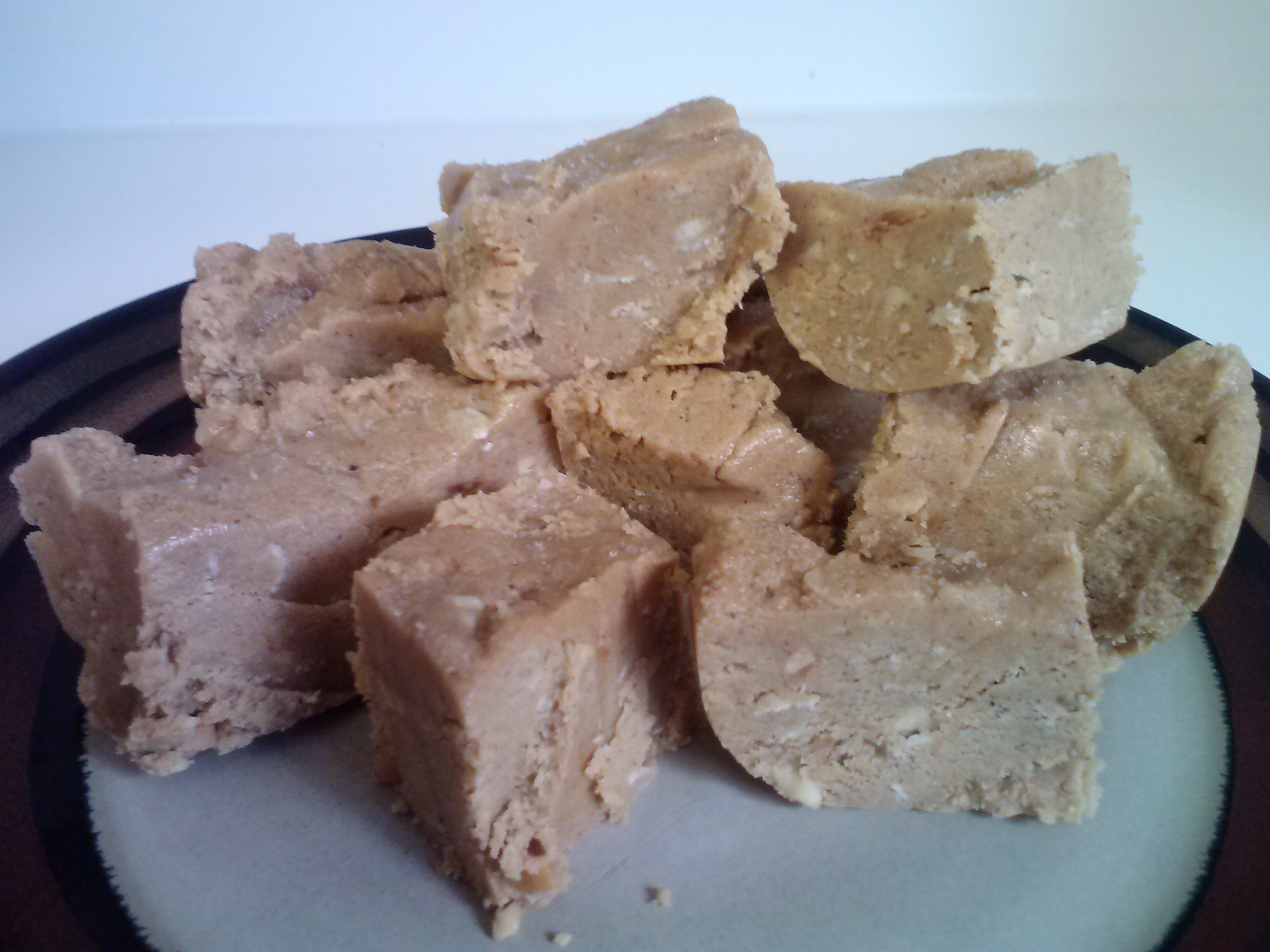
No Bake Peanut Butter Protein Bars

The Internet has done a lot of good for all of us, and has also done a lot of bad.  There’s also the occasional great thing on the Internet, and today, we’re going to talk about one of those.

I’m talking about the fantastic “No Bake Peanut Butter Protein Bars” that I found on the Bodybuilding Recipes Facebook page.

No Bake Peanut Butter Protein Bars

Snack Perfection.

Now the recipe calls for the following ingredients, however, longtime readers know that I only advocate using the metric system when measuring out ingredients / foods, and whenever possible, I use the mass measurement.

The Original Recipe

1-3/4 cup creamy natural peanut butter
1 cup organic honey
2 scoops Whey protein
1/2 cup old-fashioned oats
50 grams raisins

Now here’s how I made it–  It’s worth noting that I’m listing the ingredient list based on my second time making these–  The first time around, they were a little sweeter than I’d like, so I reduced the honey slightly and also left out the raisins.

My Version of the Recipe

422g Natural Peanut Butter
305g Honey
41g Oatmeal
70g NutraBio Unflavored Whey Protein Concentrate

So how do you make it?  Get a big (and I mean big) microwave safe bowl and put the honey and peanut butter in it.  Put the bowl in the microwave for 90 seconds.  Fresh from the microwave, quickly put in the remaining ingredients, and mix it up thoroughly.  When it is adequately mixed, pour it into a Pyrex, or some other container and allow it to cool in the refrigerator.  At this point, I also add a light dusting of sea salt to them.  When they’re cooled, enjoy!

Nutrition Facts, Serving Size, etc.

When cooking, I treat my kitchen like my chemistry lab;  I carefully measure everything at every step of the way to make sure that I have a precise measure of my yield, which I can then use to accurately calculate the nutrition facts. So, how do these stack up?

Yield: 838g, which leads us to a basic breakdown of 3941.8 Kcal, 218.4g Fat, 360.1g Carbohydrates, and 164.3g Protein.

Of course, I’m not going to eat the entire thing in one go, so let’s split these up into 45g servings.  What are the nutrition facts for a 45g piece?

  • 211.7 Kcal
  • 11.7g Fat
  • 19.3g Carbohydrates
  • 1.6g Fiber
  • 8.8g Protein

The next time around, I may experiment with slightly less honey, and slightly more protein.  Either way, these are incredible!

Update 5/25/2014

As I mentioned before, I experimented with the recipe, and I got something that I like a lot more.  I reduced the amount of honey, which made them identical in texture and taste to peanut butter fudge–  They’re even more incredible!  Here’s the new recipe:

  • 280g Honey
  • 422g Natural Peanut Butter
  • 38g Oatmeal
  • 70g Nutrabio Whey Protein Concentrate (Unflavored)

They gave a very similar nutrient breakdown:

  • 203.4 Kcal
  • 12.1g Fat
  • 19.5g Carbohydrates
  • 2.4g Fiber
  • 9.1g Protein

I highly recommend this new recipe, especially if you tried the other and found them too sweet–  You can’t go wrong with either, though!

Recent Blog Posts