Follow us on Facebook for Training Tips
Physique Coaching Tips from Twitter
DeVine Physiques on Yelp!

Thoughts on Body Image

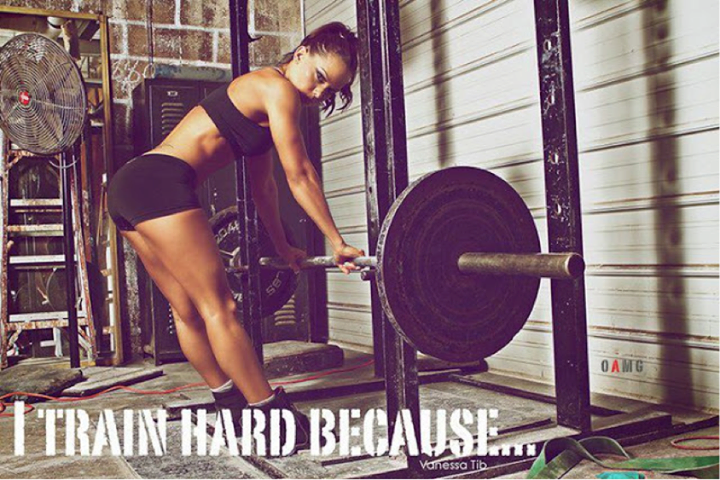
I follow a dessert brand on facebook, and they posted a motivational picture yesterday that drew a lot of criticism:
1382933_10151986062377847_669123424_n


The criticism?

  • Looking like the woman in this pic is likely just as unrealistic as looking like a swimsuit model, so in that sense it can be damaging
  • Those women have trained for YEARS for hours at a time not having to worry about jobs and work because modeling IS their career. They generally don’t have children so most likely can do cardio when it’s required and don’t have little ones sucking the energy out of them and in addition the majority NEVER use the supplements they represent. They use clenbuterol, dnp and other injectable “supplements”

(I was originally going to paraphrase the comments, but since I’m not mentioning names, nor which page these appeared on, I posted them verbatim.)

That’s true, right?  That’s unrealistic!

There’s a movement on Tumblr, and Pinterest called “Thinspiration.”  This is the idea that you should do unhealthy things to look unhealthily thin.  While I wouldn’t call the movement “unrealistic” as there are real, living people doing those terrible things. . .  I would call it damaging, unhealthy, and dangerous.

The thing is, the picture above is not a “Thinspiration” picture.  “Thinspiration” tells you to not workout because your legs will become muscular and you may lose out on a “thigh gap.”  “Thinspiration” tells you to follow unsound, and unhealthy nutritional advice to lose weight.

That picture is still an unrealistic body type!

No.  We’re not discussing a plastic doll, or an overly photo-shopped billboard.  We’re discussing a fitness model that has achieved those results.  It’s not unrealistic because someone, in reality, has gotten there.  She has a fit body from her training.

This is all a part of a much larger problem known as “fit shaming.”  It’s unacceptable to comment on an overweight person’s health or weight, but it’s okay to tear someone down for being in shape.  It’s a horrible double standard, and it’s harmful to many people on many levels.  (That is the subject of a much longer post one day.)

But it’s unrealistic for me!

Things are only “unrealistic” when you don’t work toward them.  While there are some people that are genetically gifted, that doesn’t mean they don’t have to work for they want;  In a similar fashion, just because you weren’t blessed with genetics doesn’t mean you can’t achieve what you want.  Genetics tells us only two things:  What you can’t do, and how difficult your journey will be.  What can’t you change?  Bone structure.  If you have a wide pelvic girdle that leads to “wide set hips,” you can’t change that.  What else can’t you change?  Muscle bellies.  “Full muscle bellies” are much sought after in competitive bodybuilding and are totally dictated by genetics; unless you’re planning to compete, this means nothing to you.

You said “How difficult your journey will be”?

We’ve discussed “Somatypes” before, and while they’re a controversial topic, there’s plenty of evidence to suggest they’re very real.  There are people who are naturally small;  people that are naturally more fit;  and of course, there are people that are naturally larger / fatter.  No matter what somatype you are, you can achieve your goals if you follow a proper nutrition and training program–  While you may be genetically predisposed to be fatter (like I am), that doesn’t mean you can’t have a shredded physique one day.

She’s still using “Injectable ‘supplements'”

That’s a cop out.  You don’t know that, and it’s rude to assume that someone who has a nice physique is using PEDs (Performance Enhancing Drugs) to get there.  You’re looking at someone you know nothing about, and are effectively calling them a liar, unethical, and in some circles, a cheater.  Sure, many use PEDs, but just as many don’t.  Just because someone how what you want doesn’t mean you should tear them down.

That’s great and all, but I’m too busy.

I always find this argument interesting, because for a long time, I was working between 50 – 60 hours a week at normal jobs, while also working toward my career in the entertainment industry, and trying to maintain a little bit of a life outside of work.  I still made time to prepare all of my food, eat clean, and train 5 times a week.  Why?  Because it’s important to me, and I will achieve my goals.  If you want it badly enough, you will make the time to do so.  I’ve heard of a lot of people discuss how they have no time to get in shape, yet they have plenty of time for partying, blazing through seasons of TV shows, and much more.  If you want it badly enough, you will decide to change your lifestyle.

As far as the argument that this is their job (on the subject of fitness models), you’re right.  It is, now.  It wasn’t, though, when they had to work their hardest to get in shape.  Maintaining a body type is a lot easier than achieving one, but no modeling agency wants a fitness model that is still bulking, or still cutting–  They want one that will sell.  So that model, the one whose work you’re devaluing, had to juggle a job to pay the bills, while preparing food, while training 5 days a week to get to the point where she could make this her job.

It all boils down to motivation.  How badly do you want it?
Nutritional Snapshot: Bulking Season

It's not the only reason. . .

It’s not the only reason. . .

Last week, I discussed how I went from following a ketogenic nutrition plan to eating what could best be described as “normal.”  My only goals for nutrition are to stay within my calories / macros, and eat as clean as possible.  Right now, I’m bulking, which means a lot of food over the course of the day.  So what does this look like?

Breakfast:

Italian Sausage with 3 whole large eggs and 3 large egg whites.  451 calories; 2g carbs; 30g fat; 43g protein.
1/2 Cup of Orange Juice. 55 calories; 14g carbs; 1g protein.

Pre Workout Meal:

Smoothie, which consists of : 152g Banana, 40g Spinach, 100g Broccoli, 140g Blueberries, 184g Strawberries, and 6g Fiber Supplement.  341 calories; 82g carbs; 10g protein.
112g Ground Beef with 350g Russet Potato and 1 tsp Olive Oil.  628 calories; 63g carbs; 30g fat; 27g protein.
56g of Granola with 1/4 Cup of Whole Milk: 293 calories; 43g carbs; 11g fat; 7g protein.

Post Workout Meal:

My Standard Post Workout Shake: 42g Honey, 4g Cocoa Powder, 32g Protein Powder, 40g Oatmeal, 16g Carbomax, 164g Banana, and Water.  622 calories; 119g carbs; 5g fat; 33g protein.

Dinner:

266g Chicken with Soy Sauce, 4g Butter, and 42g White Rice.  439 calories; 34g carbs; 7g fat; 62g protein.
108g Vanilla Ice Cream.  280 calories; 23g carbs; 19g fat; 5g protein.

Late Snack:

118g Low Fat Cottage Cheese with 16g Multigrain Chips. 169 calories; 16g carbs; 6g fat; 12g protein.

So where does that bring me?  3,306 calories; 394g carbs; 111g fat; 200g protein, which is pretty close to my calorie and macro goals.  I’m adjusting these weekly as my needs will gradually rise as I gain weight.

Carbs are Necessary

Disclaimer:  If you’re happy with your keto diet, I’m not here to convert you over to eating carbs–  Merely here to help inform.

I used to follow a ketogenic nutrition plan–  I did carb cycling as a way to try and burn fat faster.  I would eat “No Carb” on my non training days (Less than 30g net carbs), and then on training days, I would indulge in carbs only after my workout.

I then started learning about how that’s not very effective for my goals, so I tweaked my plan to where I eat a small amount of carbs pre workout, a lot post workout, and none otherwise.  I thought this would be great.

Luckily, I never stop researching exercise, nutrition, and physiology, and have since learned that none of that was necessary.  I then switched over to eating a lot of carbohydrates daily, and started measuring all of my food using metric measurements–  In the 1.5 months that I did that, I saw more progress in my quest to lean out than the previous 4 months combined.

I'll pass.

I’ll pass.

How can this be!?

When it comes down to it, eating a ketogenic diet to lose fat is not necessary.  While it’s true that it may slightly accelerate the fat burning process, it can also lead to muscle wasting, which is far from our desired result.  Muscle creates muscle definition (“tone,” if you will), so it’s more important to keep that and lose fat slower than to potentially lose some hard earned muscle.

“That’s great, but the guy at the gym says–“

It would take about 1,500 words to properly explain why a ketogenic diet is not necessary, and carbs are more important.  Bear with me while I try and sum it up in this post:

Proponents of ketogenic diets claim that the diet will turn your body into a “fat burning machine.”  The problem with that?  Your body is already a fat burning machine.  Unless you’re engaged in an anaerobic activity (Sprinting, lifting weights, etc.), your body will utilize an oxidative (aerobic) process for energy metabolism, and the process that yields the most ATP (muscular energy) per gram of substrate is “beta-oxidation,” a lipolytic (fat burning) process.  Almost your entire day, unless you’re exerting yourself, or have elevated insulin levels from a meal digestion, is spent burning fat for fuel.  That sounds like all the fat burning I need!

“But Insulin is the ENEMY!”

While it’s true that lipolytic processes are halted (or slowed) when insulin is circulating, that doesn’t mean that you will get fat, and it doesn’t necessary say that you will automatically store more fat that day.  As I mentioned before, the amount of time you spend aerobically metabolizing energy will outweigh the amount of time your body can’t, or won’t burn your stores of body fat.  It’s also worth noting that, while digesting carbs may turn off lipolysis, it also turns on glycolysis, a glucose (carb) burning  metabolic pathway.  The result of which is less carbohydrates to be converted and stored as fat when your glycogen stores are full and your activity / digestion is through.

Also keep in mind that insulin is anabolic, meaning you need it to gain muscle mass.

The Bottom Line.

Remember that fat loss is a numbers game.  While nutrition and clean eating are high on my priority list (and I feel it should be high on your list too), if you consume less calories than you use, and have a healthy thyroid, you will lose fat.

“I’m sticking with Keto Dieting.”

That’s fine.  Here are some things to consider though:  Dietary Fat has the lowest “Thermic Effect;” that is, it is digested the easiest, with the fewest amount of calories burned from the digestive process.  For this reason, your RMR (Resting Metabolic Rate) will actually be lower than someone consuming carbohydrates, and you should take this into account when figuring out your caloric needs.  The Thermic Effect can account for up to 10% of your RMR.

Realize that carbohydrates are muscle sparing, and fat is not.  If your body needs more carbohydrates to perform a task, it will take from circulating blood glucose or stored glycogen.  If it can’t find any here, it will turn to protein stores (muscle)–  Amino Acids will be deaminated, and the left over carbon will be converted to glucose.  If you have no stored glycogen to begin with, and haven’t consumed carbs pre workout, then your body will likely turn to this process (Termed “Gluconeogenesis”) sooner.

Finally, when switching over to a ketogenic diet, you will likely notice a drastic decrease in weight, and possibly even a “leaning out” effect when you first start the diet.  This is side effect of the lack of carbohydrates that many people mistake for real progress.  What happens?  Your body can’t store nearly the amount of glycogen as it could before (as the carbs aren’t there), and glycogen tends to retain a lot of water.  Your body ends up having less immediate fuel on hand, and is not as hydrated as it normally is, leading to a reduction in weight.

Okay.  So how do you setup your macros?

Scientific research supports between 0.6g / lb. and 0.8g / lb. of body weight for protein, which is the most important macronutrient.  For myself, I actually go slightly above this (Between 0.8g / lb. and 1g / lb.), and follow something closer to the bodybuilder recommendation of 1g / lb. of body weight.  From there, I figure out what percentage of my macros protein makes up–  Currently, that would be 22% – 26%.  From there, I figure out how much fat I want to consume.

“How much fat should I consume?”

The accepted appropriate range is 20% – 35%;  20% – 25% is advised for athletes.  I follow 20 – 33% for myself, as I tend to eat a lot of eggs and nuts.  From there, I use the remaining percentages for carbs by adding my fat and protein ranges together.

What it looks like:

This week: 3020 calories target; 165g – 200g protein; 67g – 111g fat; 306g – 411g carbohydrates.

That was quick.

Thanks for sticking with me.  I tried to sum up an entire subject of bioenergetics in less than 1,000 words (For the record: 971), and while it may be a little lean, it seemed to work.  If you have any questions, feel free to comment or Email!  Next week, I’ll post a nutritional snapshot so you can see what a clean bulk, with plenty of carbs, looks like!

Sources, Links, and More Reading

Recent Blog Posts