Follow us on Facebook for Training Tips
Physique Coaching Tips from Twitter
DeVine Physiques on Yelp!

Muscle Imbalances

A big part of the NASM OPT Model is identifying postural and muscle imbalances in clients, and I’m fairly certain that everyone suffers from some sort of imbalance.  I was shocked by how many muscles were potentially out of balance when I did my first self assessment, but I’ve noticed a drastic change in my flexibility and range of motion (ROM) ever since working on fixing the imbalances.

There are a number of different postural distortions, and plenty of different movements to identify muscle imbalances, but we’re going to keep it simple today by looking at one postural distortion, what goes into muscle imbalances, and what it means to those who suffer from it:
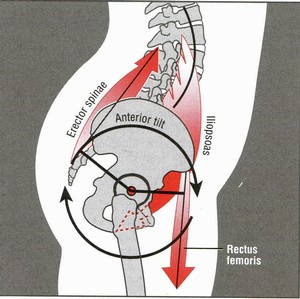
Lower Crossed Syndrome.  A surprisingly hard picture to find. . .

Lower Crossed Syndrome. A surprisingly hard picture to find.

Lower Crossed Syndrome (LCS)

This is characterized by an anterior tilt to the pelvis from an excessively arched back.  A way to spot this in the wild is by observing the waistband on one’s pants;  If, from back to front, the line of the waistband makes diagonal line downward, chances are you’re observing some level of LCS.  This is usually identified through a static postural assessment, where a trainer would look at your standing posture from the side. From this, we can identify what muscles are “underactive,” and which are “overactive.”

Underactive vs. Overactive Muscles

A muscle that is “Underactive” may also be referred to as “Lenghtened,” or “Functionally Weak.”  These muscles allow the distortion (or compensation) to occur because they lack the strength necessary to keep your body in correct postural alignment.  A example of this in someone with LCS is their transverse abdominis muscles.  The tilt in the pelvis puts the abdominal complex in a continuously stretched position, creating a weak group of core muscles that don’t have the strength necessary to keep the lumbo-pelvic hip complex in a neutral position.  Weakened abdominals also create a counterpart in their imbalance:  A muscle that is “Overactive” can also be referred to as “Shortened,” or “Tight” muscles.  These are the muscles that are continuously shortened / semi flexed, and lose a level of extensibility.  To expand on our example, with the excessively arched back from LCS, the erector spinae (lower back muscles) are continuously shortened, which leads to inflexibility in the back, and eventually low back pain.  It’s worth noting that these are two muscles mentioned as examples, but Lower Crossed Syndrome has an additional 5 overactive, and 5 underactive muscles.  Overtime, LCS can lead to hamstring strain, knee pain, and low back pain.

What can you do to fix it?

First, have a trainer assess both static and dynamic posture to identify postural imbalances.  Once you have your list of underactive and overactive muscles, you can do something about them!  For our underactive muscles, we’ve learned that they’re weak, so we need to make them stronger!  For the abdominal complex, great exercises would be planks and side planks to strengthen the core for posture.  For our overactive muscles, we need them to calm down and regain their proper extensibility.  Good flexibility training will take care of this;  and by “good,” I mean smart.  Start by foam rolling the overactive muscle to decrease muscle spindle activity, and be sure to hold on the tender area for at least 30 seconds.  (I’ll write a post soon about proper self myofascial release technique)  Then, static stretch the muscle for at least 30 seconds.  To improve muscle extensibility, you should engage in flexibility training 4 – 7 days per week.

And there’s your brief primer on muscle imbalances!  If you have any questions, be sure to post them or Email us!

Resources, Sources, and Links

Debunking: “Carbs are killing you.”

I usually tell people that “I’ve been there.”  My body type is “Endomorph,” which means losing fat is not easy and my body resists as much as possible.  I was once a total gym newbie.  I sought quick fixes to try and cut down and “tone.”  I still tell people that “I’ve been there.”  For some time I was eating no carb, tried nutrient timing diets, fasted cardio, and did all of these different things in an effort to lose fat as fast and efficiently as possible.  None of it really helped, and after plenty of reading and research, I found that I was getting in the way of my goals.  At this point, I eat a great deal of carbohydrates, and am still leaning out at the same rate (if not faster) than I was when I was eating paleo / no carb.

I have officially reduced every aspect of my nutrition and workout program to science–  No more pseudoscience involved!

I now feel as though I have had a huge breakthrough in my life, and I want to do everything I can to spread the word to as many people as possible!

. . .  Most won’t listen, though.  So instead, I usually leave a long winded comment in the hope that just one person will do a little research and realize that there is a better way to reach your goals.  I can definitely say that I wish someone had done that for me so I could have stopped wasting my time a long time ago.  Case in point, this pin on Pinterest.  This isn’t the first time I’ve debunked something from Pinterest, and it certainly won’t be the last.  Protip:  If you found the health / nutrition advice on Pinterest, there is a 95% chance it’s completely wrong or not helpful.

The best collection of fitness myths since 2010!

The best collection of fitness myths since 2010!

The whole infographic seems like an advertisement for paleo dieting / no carb dieting, as the main goal seems to be proving that eating a lot of dietary fat is okay.  For the record, eating a lot of dietary fat is not bad;  there are drawback to eating fatty foods, such as their high energy (calorie) content, but overall, you need to eat dietary fat.  I digress. . .  The author’s plan of attack is to demonize carbohydrates so that you’ll think, “The carbs are the reason I haven’t lost weight!”  This is absurd, and I can’t let this stand.  So, here we go; and I’m warning you. . .  This is a long one:

Debunking “Carbs are killing you!”

  1. Claim:  Insulin turns off fat burning.  Debunked:  It’s true that insulin turns off fat burning, but that’s perfectly okay.  Fat burning (or lipolysis), is the primary metabolic pathway for the body–  During periods of exertion, such as exercise, your body burns a combination of fats and carbohydrates for fuel.  The rest of the day, and while you’re sleeping, your body is oxidizing fat for fuel;  thus, the amount of time spent in a lipolytic state is far more than in a glycolytic (glucose burning) state.  Plus, shutting off lipolysis isn’t a bad thing–  When insulin levels are elevated, that means you’re fed.  Your body is now digesting the food it was given, and is determining where it all needs to go.  Insulin binds to different cells as a sort of valet, telling blood glucose to enter if needed.  This is important for muscle tissue repair (and growth), for glycogen storage, and for performance, if consuming carbs during a long workout.  If your body has any glucose left over, then it is stored as fat.
  2. Claim:  Thinking of eating carbs will stimulate insulin secretion.  Partially Debunked:  Thinking of any food can actually stimulate insulin secretion, whether there are carbs in the dream meal or not. . .  This was just another attempt to paint carbs in a bad light.
  3. Claim:  Insulin is bad because it promotes fat storage;  you will get leaner if you eat less carbs.  Debunked:  So the whole point of the pin is to show the cycle of how eating carbohydrates can make you “fatter.”  They don’t go into detail about all of the great things carbs do, though:
    • Glucose is the primary metabolic pathway for anaerobic activity–  If you’re lifting weight or sprinting, your body needs carbs, otherwise it may cleave skeletal muscle, which it can deaminate to create glucose;  thus, carbohydrates are incredible muscle sparing.  Wouldn’t you rather eat carbs than have your body eat your muscle mass?  Plus, skeletal muscle is what makes you appear lean, and if your body is consuming that for energy, you may lose weight, but not fat.
    • Insulin drives nutrients into cells–  This is why athletes consume carbs and protein after training.
    • Carbohydrates can easily be converted to Glycogen, which is then stored in the muscles for later use.  This makes energy readily available whether you’re fed or not, and whether the process is aerobic (primarily fat burning) or anaerobic (primarily glucose burning).
  4. Claim:  Carbohydrates are completely responsible for insulin secretion.  Debunked:  The article conveniently fails to mention that protein also stimulates insulin secretion;  if you’ve ever opted for a steak without the side of potatoes to avoid insulin secretion, you did not achieve your goal.
  5. Claim:  Fats don’t make you fat.  Carbs do!  Debunked:  Neither fats, nor carbs make you fat. . .  Calories do.  So many people get so caught up in their macronutrients, that they forget the most fundamental rule to fat loss:  If you consume less calories than you use, you will lose fat.  If you consume more calories than you use, you will not lose fat.  Just ask Professor Mark Haub, who did an experiment and lost 27 pounds by controlling his calories while only eating snack foods  (Doughnuts, twinkies, chips, etc.).  You can read more about it here.

This infographic is seriously flawed, and tries so hard to draw conclusions and correlations that are either fallacious, or wrong.  The most important takeaway is number 5 above:  You can’t blame any particular food for inhibiting fat loss. . .  It all comes down to calories in / calories out.

Sources and Links

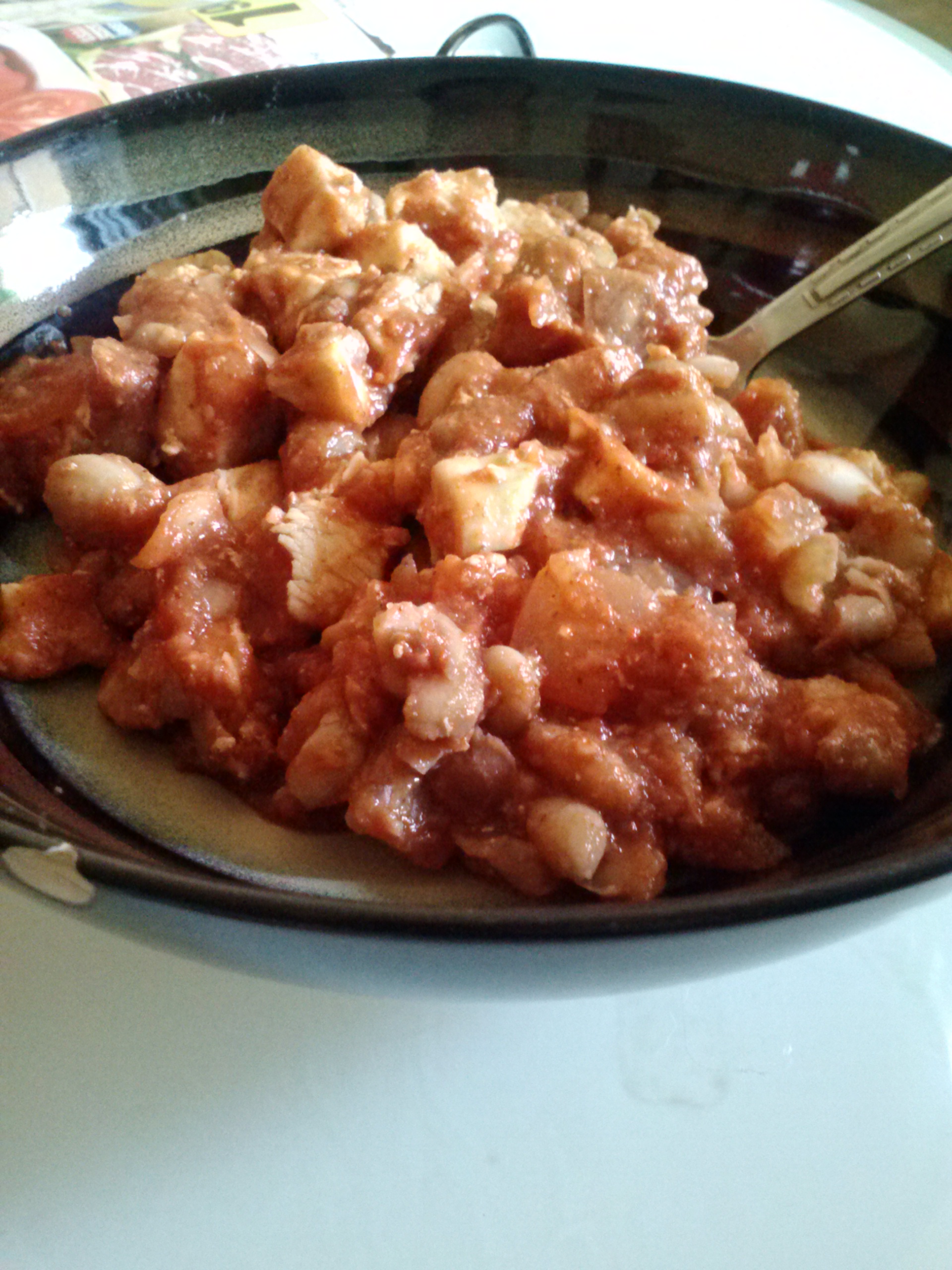
Clean Eating- Chili

This chili is soooooo tasty! It is gluten-free, egg free, nut free, and super clean!

1/4 cup raw pinto beans (yep, I soaked them and cooked them all by myself)!
1/2 cup organic tomato sauce
7 oz chicken
Chopped onion to taste
Giant dash of ground Onion
Giant dash of ground Garlic
Giant dash of cayenne

Calories: 393
Fat: 3g
Protein: 55g
Carbs: 38g

I soaked the beans for about 7 hours, then rinsed and let simmer for about another hour and 15 mins. I cooked the chicken, threw all of it into a pot, and mixed it up! Voila! Husband can be a bit picky with his beans, and he approved! (Only my second time making pinto beans from raw…first time…no success LOL).

Clean Chick

Clean Chicken Chili


The Great Fish Oil Scare of 2013

The vast majority of supplements out there don’t do anything for you, but for every 5 that do nothing, there’s 1 that is incredible!*  Today, we’ll be talking about one in particular that was part of a new “study,” a potentially harmful study that is being taken much more seriously than it should be.

Fish Oil.  Fish Oil supplementation is a cheap, easy way to supplement your diet with healthy Omega-3 Fatty Acids.  Taken in dosages between 1 and 4 gels a day, fish oil is an anti-inflammatory that has a wide range of potential benefits, including:

  • Potentially reducing blood pressure in those suffering from hypertension.
  • Potentially protecting against Parkinson’s Disease
  • Helps the prevent the brain from cognitive problems associated with Alzheimer’s.
  • It can slow the growth of tumors in cases of prostate cancer
  • May reduce depression
  • Can decrease severe symptoms of psoriasis
  • Can aid in weight loss
  • And much more!  (Seriously, this list could go on forever.)

As you can see, there’s a lot of benefits to supplementing with fish oil.  Now, recently, there was a study that allegedly linked fish oil supplement intake with the development of prostate tumors.  I’ve seen quite a few people in my news feed asking for the opinions of others, and whether or not they should stop taking the supplement.  For the first time in a while, I watched as a scientific study set off a sort of firestorm, but in reality, this is nothing to worry about, and when it comes down to it, the study seems seriously flawed.

There’s a fantastic article here that went through and thoroughly debunked the study, but here’s a short summary of why you should pay no attention to it:

  • Time is not a factor at all in this study, which is important because many prostate cancer patients may begin supplementing after an initial diagnosis because of the “Cancer Protecting” properties of fish oil.  Also, time is a major factor because of the method of determining circulating Omega-3s and Omega-6s.
  • They drew these conclusions from a pre-existing study known as the “SELECT Trials.”
  • Fish oil has been proven to decrease mortality in individuals with prostate cancer, a fact that is not referenced in the study.
  • Here’s a fantastic tidbit from another article about the study:  “Due to the nature of the study, it was not possible to tell for certain whether the elevated blood levels were due to men taking supplements or eating fish rich in omega-3s.”

As is the case with most things, and with most studies, more research is always welcome, but at this time, it’s a good idea to politely disregard this study.  Don’t stop with the fish oil!

*As far as statistics go, I made that up.  Sounds about right to me, though.

Sources and Links

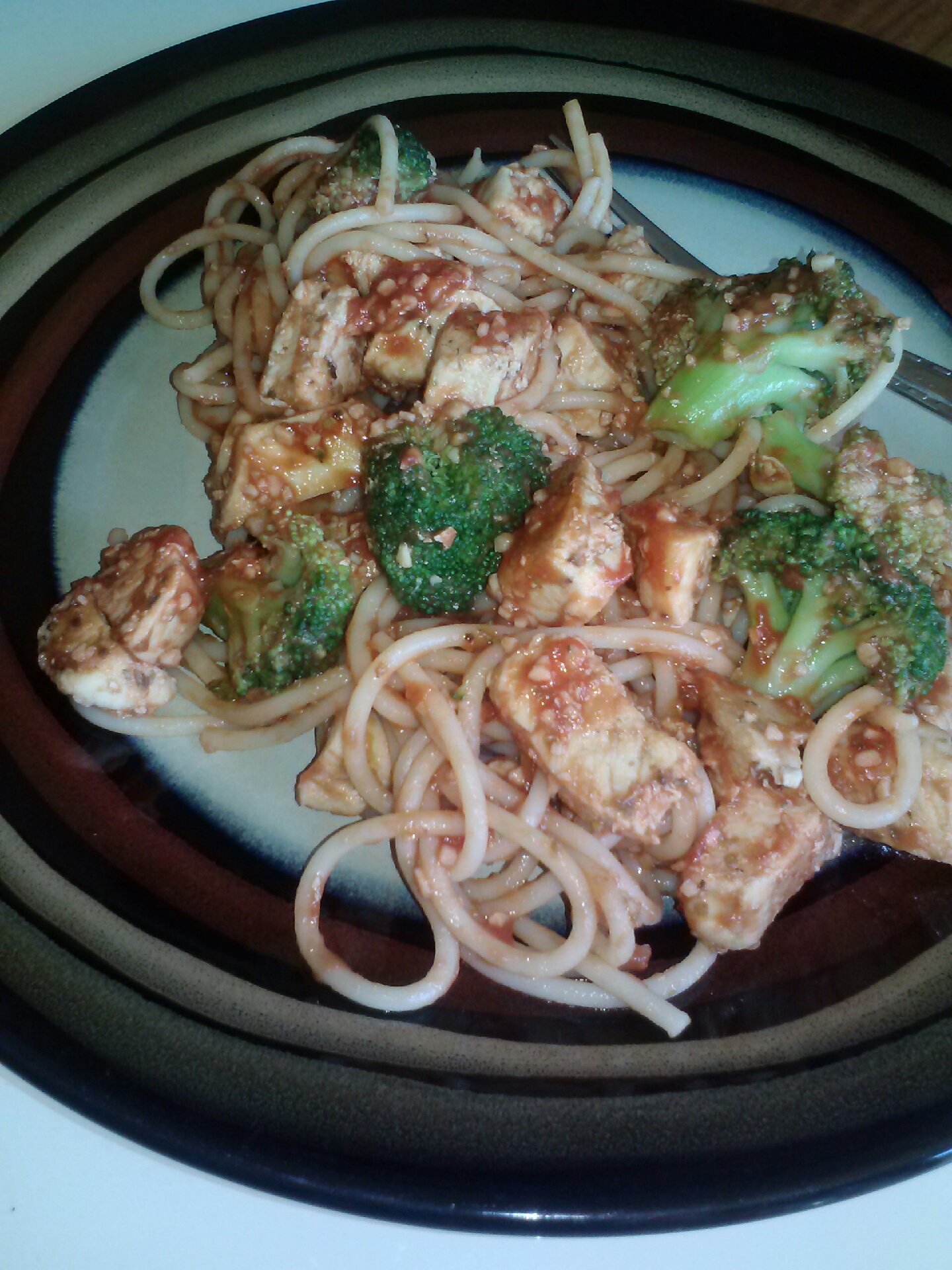
Garlic Chicken Spaghetti!

0625131710

2 oz Spaghetti
7 oz  Boneless Skinless Chicken Breast
1/2 cup Organic Tomato Sauce
1 tbsp Minced Garlic
1 cup Broccoli
Dash Oregano
Dash Onion Powder
Dash Garlic Salt (I love garlic, but could use regular salt here)

Calories: 467
Carbohydrates: 56g
Fat: 4g
Protein: 55g


Stretching – The Truth Revealed!

Stretching is fantastic for you, and you should do it often!

Well that was easy.

Wait. . .  Yeah, I guess that, just like everything else in the health and fitness world, it’s not that easy.

So let’s start with how stretching works.  We’re going to split this up–  For the science, read this paragraph;  If science isn’t your thing, skip this paragraph.  That being said:  Stretching can be easily defined as improving the extensibility of a muscle by moving it through it’s full range of motion.  There are different types of stretching, but for this, we’re going to mostly refer to static stretching, which is holding a stretch for 30 seconds or more.  There is a neuromuscular response in the body known as “Autogenic Inhibition” that is used to increase the extensibility of muscles.  Without getting too involved:  In your muscles, you have muscle spindles that sense the length and speed at which a muscle is lengthened;  In the tendons that attach muscles to bones, you have “Golgi Tendon Organs” (GTOs) that sense the tension and rate of tension.  Autogenic Inhibition is where the tension experienced by the GTO overrides the impulse causing the muscle to contract;  Thus, it forces the muscle spindle to relax, allowing you to increase the extensibility of the muscle.  In order for you to benefit from Autogenic Inhibition, the stretch must be held for 30 seconds;  That ensures your muscle spindles have relaxed.  There’s more to all of this, but this is a very brief overview of how stretching works.

So, to recap, to gain the benefits of static stretching, you should hold the stretch for at least 30 seconds for it to work–  Less time and you may feel better, but you’re not doing much to increase flexibility.  So what are the benefits to static stretching?  Stretching, and Flexibility Training can:

  • Increase joint range of motion.
  • Relieve joint stress.
  • Improve neuromuscular efficiency.
  • Improve the extensibility of muscles.
  • Decrease tension of muscles.
  • And more.

From my own experience, I only ever stretched in between sets, and would hold the stretches for about 10 seconds or less.  (I now know that this was actually getting in the way of my goals;  More on that later.)  I was not flexible at all–  Who am I kidding, I’m still not flexible, but ever since I’ve incorporated flexibility training into my exercises, I have experienced less soreness after exercise, increased flexibility, and increased range of motion.  Alissa has also benefited from the flexibility training and is now going ATG on squats.  So from experience, I can tell you that even 3 weeks of flexibility training can make a huge difference.

Now, there are many people that say that stretching before working out for you is bad.

. . .  And they’re mostly right.  Studies have found that static stretching before activity may decrease strength and power for up to 10 minutes after the stretching, but there is little evidence that it has any impact on overall general performance. So when should you stretch?

If you’re engaging in maximal effort exercises or activities (Powerlifting, Heavy Lifting, Sprinting, Competitive Sports, etc.), it’s recommended that you either don’t stretch, or you do active / dynamic stretching only as part of your preworkout warmup.  If you’re engaging in any other sort of activity, static stretching prior to workout is still recommended, especially if you have particular muscle imbalances.  (Of course, don’t stretch during your workout, as this will further reduce strength and power output.)  After your workout, at a minimum you should be stretching the muscles you stretched preworkout, and it’s also recommended that you stretch muscles that were worked during your workout.

Sources and Links

Recent Blog Posts