Follow us on Facebook for Training Tips
Physique Coaching Tips from Twitter
DeVine Physiques on Yelp!

Archive for the ‘Fitness Myths’ Category:

Don’t Trust Everything on the Internet

There is so much misinformation on the Internet, and it is truly the reason why everyone over complicates everything related to health, nutrition, and exercise.  It’s not isolated to just that, though.  I would venture to say that 80% of the info-graphics on varying topics don’t cite sources, and are usually wildly inaccurate.  I digress. . .

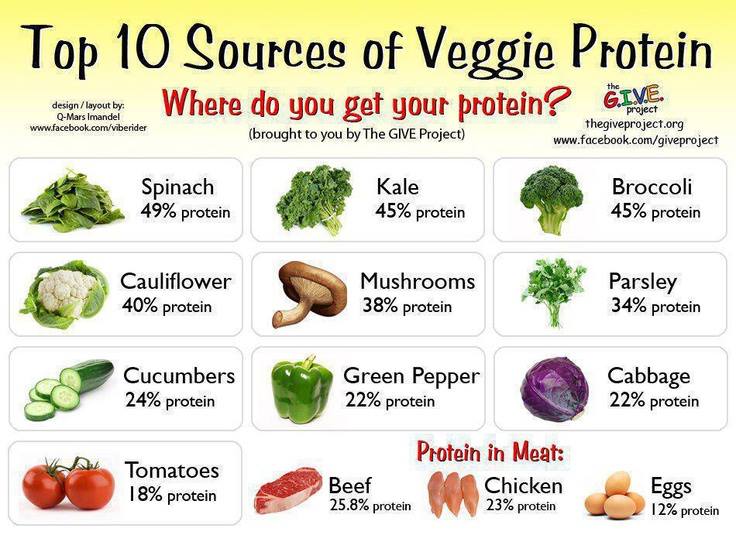
Case in point, this little gem I found recently.  Now, I don’t want to make any implications about where this may have come from, or who may have made it, but first, let’s look at some of the information they claim:

Sources of Protein

This is so incorrect.

So, obviously, they have an agenda. They’re trying to make the case that you could derive more protein from plant based sources than animal based sources.  While I agree that there are plenty of fantastic plant based sources for protein, they don’t compare to animal based sources as a percent of calories–  Furthermore, the information presented here is completely false, and you can easily look up the information yourself.

There are databases where you can look up the complete breakdown of virtually all foods–  These break downs include macronutrients, micronutrients, amino acid profiles, energy content, calorie percentages, and even more than all of that.  The one I use is Nutrition Data.

Now, let’s make some comparisons based on this false chart:

I could go on more, but I think you can see where this is headed.  Most people would (hopefully) look at their claims about chicken and eggs and see right through the nonsense, but there are plenty of people out there who won’t make that connection, and could be listening to a shoddy info-graphic for information.

. . .  And really, if you have to spread misinformation to advance your agenda, I’m going to go out on a limb and say you’re doing it wrong.  The truth is much more powerful than lies–  It may not be as sexy, and it may take more time to get people to listen to you, but in the end, it’s better than creating a castle built upon a foundation of lies.  I believe that, at least.

It’s so easy to share a photo without thinking about the content, but before you blindly share a photo, maybe look for a reliable source, or do some research on it first!  Remember:  You can’t trust everything you read on the Internet. . .

It has to be true!

It has to be true!


Archive for the ‘Fitness Myths’ Category:

Don’t Trust Everything on the Internet

Have you ever been really sore following an insane workout, and had someone tell you it was “Lactic Acid Build Up”?  Well, I’m sorry to tell you this, but Lactic Acid has nothing to do with you being sore, unless we’re talking about during the workout–  That could actually cause soreness fora minute or so.  If you’re sore after a workout, it’s something called “DOMS:”  “Delayed Onset Muscles Soreness.”

Not pictured: Lactic Acid Buildup.

Not pictured: Lactic Acid Buildup.

To start, what is Lactic Acid?  Without getting too far into it:  Lactic Acid is a by-product of Anaerobic Glycolysis.

The chemical breakdown of glucose for the production of “ATP” (Adenosine Triphosphate- Most easily described as a unit of energy for muscles) without oxygen (During weight lifting, sprinting, etc.) produces lactic acid;  When oxygen is present (Jogging, running, bicycling, etc.), the process is “Aerobic,” and instead of producing Lactic Acid, your body produces Pyruvic Acid, which can then be used to fuel other oxidative processes for energy metabolism.  There are two methods for removing Lactic Acid after production:  Oxidation into Pyruvic Acid to fuel the Krebs Cycle, or it can be converted into Glucose in the liver via Gluconeogenesis for energy.

Science aside, what does that mean?  Your body produces a chemical that can cause momentary “burn” in muscles because you’re exerting yourself, and then clears the pathways shortly thereafter.  Think of it like this–   Let’s say you have to climb 10 flights of stairs.  For the first flight or two, you will “feel the burn” in your legs, because your body hasn’t increased respiration to increase oxygen supply, so your body is producing energy through Anaerobic Glycolysis.  After the fourth flight of stairs, your body has increased respiration, and is now producing Pyruvic Acid instead of Lactic Acid, and you’ve begun an anaerobic workout–  At the same time, the increase in oxygen supply is allowing some of the Lactic Acid to go through oxidation, while the rest is being shuttled to the liver.

Here’s another example to demonstrate that it can’t “build up:”  You climb 2 flights of stairs–  The entire process was Anaerobic, so your body produced Lactic Acid;  You feel the burn in your legs as your arrive at your destination on the third floor.  After a very short while, your legs no longer burn.  Why?  You’re now in an aerobic method of energy metabolism–  You’re not taking in any more oxygen, but you’re also no longer exerting yourself;  The Lactic Acid was converted to Pyruvic Acid for energy metabolism.  (Anything left over was then sent to the liver.)

So, if someone says they’re suffering from Lactic Acid buildup from a few days ago. . .  They’re not.  What they’re experiencing is “DOMS.”  DOMS is soreness, inflammation, and pain associated with particularly tough workouts, workouts too intense for the trainee, or a workout that involves intense movements the trainee is unaccustomed to.  It’s often felt between 24 and 72 hours post workout, and is the result of microscopic tears in the muscle tissue that lead to inflammation and soreness.

DOMS is very unpleasant, but is not a sign that you did anything wrong, unless you’re just starting a workout plan–  In that case, DOMS means that you started off too intensely and should have ramped up.

Archive for the ‘Fitness Myths’ Category:

Don’t Trust Everything on the Internet

Everyone has heard that–  “Be careful!  If you gain too much muscle, when you stop working out it will turn into fat.”

Does anyone out there believe it?  I hope not.  Before we get into where this myth came from (There is a logical explanation for why this exists), let’s look at muscles and body fat.

Muscles are responsible for causing “force and motion,” and taking care of most internal functions.  They’re composed primarily of water, and the fibers are made up of protein filaments.  There are three types of muscles in your body:  Cardiac, Smooth, and Skeletal;  Skeletal muscle being what we’re talking about today.

Body fat, also known as “Adipose Tissue,” is your body’s storage system.  Body fat is made up of fat cells (“Adipocytes”) that act as little compartments to store energy in the form of lipids.  (It’s important to note that lipids include oils, waxes, fat soluble vitamins, but no water.)  As you gain weight, your fat cells fill with lipids, and if you run out of available storage space, your body will create more fat cells.  What is equal parts fascinating and terrifying is that your body can only create new fat cells;  It has no natural way of getting rid of fat cells.  Body fat is found beneath the skin (“Subcutaneous Body Fat”), around your internal organs, in bone marrow, and in breast tissue.  Notice it’s not found within muscles.

So, we now have a slight idea of what muscle is, and what fat is. . .  Now we can address this myth:  “If you stop working out, your muscle will turn to fat.”

That’s impossible.  At the risk of making a religious joke, unless you’re a deity, you cannot turn water into oil.  Also, since these parts of your body are entirely separate, your body can’t simply transport muscle tissue into your fat cells and transform that into oil;  Your body is not capable of such sorcery.

If your body isn’t capable of doing that, though, where did this myth come from?

From health nuts, bodybuilders, and fitness gurus retiring or taking a break.  When you have more muscle than your body naturally wants, it takes a lot of work to maintain that muscle mass.  If you stop weight training, you will slowly begin to lose that muscle–  Your body will catabolize that muscle, breaking the tissue down into amino acids, which will then be used for energy.  This is done for survival purposes.  The human body is an incredibly smart and adaptable machine that will make sure it can survive;  Muscle takes a lot more energy to maintain than fat, and if you don’t give your body a reason to maintain that muscle, it makes better survival sense to hold on to the tissue that doesn’t require as much maintenance.

So what happens while your body is breaking down the muscles?  It’s in a fat sparing mode.  While it’s creating energy from amino acids and dietary intake, it is not oxidizing fat for energy.  So the amount of lean body mass goes down while the amount of fat stays the same–  Thus, you will begin to look fattier.

There’s one more important part to this equation, though.  Think of what is no longer happening to our hypothetical health nut, bodybuilder, or fitness guru.  They’re no longer being active, and the chances are, if they’re giving up that lifestyle (or taking a break from it), they are no longer watching what they eat, or working out.  So what does that do?  It leads to gains in body fat.

So, with our hypothetical person, all of this is going on:  Their body is sparing body fat while eating away muscle for energy, all while the subject is already gaining body fat.

It’s easy to see where the myth comes from, but just remember, it’s just that–  A myth.

The difference.

The difference.

Archive for the ‘Fitness Myths’ Category:

Don’t Trust Everything on the Internet

I’m going to start a series of posts about the importance of knowing what you’re doing.  I can’t stress enough how important it is to know what exercise you’re doing, how to do it, why you’re doing it, and what muscles you’re working.

That final point is what we’re going to focus on today;  Knowing what muscles are being worked during an exercise.  In most cases, this seems pretty straightforward, but there are exercises where they obvious answer is. . .  Well, it’s not the right answer.  Here’s an exercise that is often misunderstood:

Pop Quiz:  What muscle does this target?

Pop Quiz: What muscle does this target?

I once overheard a guy telling his friend that this would make his calves “look jacked.”  Here’s the problem:  In a few different places on your body, you have a set of muscles that complete a movement–  Some of those muscles are aesthetic and functional, while some are only functional.  Let’s look at your lower leg for a second.  There are three major muscles (and only four total) in your lower leg:  The Tibialis Anterior (Over your shin), Soleus (Within your calves), and Gastrocnemius (Your calves).  When people are looking for aesthetics with their calves, there’s only one muscle that plays into this:  The Gastrocnemius.  So, why won’t your calves get “jacked” by doing the seated calf raise?  Because that exercise targets your Soleus only.

This isn’t the only situation where there’s a lot of misconceptions about what’s being worked.  I watched a guy doing Hammer Curls, and somebody asked him what he was working.  His response:  “My outer biceps, bro.” Actually, the hammer curl is a grip exercise, targeting your brachioradialis, which is an important muscle and also happens to have the coolest sounding name.

One last example:

I've seen entire routines centered around Preacher Curls, and yet, no one knows what they target.

I’ve seen entire routines centered around Preacher Curls, and yet, no one knows what they target.

If you think this will make your biceps “jacked,” you would be wrong.  If you think this targets your biceps, you would be wrong.  The preacher curl is like the seated calf raise–  It targets an important muscle that is all about function and not about aesthetics.  It targets your Brachialis, the muscle underneath your biceps.

I’m not telling you to stop doing seated calf raises, hammer curls, or preacher curls–  Every muscle in your body needs to be worked. . .  But, before you start doing exercises, learn about them, and figure out if they actually fit in with your goals.  While working at a sporting goods store, I had someone buy an expensive bench because it had a “Preacher Curl Pad.”  All he wanted to train was biceps.  I told him that he would save a lot of money, and would actually be training what he wanted to train if he went with an EZ bar and plates.  Instead, he was sold on the idea of the preacher curl and spent too much money for a workout that is not nearly as effective for what he wanted.

Archive for the ‘Fitness Myths’ Category:

Don’t Trust Everything on the Internet

The post about our HIIT cardio routine will come next week. . .  For now, we had to debunk an article!

On Facebook, people post a lot of links to articles and tips for health, “weight loss,” and nutrition;  Often times there are quality articles out there, but it seems like almost as often, there are articles posted that are misleading, incorrect, or have their hearts in the right place but don’t understand science.

Case in point, this article.

Now, I admire that they’re trying to give lifestyle advice to people seeking it, but there are a lot of tidbits of information here that are just plain wrong–  You can’t completely fault them, though.  A lot of what they write are recycled health and nutrition myths that almost everyone believes.  (Before I was enlightened, I believed them too.  Honest mistake!)

Error #1:  Fat is the only result of excessive calories.  Let’s start with their explanation of what a calorie is.  They very correctly state that it’s a unit of energy, but then they go on to say that if your body doesn’t use it for energy, it will store it as fat.  What about eating an excess of calories after hypertrophy (weight training to failure) training?  The result of that “unused energy” is muscle tissue.  Perhaps they’ll argue that you’re “using” that energy, but if the author tried to claim this, then they would not be able to claim their “Calorie neutral” stance.  What’s that?

Error #2:  “Practice being ‘calorie neutral. . .'”  They explain that this means you should burn the calories you consume before eating more.  Their logic states that, they’re pretty sure your 400 calories breakfast will be burned off by the time you eat again.  What if you eat a lot of fat, which takes hours to completely metabolize?  I know I’m being picky here, but seriously, a beginner error (that I even I made) is treating all calories equal, when you must take macro nutrients into account–  All calories are different.  (To relate to the muscle building rhetorical claim from error #1, if you’re “calorie neutral,” then you can’t eat enough to gain muscle, ever.)

Error #3:  Nutrient timing is too real!  Be afraid of dinner!  Wrong.  A common beginner error is to believe that you shouldn’t eat after 6 or 7 PM, and more importantly, you shouldn’t eat carbs.  This is an old wives tale, and I really wish this thinking would go away.  To quote the article:  “Now, if you eat a 1,000 calorie dinner, I can guarantee you that, unless you will be sprinting for the next 2 hours afterwards, you’ll store these calories as fat to be used later. It doesn’t matter if you eat carbohydrates, fat, or protein, if you’re body doesn’t use it, it’ll store it as fat.”  At the end of the day, the only way you’ll store those calories as fat is if you ate above your TDEE  (Total Daily Energy Expenditure) throughout the day.  If your TDEE is 2000 calories, and you end the day at 1600 calories, with 1000 of those eaten during dinner, the result is the same as if you ate 4 meals at 400 calories each–  You will lose weight as you will be in a caloric deficit.

Notice I said “weight” and not “fat.”  They also incorrectly state that the macros don’t matter for fat storage (and thus, body composition).  Well, it does if you’re eating above or below your TDEE.  Fat and Protein won’t directly contribute to fat gain, whereas carbs can have a direct effect on your Adipose Body Mass / ABM  (read: Body Fat).  Again–  Not all calories are created equal.  Graduate past this!

On top of all of that, I would argue, as would others, that you should only eat carbs at night.  Thus far I have seen fantastic results by isolating carbohydrate intake to late in the day, after weight training.

Error #4:  Eating breakfast kick starts your metabolism!  This is something that, I’m pretty sure at one point we advocated, but is now in the myth column as far as nutritional research is concerned.  Your body does not need you to “kick start” your metabolism by eating–  If you’re healthy and have a healthy metabolism, your body will burn calories just as it should regardless.  Admittedly, they claim in the article that you’ll burn them at a “normal” rate instead of an accelerated rate, however, the amount of calories you would burn by “kick starting” your metabolism are negligible.  (Also, there are great benefits to skipping breakfast)  If there’s any adjustment to be made to breakfast, it’s to avoid carbs at all costs.  Carbs in the morning can trigger an insulin response, which can promote fat storage and can start the blood sugar roller coaster early.  (We reiterate this in the next point.)

Error #5:  If you skip breakfast, you’ll be so ravenous that you will eat junk food!  Well, that really boils down to self control, and whether or not you have it.  It’s also worth noting that if you eat your carbs for breakfast, you will have a carbocrash earlier, which could lead to making you ravenous.  Instead, if you use Intermittent Fasting to push your breakfast later, or stick to low to no carbs, you won’t run into that problem.

No hunger, and no carbocrash if you control your carbs.  (Image stolen from getslimshop.com)

No hunger, and no carbocrash if you control your carbs. (Image stolen from getslimshop.com)

At the end of the day, if this advice is helping you to lose weight, keep on keeping on–  Just understand that the advice given in this article is flawed, and eventually, your goals will likely need to expand outside of the myths.

Archive for the ‘Fitness Myths’ Category:

Don’t Trust Everything on the Internet

I wanted to take a little time today to debunk a major myth among women. Women shouldn’t do heavy weight lifting. For some reason as a society we have trained ourselves to think that it is just fine for men to lift heavy in the gym, but that women should only lift light weights and do more reps of the exercise.

Women have a fear that if they start to lift heavy they will get huge and bulky muscle, this is only a concern if that woman is taking steroids. The female body doesn’t produce enough testosterone to build muscle like that. All that will happen when a woman lifts heavy is that she will start to build some muscle  burn more fat, and look leaner and more toned.

I recently told another lady how much weight I can deadlift (195lbs) and her response was hysterical to me. She said “lifting weight that is heavier than you can’t be good for your body.” I am not sure how she even decided that in her head because I can see absolutely no reason that could possibly be bad for you. If you train with correct posture and know how lifting heavy will never hurt you.

I can’t even begin to describe how much my body has changed for the good since I really started lifting heavy. I look better, I feel confident in my abilities and my appearance, and I know that I can handle anything that comes my way physically.

If you are a woman, do yourself a favor… start lifting heavier weights. You won’t believe how quickly your body will transform and how much stronger you will become.

If you do it right you will only gain benefits!

If you do it right you will only gain benefits!

Archive for the ‘Fitness Myths’ Category:

Don’t Trust Everything on the Internet

“Your body can only digest 30 grams of protein.”

How many times have you heard this?  Better yet, how many times have you said this to someone?  Now the interesting thing is how often it changes;  I’ve heard that you can only process 30 grams per day–  More often, though, it’s 30 grams at one time.

So, where did this thought come from?  No one knows, and when you ask someone for evidence to support this, everyone will point to something that a bodybuilder said, or that a mesomorphic gym rat said.  The simple truth is. . .   This is completely untrue, and has led to people not getting enough protein.  So, where does this idea stem from?

My guess would be it comes from how much protein is needed to boost amino acid levels in the blood to kick start muscle building.  30 grams is all that’s needed, and by having more, you can’t increase the efficiency of muscle building.  At some point, I’m sure someone was trying to convey this to someone who was consuming an obscene amount of protein post workout, and since no one would listen, they decided to add some invalid arguments that somehow stuck.

Is that how this myth came to be?  Who knows, but I can speculate.  Either way, this is one of the most widespread myths in health and fitness;  Don’t listen to me though.  You can read countless essays and articles from Dr. Mike Roussell, who got his Ph.D. in Nutrition from Penn State University.  In one such article that discusses amino acid levels in blood for muscle building, Mike says:

For whatever reason, people have long assumed that you can only digest 30 grams of protein at a time. Perhaps people thought our intestines contain a magical sensor that stopped absorbing protein once it registered 30 grams. Whatever the logic, your body can certainly digest much more than 30 grams of protein in one sitting.

Think about it. . .  There are sweeteners that your body does not digest, which is why they are both zero carb and zero calorie.  If your body wouldn’t absorb the protein at a certain point, that would mean that there are less calories than you are tracking.  Today, I’m going to eat a 12 oz. chicken breast, which contains 330 calories and 75 grams of protein.  If my body could only absorb 30 grams of the protein (40% of the protein content), that would mean only 132 of those calories would count.  Another question I would ask is, there are only 3 macro nutrients that make up calories  (Unless you count alcohol, which are empty, non nutritive calories)–  If your body isn’t digesting that protein, and there are no carbohydrates nor fat in that chicken. . .  Where are those calories coming from?  Nothing?

Simply put, your body can digest all of the protein you give it, and you should never use a myth to dictate your diet.

Archive for the ‘Fitness Myths’ Category:

Don’t Trust Everything on the Internet

Ok ladies, I have heard this so many times.  “I don’t want to bulk up so I don’t do weights.”  Wrong wrong wrong!  Let’s start by saying that without the proper nutrition to bulk you will not bulk regardless of how much/how often you are lifting–  Whether or not you gain or lose weight is simple math.  My TDEE is 2,283 calories–  The only way that I would “bulk up” is if I were eating more calories than that while weight training.

. . .  It goes to show, you can’t accidentally “bulk up.”

Anyway.  Men bulk a lot easier than women because they naturally have a lot more testosterone.  This hormone is essential in muscle building.  Therefore, if you, as a woman, want to gain mass amounts of muscle it would probably require some form of steroid, or a ridiculously regimented workout plan that will halt estrogen production long enough for your body to create testosterone.

There are also tricks when lifting that will help you to build long, strong, and lean muscles.  Do lower amounts of weights but more reps. . .  This helps your muscular endurance so that you stimulate your muscles while burning calories.  Full range of motion is important too!  (A post on this will come eventually.)

I heard a couple talking in the gym the other day and the lady said she didn’t ever do weights for her chest because she didn’t want to lose her breast size.  Well, weight lifting won’t do that. She seems to think spot training exists, because this is flat out wrong–  The only thing, fitness-wise, that will affect your cup size is your body fat percentage, which is typically something that will go down if you’re working out excessively. . .  It has nothing to do with your weight training.

Archive for the ‘Fitness Myths’ Category:

Don’t Trust Everything on the Internet

Gabriel:  My brother once said something to me that was incredibly true, and is something I still impart on people today:

“Abs are made in the kitchen–  Not in the gym.”

How true this is, this statement about spot reduction / spot training.  Here’s the question:  How often have you seen an infomercial for a product claiming to give you rock hard abs?  How many times have you yourself done more crunches in the name of getting a six pack “faster”?  Would you be shocked to hear that this is impossible?  For those veteran gym rats, you won’t be shocked at all, but for others, this will become a revelation of sorts.

All of those products that claim to give you insane results with minimal effort (Or a six pack in just days) come with a nutrition plan, and they do because the manufacturers know the true key to getting a six pack–  Body fat percentage, not spot training.  No matter how much you train a particular muscle, whether it be your quadriceps, rectus abdominis, or your triceps brachii, if you’re looking for the chiseled look, you will need to adjust your diet and lower your body fat percentage.

But why, you may ask?  Well, simply put, if you’re doing crunches, you’re not burning fat around your waist.  If you’re doing the preacher curl, you’re not burning fat in your upper arms.  If you’re bench pressing, you’re not burning fat in any part of your body–  What you’re doing is training the muscle beneath the fat, which won’t allow the muscle to show through any better;  Rather, it’s going lead to a potentially bulkier appearance, as the fat atop the muscle will bulge more with more mass beneath it.


Pictured: A good ab workout, but not the key to a six pack.

So. . .  You want a six pack?  Spend more time in the kitchen, because adding a second routine for abs to your workout is not going to cut it alone.

Alissa:  Also, remember the importance of cardio in losing body fat.  Nutrition is key, but cardio is a close second.  With the right combo of nutrition and cardio you will have a six pack in no time!

Recent Blog Posts